
In Letters of Blood and Fire: Work, Machines, and the Crisis of Capitalism

In Letters of Blood and Fire: Work, Machines, and the Crisis of Capitalism
George Caffentzis
Karl Marx wrote that the only way to write about the origins of capitalism in the 16th century is in the letters of blood and fire used to drive workers from the common lands, forests and waters. This collection of essays by autonomist Marxist George Caffentzis argues that the same is true for the annals of 21st century capitalism. Information technology, immaterial production, financialization and globalization have been trumpeted as inaugurating a new phase of capitalism that put it beyond its violent origins. Instead of being in a period of major social and economic novelty, however, the course of the last decades has been a return to the fire and blood of struggles at the advent of capitalism.
Emphasizing class struggles that have proliferated across the social body of global capitalism, Caffentzis shows how a wide range of conflicts and antagonisms in the labor-capital relation express themselves within and against the work process. These struggles are so central to the dynamic of the system that even the most sophisticated machines cannot liberate capitalism from class struggle and the need for labor. Moreover, the theme of war and crisis permeate the text but are also given singular emphasis, documenting the peculiar way in which capital perpetuates violence and proliferates misery on a world scale. The collection draws upon a careful re-reading of Marx’s thought in order to elucidate political concerns of the day. The essays in this collection have been written to contribute to the debates of the anti-capitalist movement over the last thirty years. This book is meant to make them more available as tools for the struggle in this period of transition to a common future.
Product Details
ISBN: 9781604863352
Published: March 2013
Format: Paperback
Size: 9 x 6 in
Page count: 288
-
“George Caffentzis has been the philosopher of the anti-capitalist movement from the American civil rights movement of the 1960s to the European autonomists of the 1970s, from the Nigerian workers of the oil boom of the 1980s to the encuentros of the Zapatistas in the 1990s, from the feminists of wages-for-housework to the struggle of the precariat for the commons. Trained as both an economist and a physicist he has taken fundamental categories such as money, time, work, energy, and value and re-thought them in relation to both revolutionary Marxism and to the dynamics of our changing movement.
An historian of our own times he carries the political wisdom of the 20th into the 21st century. He is a lively and dogged polemicist; he dances circles around the pompous marxologist; with the passing of time his thought has grown in depth and increasingly tends to be expressed with pleasure and humor. The lever by which he overturns the world is light as a feather, and its fulcrum is as down to earth as the housewife, the student, the peasant, the worker. Here is capitalist critique and proletarian reasoning fit for our time.” —Peter Linebaugh, author of The Magna Carta Manifesto: Liberties and Commons for All
-
George Caffentzis is a leading thinker in the development of autonomist thought who has been engaged in varied movements during the past half-century, from civil rights sit-ins and antinuclear efforts to alter-globalization and pro-commons activities. He is cofounder of the Midnight Notes Collective and coordinator of the Committee for Academic Freedom in Africa (CAFA). Caffentzis was a Professor of Philosophy at the University of Southern Maine for over thirty years before retirement. Among his many books and articles—covering topics such as the death penalty, peak oil, and the philosophy of money—is In Letters of Blood and Fire: Work, Machines, and the Crisis of Capitalism; Clipped Coins, Abused Words, and Civil Government John Locke's Philosophy of Money; and Civilizing Money: Hume, his Monetary Project, and the Scottish Enlightenment.

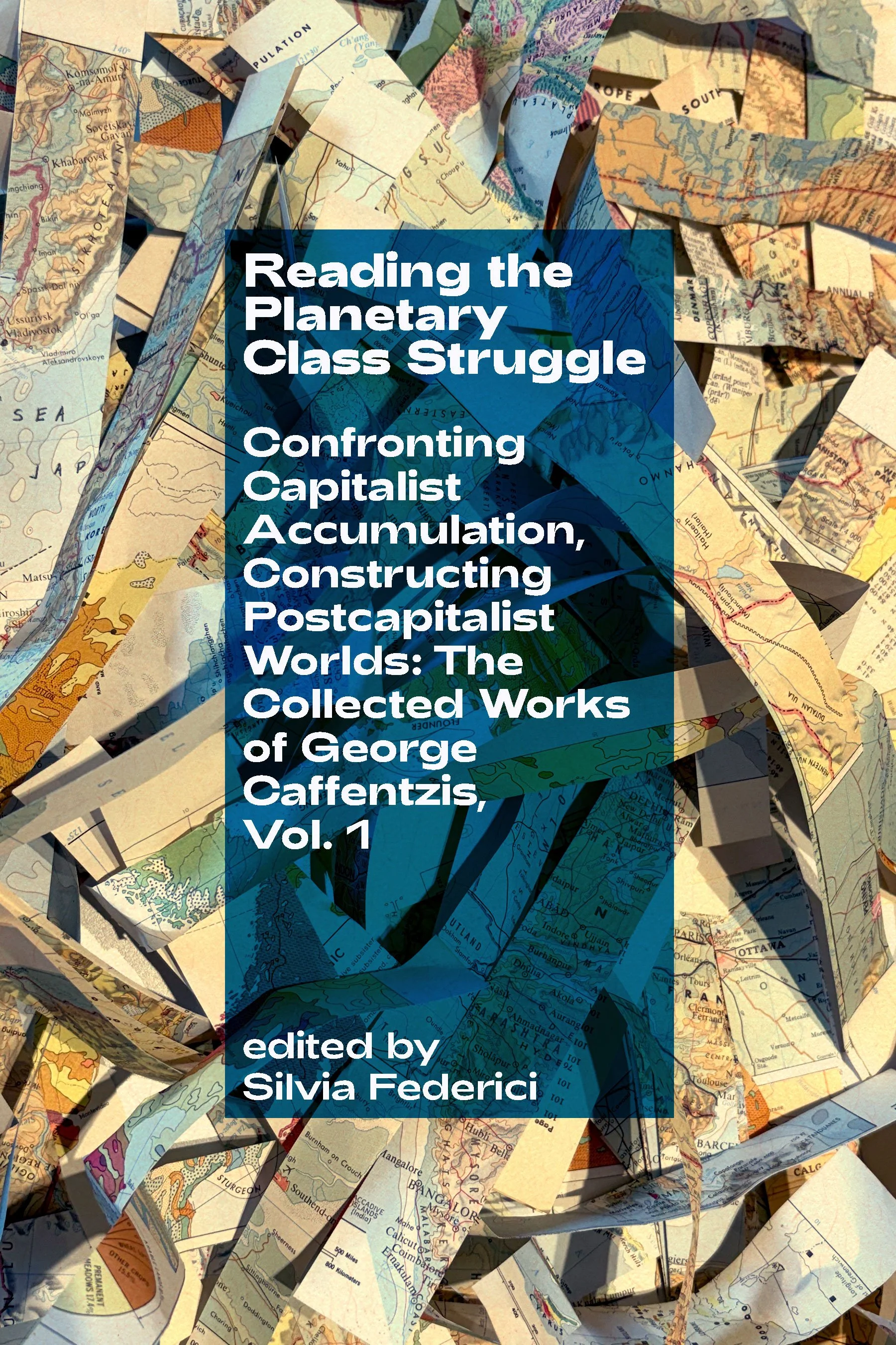
Harry Cleaver
Edited by Robert Ovetz and Kevin Van Meter
Capitalism / Labor / Philosophy
Class Compositions
End capitalism before it ends us.
Harry Cleaver is one of the most expansive Marxist theorists of the global class struggle over work of the last fifty years. Points of Departure is the definitive collection of Cleaver’s best unpublished, translated, or lesser known writings—both historical and current—on working class refusal, class composition, unwaged work, debt, and what he calls the “inversion of the class perspective.” This book puts an essential theoretical weapon into the hands of a new generation of militant workers and organizers re-energizing the class struggle. In these essays, Cleaver rereads Marx to address the crisis of capitalism, articulate strategy for the international anticapitalist movement, and to advance our collective search for points of departure from capitalism, so we can end it before it ends us.