
Defend / Defund: A Visual History of Organizing Against the Police

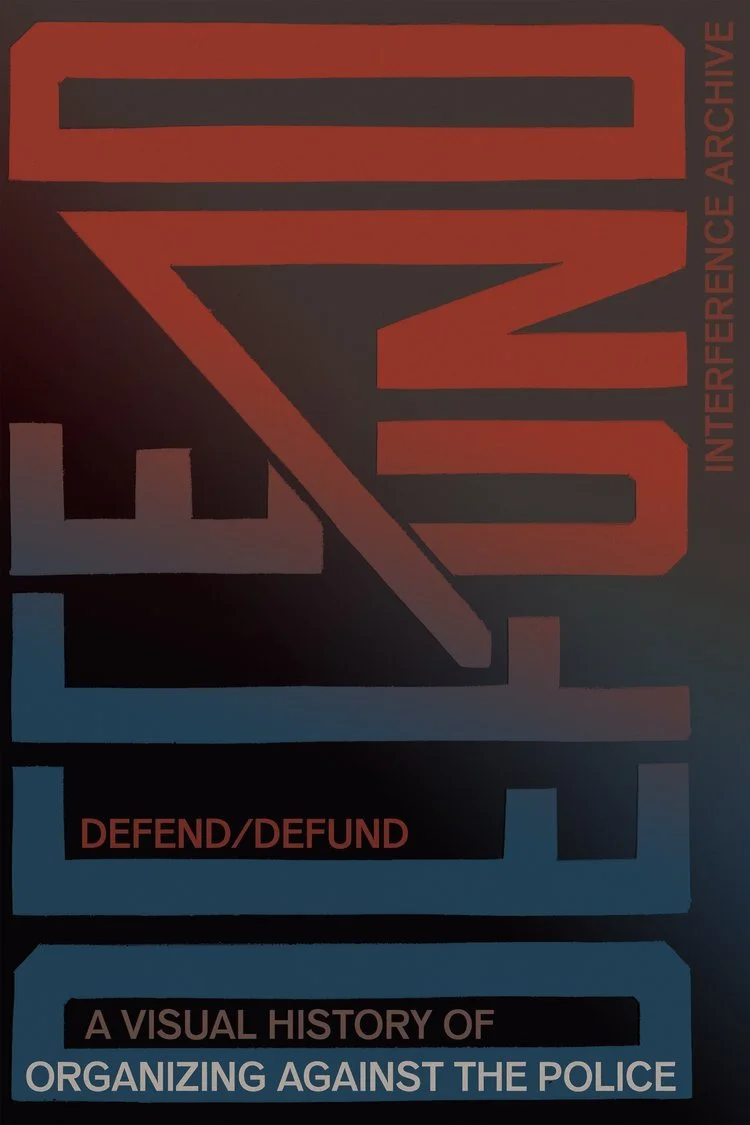
Defend / Defund: A Visual History of Organizing Against the Police
Interference Archive
A sweeping and poignant history of community response to the violence of white supremacy and carceral systems in the US, told through interviews, archival reproductions, and narrative.
In the summer of 2020, the deaths of George Floyd, Breonna Taylor, and Tony McDade ignited a movement that led to the largest street protests in American history. Abolitionist grassroots organizers around the country unified around a clear demand: defund the police and refund our communities. While the majority of the country supported the call to reform the police, what followed was a backlash from mainstream politicians and the press, all but defeating the movement to end the continued violence against Black Americans.
Defend / Defund examines the history of how communities have responded to the violence of white supremacy and carceral systems in the United States and asks what lessons the modern abolitionist movement can draw from this past. Organized in a series of thematic sections from the use of self-defense by Black organizers, to queer resistance in urban spaces, the narrative is accompanied by over one hundred full-color images including archival materials produced by Emory Douglas, the Black Panther Party for Self-Defense and the Young Lords in the 1960s and 70s, CopWatch and the Stolen Lives Project in the 1980s and 1990s, and contemporary material from the Movement for Black Lives, Project NIA, and INCITE!, Defend / Defund shows how deep the struggles for abolition go and how urgent they remain.
In addition to full-color reproduction of archival materials, the narrative includes transcripts of interviews with activists, scholars, and artists such as Mariame Kaba, Dread Scott, Dennis Flores, Dr. Joshua Myers, Jawanza Williams (VOCAL-NY and Free Black Radicals), Cheryl Rivera (NYC-DSA Racial Justice Working Group and Abolition Action), and Bianca Cunningham (Free Black Radicals). Each conversation dives into the history of specific struggles with, and organizing against, police and police brutality.
In total, the publication shows how the modern Defund movement builds on powerful Black feminist and abolitionist movements past and imagines alternatives to policing for community safety for our present.
PRODUCT DETAILS
ISBN: 9781942173885
Published: November 2023
Format: Paperback
Size: 9 x 6 in
Page count: 176
Other Formats
ISBN: 9781945335013
Format: EPUB
A sweeping and poignant history of community response to the violence of white supremacy and carceral systems in the US, told through interviews, archival reproductions, and narrative.
In the summer of 2020, the deaths of George Floyd, Breonna Taylor, and Tony McDade ignited a movement that led to the largest street protests in American history. Abolitionist grassroots organizers around the country unified around a clear demand: defund the police and refund our communities. While the majority of the country supported the call to reform the police, what followed was a backlash from mainstream politicians and the press, all but defeating the movement to end the continued violence against Black Americans.
Defend / Defund examines the history of how communities have responded to the violence of white supremacy and carceral systems in the United States and asks what lessons the modern abolitionist movement can draw from this past. Organized in a series of thematic sections from the use of self-defense by Black organizers, to queer resistance in urban spaces, the narrative is accompanied by over one hundred full-color images including archival materials produced by Emory Douglas, the Black Panther Party for Self-Defense and the Young Lords in the 1960s and 70s, CopWatch and the Stolen Lives Project in the 1980s and 1990s, and contemporary material from the Movement for Black Lives, Project NIA, and INCITE!, Defend / Defund shows how deep the struggles for abolition go and how urgent they remain.
-
The Interference Archiveis an archive from below that explores the relationship between cultural production and social movements. Collectively, members of the Archive coedited Finally Got the News: The Printed Legacy of the Radical Left, 1970-1979. As a space, the Interference Archive is people powered (all volunteer-run) and financially supported by its community. Through its programming, the archive uses its cultural ephemera to showcase histories of people mobilizing for social transformation.


Abolition Journal Working Group
Abolition / Black Liberation
The inaugural issue of the movement-focused and future-forward Abolition Journal quarterly after it was relaunched by the Philadelphia-based Abolition School.
This pilot issue of the revived Abolition Journal is produced by the Philadelphia-based W.E.B. Du Bois Movement School for Abolition & Reconstruction. It brings together two dozen urgent and timely interventions in political debates around abolition and aims to show how this abstract idea manifests itself in our daily lives.
These interventions, authored by a diverse cast of contributors, including academics and attorneys, so-called felons and physicians, artists and educators, and parents, playwrights and poets, explore the everyday experiences that come with trying to live out an abolitionist politics. In the words of the editors, these experiences include “the daily victories and errands, reflections and runarounds, gestures and drama, habits and heartbreaks, setbacks and surrenders, excuses and evasions, breakdowns and breakthroughs.”
The issue curates a variety of content, including political essays, short stories, poetry, interviews, and speeches, each resonating and reflecting in their own unique way on the central theme “Everyday Sh!t.” They offer thoughts and reflections on structure, practice, care, and direction to deepen existing movement knowledge and invite new audiences to see themselves mirrored within this work.
Without exception, these are stories of sincere experience mixed with radical poetic visions culled from the issue contributors’ plurality of pasts, presents, and prefigurative futures. Grounded in Philadelphia, yet looking out onto the whole wide world, Abolition Journal aims to reflect the lived complexity that can be messy and self-defeating, but equally authentic and inspiring.