

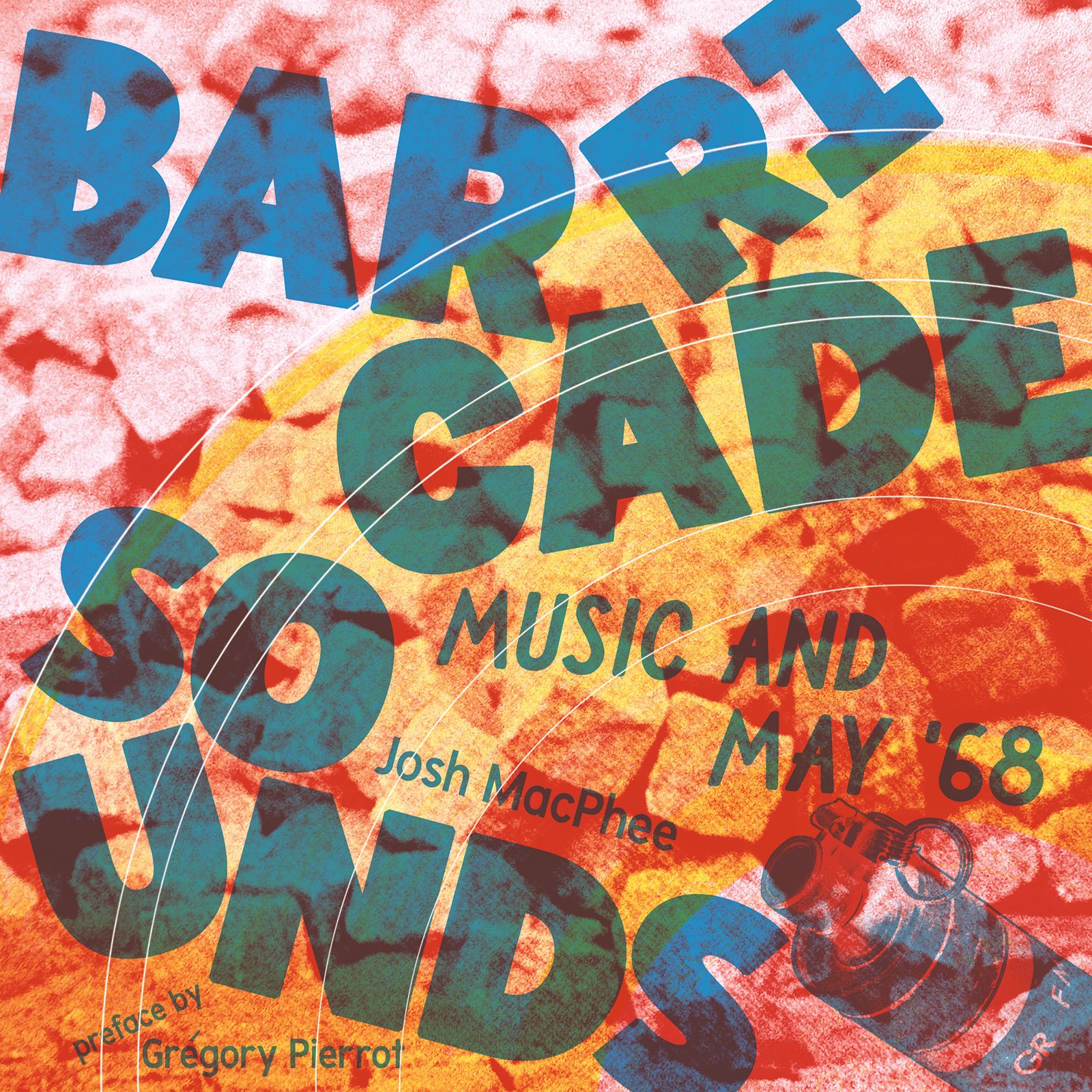
Forthcoming, ships December 2026
Josh MacPhee
Preface by Grégory Pierrot
Art & Culture / Capitalism / Labor / Social Movements
In this short, graphic volume, Josh MacPhee explores the role of music and sound in the student and worker revolt on May 1968 in France through the lens of the vinyl records that emerged out of—and were produced to comment on—the struggle. From the chanson enrages that sung on the barricades, the birth of an independent and politicized music infrastructure in France, the explosive emergence of free jazz and rock scenes, and the enduring legacy and embedding of the sounds and aesthetics of '68 into experimental and pop music to this day, this book shows the impact of liberatory politics and action on our audio landscape.
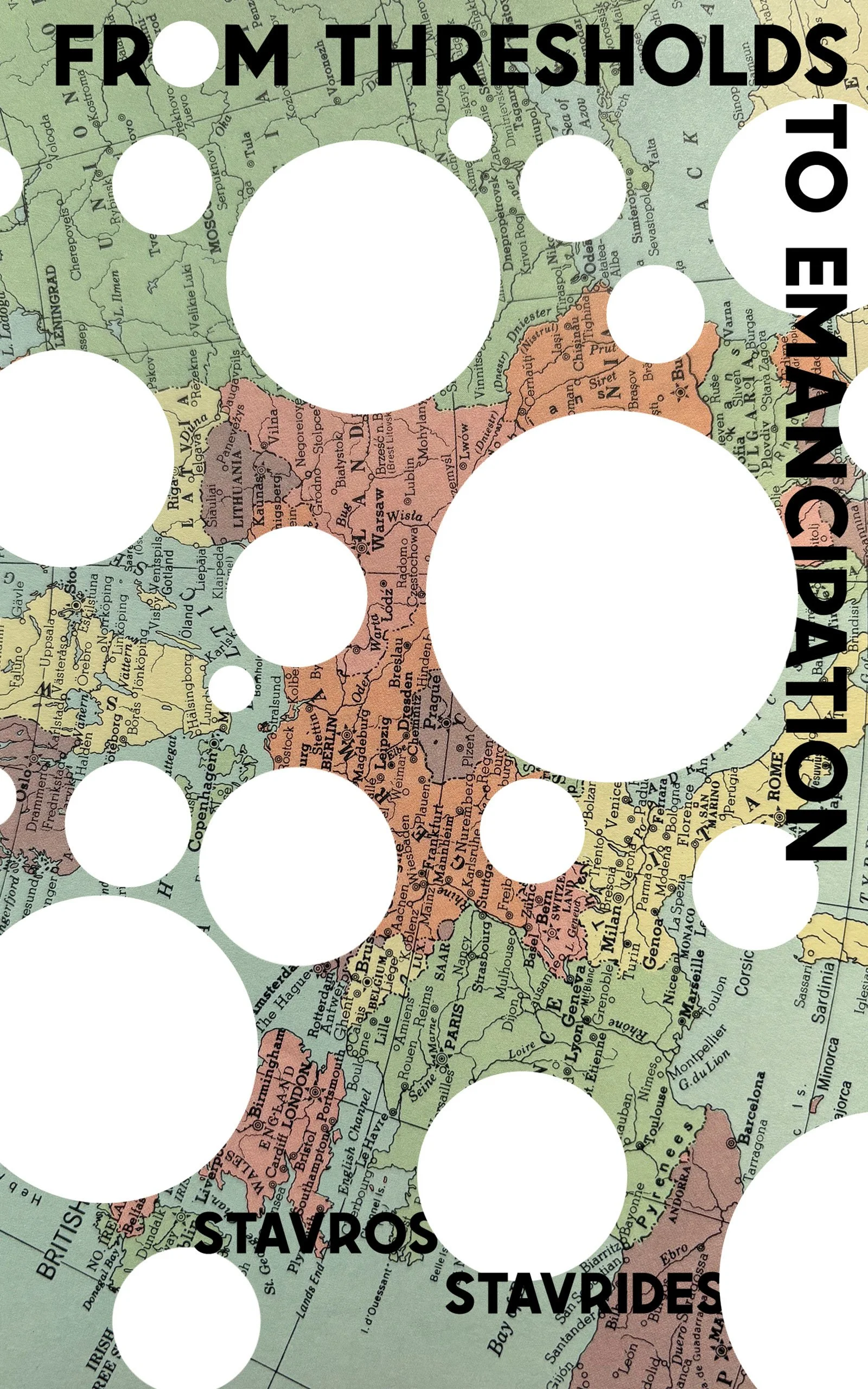
Forthcoming, ships January 2027
Stavros Stavrides
Could we see in today’s urban movements the seeds of an emancipatory future? And could their experiments in collective life teach us that another city and world are imminently possible?
In more than thirty short, aphoristic texts, architect, activist, and theorist Stavros Stavrides explores the “thresholds” of the urban commons in the present. Drawing primarily on three years of documentation from Athens during and after COVID—originally written as monthly contributions to Stavrides’ commissioned column “Thresholds to Emancipation” for Desinformémonos – Periodismo de abajo—these essays examine how practices of commoning shape subjectivity, space, and political imagination.
Stavrides focuses on affective solidarity, “polyrhythmic” urban life, resistance to the domestication of nature and behavior, and the collective cultivation of what he calls “emancipatory habits.” Across these short texts, the city emerges as a site of struggle and experimentation, where everyday practices can open pathways toward autonomy, radical imagination, and democratic life in common.
This new Common Notions edition is a pocket-sized, interventionist volume, with several texts appearing here for the first time. Situating the project in dialogue with thinkers from Benjamin and Barthes to contemporary media theorists—and with Stavrides’ own earlier work on cities as thresholds—the book balances theoretical framing with political urgency. From Thresholds to Emancipation offers both a conceptual entry point to Stavrides’ work and an open field for the experimental and performative directions the essays pursue.
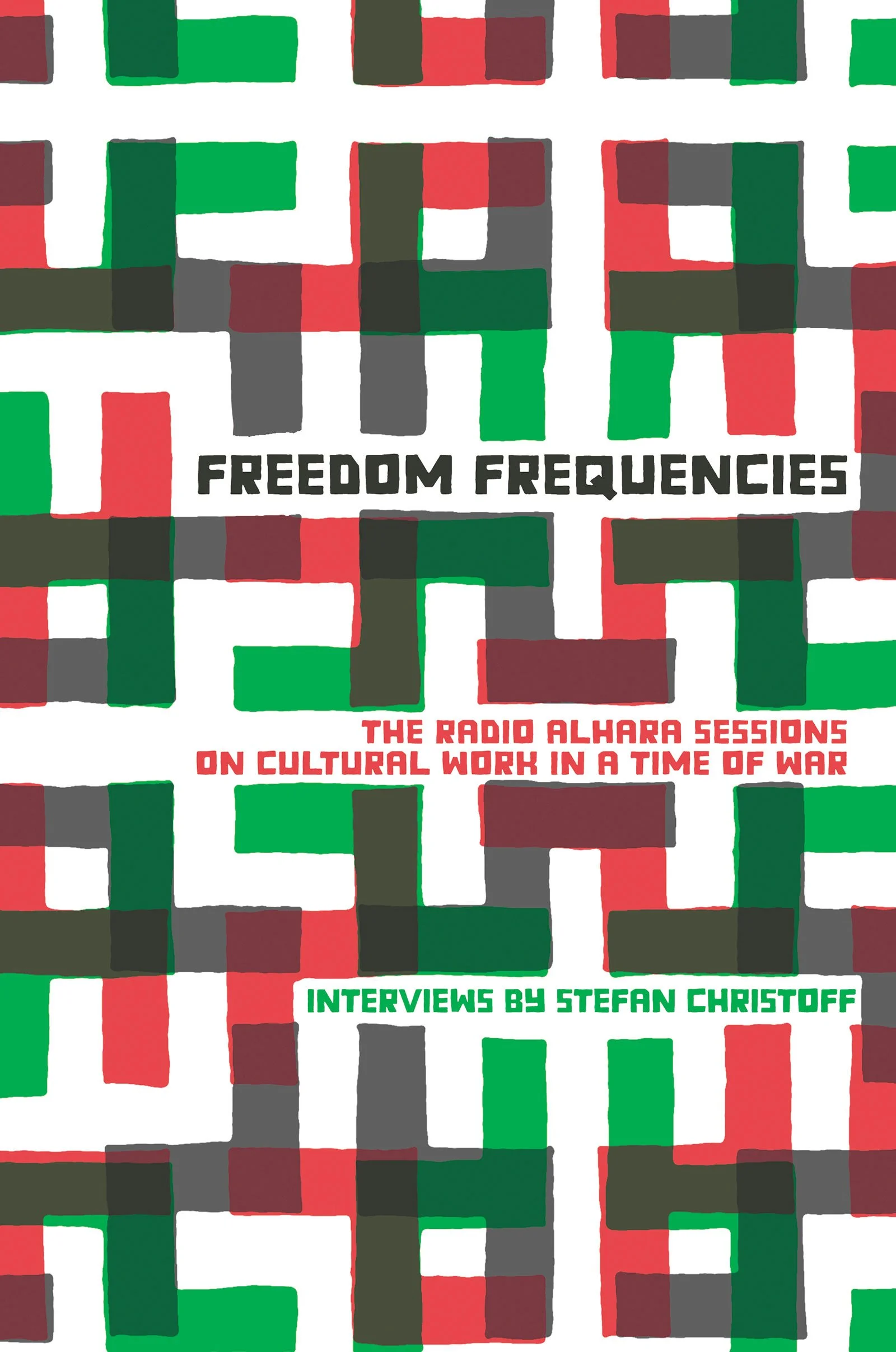
Forthcoming, ships February 2027
Stefan Christoff
Art & Culture / Anticolonial Politics
Freedom Frequencies takes the reader on a journey to the global frontlines of the Palestine solidarity movement where art and activism intersect.
Rooted in a series of conversations broadcast from Palestine on Radio AlHara, this set of interviews offers a window into the contemporary culture of the global Palestine solidarity movement.
There is both a wide geographic and political scope to these conversations; there is a root in a shared focus on supporting the Palestinian struggle for liberation, but the exchange also touches on the energy of artists finding ways to be on the streets and in the studio at once.
This series is about bringing the vitality of the contemporary wave of online radio platforms, at the frontlines of experimental culture around the world, into print. As Radio AlHara is the platform, the collection positions Palestine as the moral compass while exploring intersecting points of struggle and cultural expression, both today and in the past.
Sit with these conversations to really get a reading of the multitude of cultural expressions that thrive at intersecting grassroots levels globally and engage with the contemporary edges of the intersections of art and activism today.
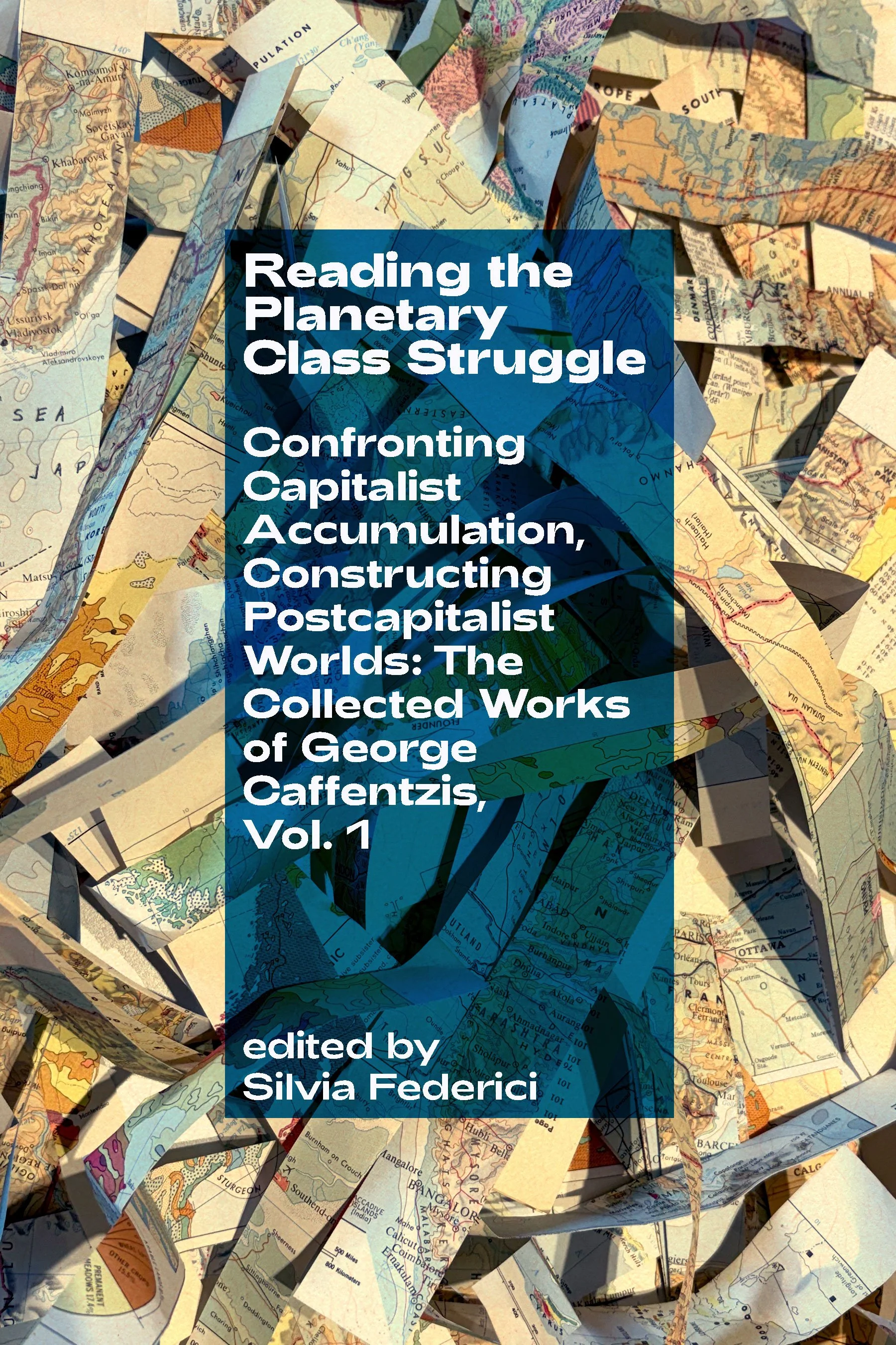
Forthcoming, ships March 2027
George Caffentzis
Introduction by Silvia Federici
Co-edited by Joey Mauro
Labor / Capitalism / Philosophy
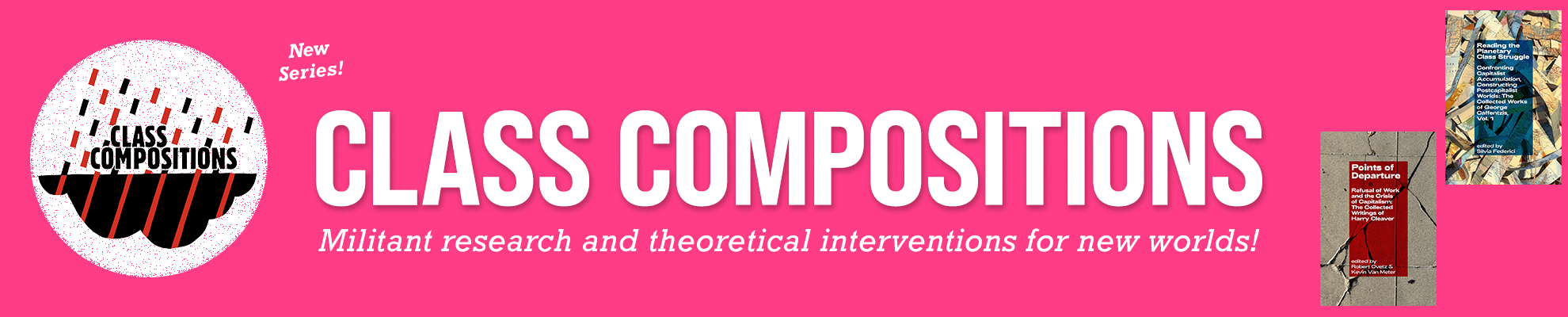
Class Compositions
A profound class struggle account of the historic and ongoing crises of capitalism from the preeminent anticapitalist philosopher George Caffentzis.
George Caffentzis has been the leading philosopher of the anticapitalist movements for over a half-century. With unrivaled clarity and political sharpness, his “reading of the struggles” offer anticapitalist movements worldwide a way of thinking and speaking about capitalism that points to the autonomy and resistance driving its crises, and the points of connection between different sectors of the planetary struggles that result in greater class power in their resistance to capital and in their creation of post-capitalist worlds in common.
More than an explanation of historical events or an interpretation of the present crises, wars, and devastations wrought by capitalist accumulation, these writings are weapons meant to advance the political thinking, strategies and actions of those who struggle to defend their livelihoods, dignity, and autonomy from capital’s exploitation and its destruction.
Organized around key themes of his life’s work, this collection brings the militant writings and scholarship of the planetary class struggle’s most profound thinker together for the first time.
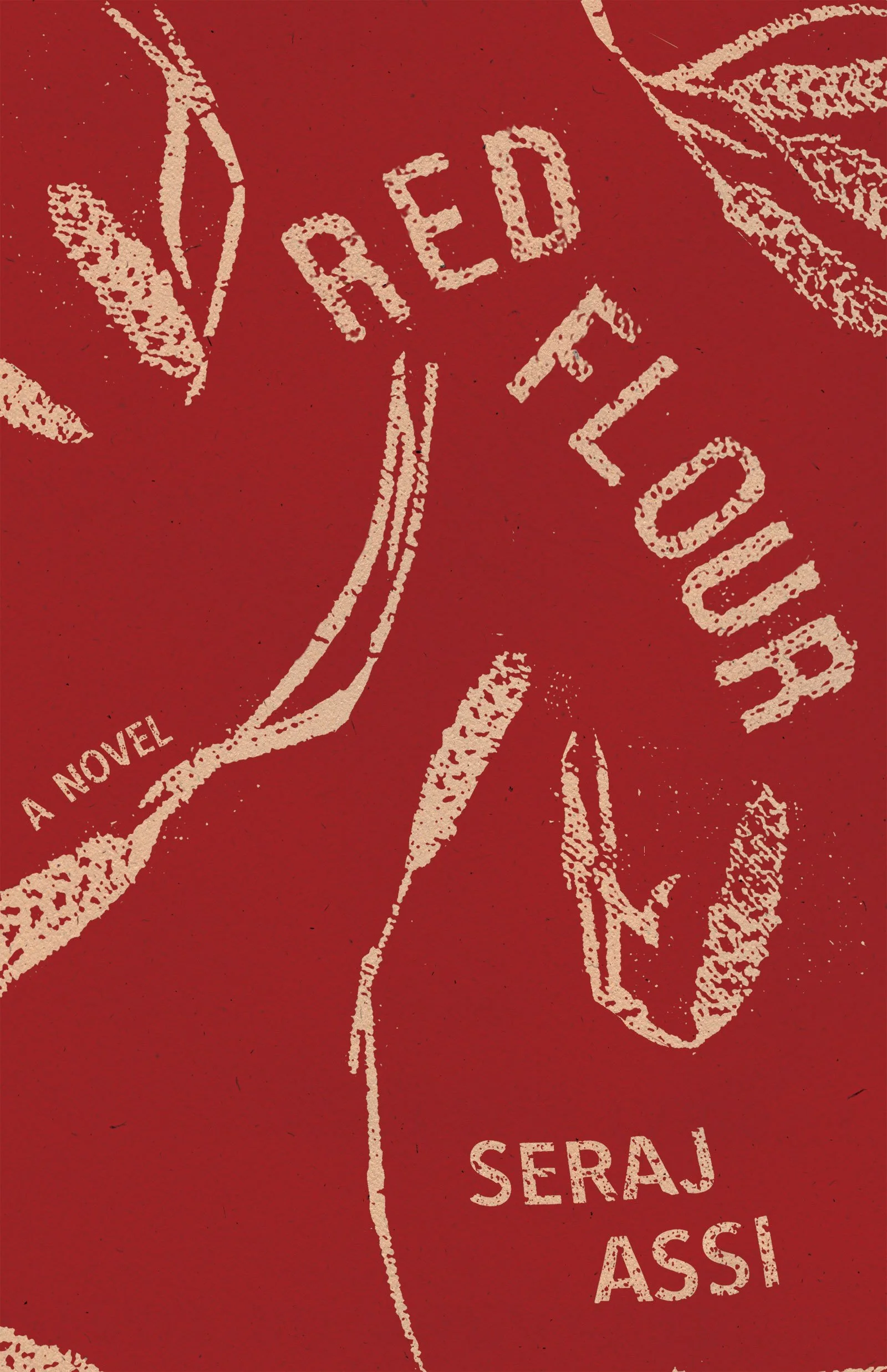
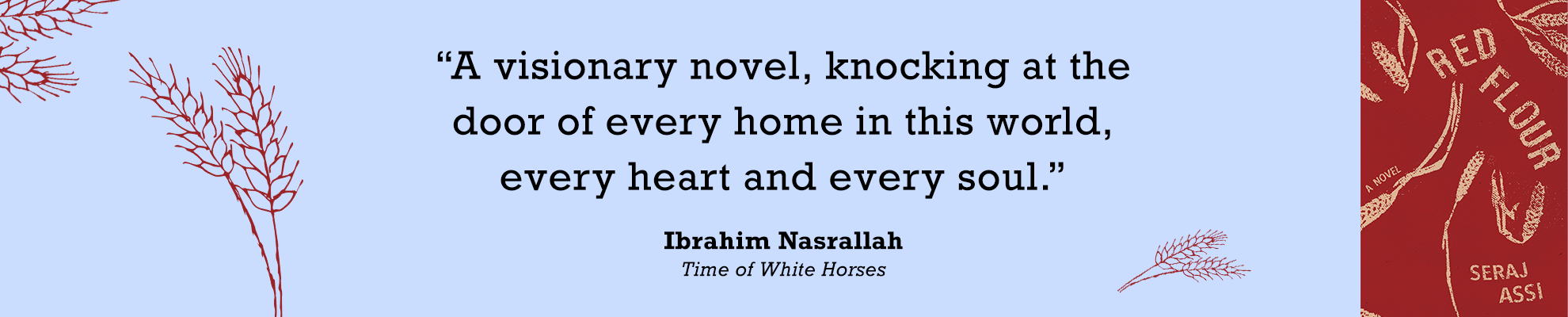
Seraj Assi
Fiction / Anticolonial Politics
Nonaligned
A Palestinian novel about witnessing a massacre, and worse still, surviving it.
Resurrected in Heaven, a bewildered survivor of a massacre flashes back to harrowing events unfolding in an unnamed besieged town, a camp ravished by hunger and swollen with displaced people and starving children, where a hopeful euphoria building at a breadline culminates in a tragedy and bleak dissolution. Centered on the theme of hunger, the essence of bread, and the magic of flour in a place on the brink of mass starvation, Red Flour is essentially a love story that takes place in a breadline. “But can love blossom in a place ravished by hunger?”
Languishing under an unending siege and constant bombardment, the camp soon dwindles into a necropolis where bone-thin children wither away in the arms of hapless parents, dying a most agonizing death, before being loaded hurriedly into waiting wagons and buried in haste. And beyond starvation a flour massacre unfolds, leading to the protagonist’s cry: “Even our bread is massacred, murdered before it’s leavened.”
This is a compelling story of death and survival, of bread and roses, in a world in which humanity is at a brink.
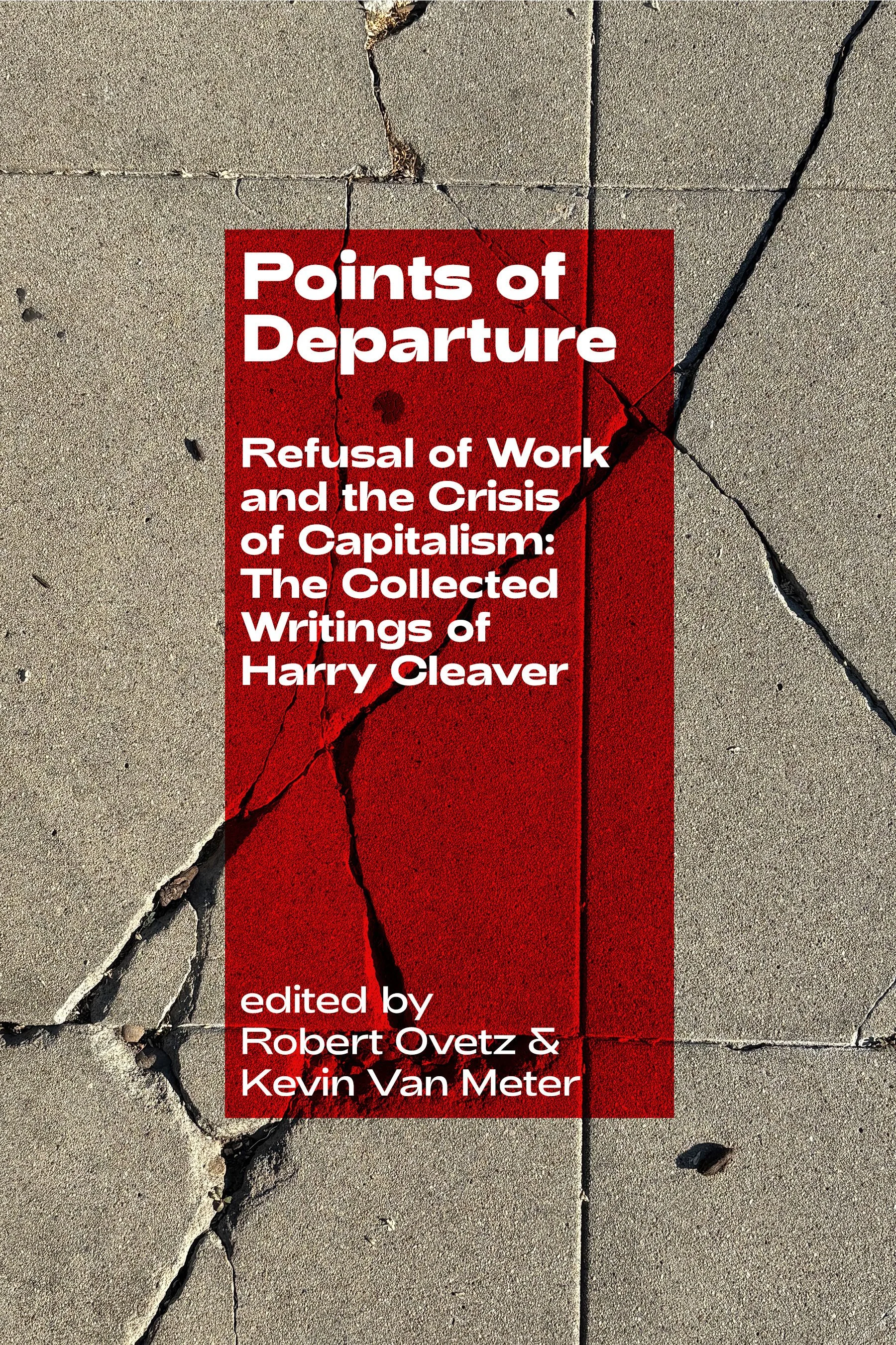
Harry Cleaver
Edited by Robert Ovetz and Kevin Van Meter
Capitalism / Labor / Philosophy
Class Compositions
End capitalism before it ends us.
Harry Cleaver is one of the most expansive Marxist theorists of the global class struggle over work of the last fifty years. Points of Departure is the definitive collection of Cleaver’s best unpublished, translated, or lesser known writings—both historical and current—on working class refusal, class composition, unwaged work, debt, and what he calls the “inversion of the class perspective.” This book puts an essential theoretical weapon into the hands of a new generation of militant workers and organizers re-energizing the class struggle. In these essays, Cleaver rereads Marx to address the crisis of capitalism, articulate strategy for the international anticapitalist movement, and to advance our collective search for points of departure from capitalism, so we can end it before it ends us.

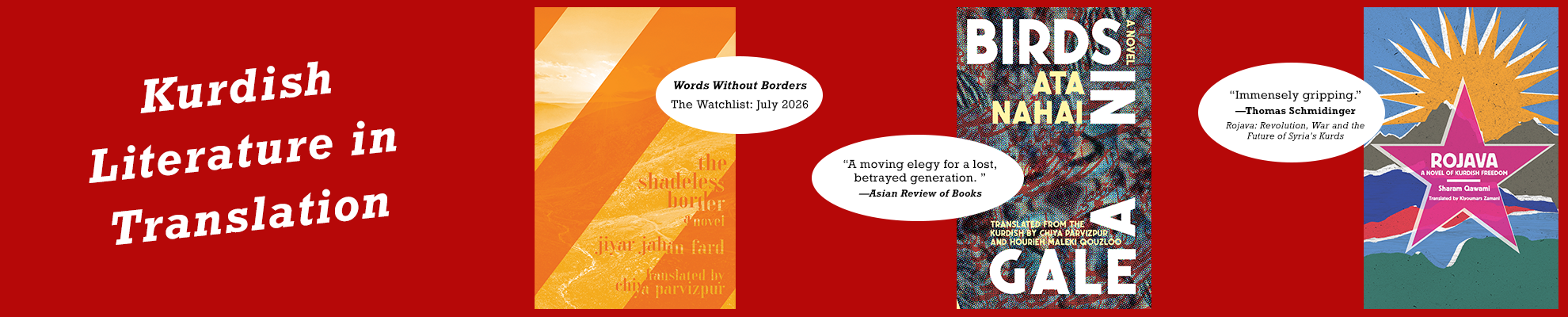
Jiyar Jahan Fard
Translated by Chiya Parvizpur
Over a single day, a family faces grief and exile and history in a surreal tale set at contested borders.
On one side of the border, Azad’s mother stands in her grief, waiting to bury her son. On the other side, his uncle and cousins wait with his body, barred by unrelenting guards from bringing him home without a passport. Borders are a thousand kinds of violence, a vicious declaration of who belongs and who does not. For generations, the Kurdish people have lived divided by these cruelties, carved out amid the ruins of war and empire. This is The Shadeless Border.
Over the next twenty-four hours at the crossing, an uncanny tale unfolds through a chorus of surprising voices: Death and the Border speak to us like old friends; a coffin and a stringed instrument, both carved from the same tree, remember Azad’s family history. Set at the contested frontier between Iran and Iraq, Jiyar Jahan Fard’s masterpiece is a work of haunting intensity, written along the delicate line between Kafka and Kundera, and tracing the man-made boundaries that define the reality of modern-day Kurdistan.
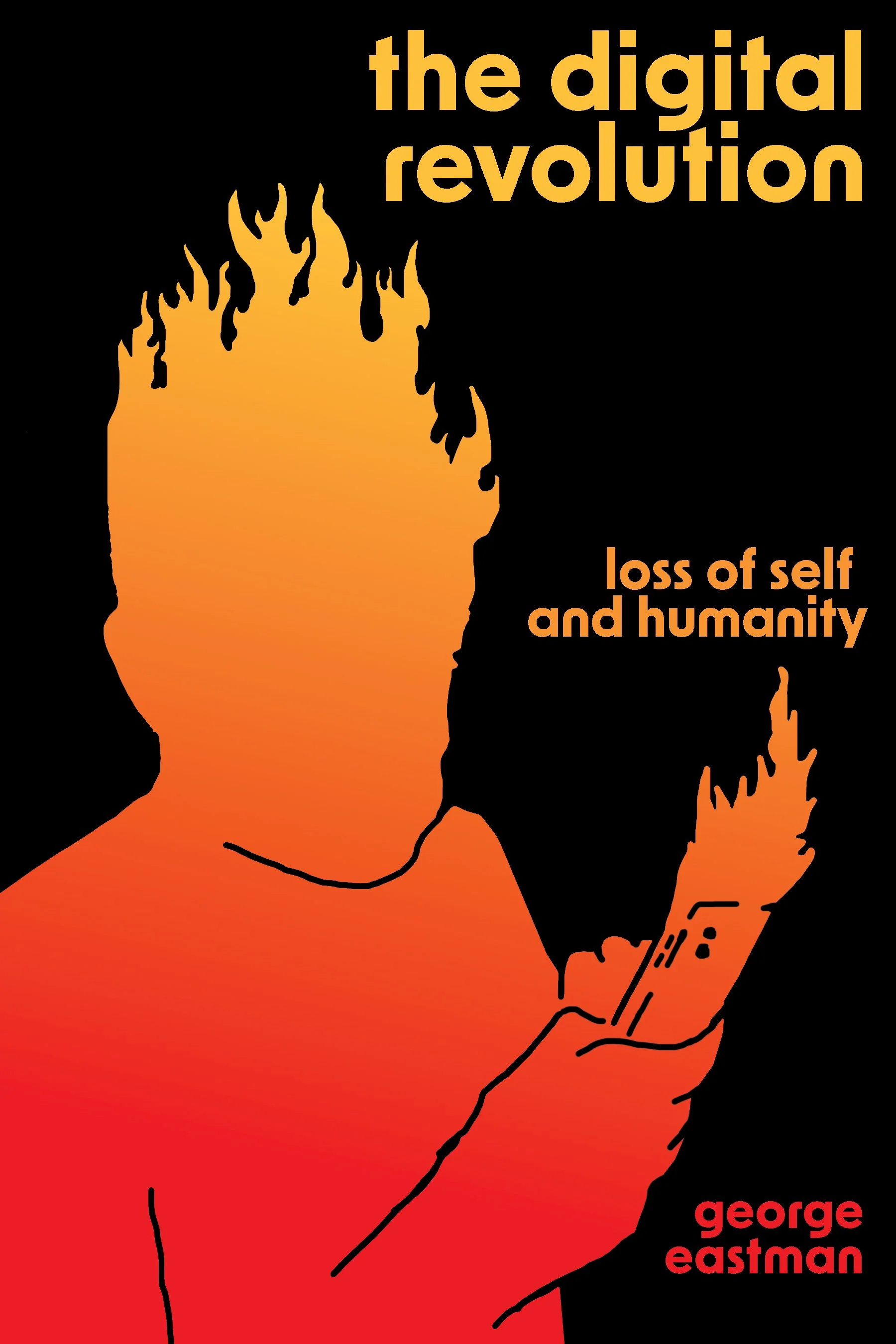
George Eastman
Philosophy / Science & Technology
The Digital Revolution: Loss of Self and Humanity explores how digital algorithms reshape our minds, lives, and society and offers a powerful call to reclaim time, attention, and humanity in an AI-driven world.
Digital algorithms are reshaping our minds and lives, trading convenience for a loss of self, agency, connection, and humanity. The Digital Revolution, based on more than sixty years of research across multiple fields—including psychology, technology, and philosophy—pursues a holistic approach to answering the question of how digitization affects us and our relation to the world around us.
The Digital Revolution takes the reader on an unexpected journey, starting from the great tech revolutions of the early twentieth century and the invention of the first modern computers in the post-World War II era to inside our very own minds, exploring the neural mechanisms of addiction, altered states of consciousness, and age-old questions around perception versus reality.
Today, despite accelerated digital connectivity and access to information, we feel lonelier, adrift in an era that consumes our time and attention. By college, most young people have already spent tens of thousands of hours on screens, immersed in a silent Digital Revolution that has quietly established a subversive foothold in our previously analog lives. You want to put down your phone, but you can’t. You want to quit social media, yet you vacillate. You want to read a book but keep picking up your phone instead. You feel like time is slipping away. These devices promise to save us time and make life more convenient, but all they do is keep us busy—and not with the tasks we want to do. Though we sense the negative impact, breaking free is difficult.
Despite clear evidence of harm, the people most affected—parents, teachers, children, and adolescents—lack accessible information on this topic. Drawing on George’s long career as a philosopher and educator, this book offers insights from personal lived experience, tracing technological shifts from the 1930s to today. It aims to empower readers to become intentional participants in this revolution, reclaiming time, connection, and self-awareness. As AI is becoming increasingly dominant in shaping our daily lives, professional endeavors, and social interactions, The Digital Revolution is both a warning and a guide to conscious change.
The Digital Revolution seeks not only to understand this development—what is “artificial intelligence” and how should we understand its role in our lives?—but also suggests how we can maintain human control in a world where digital algorithms set the tone and the pace of work, leisure, communication, consumption, and so much more.
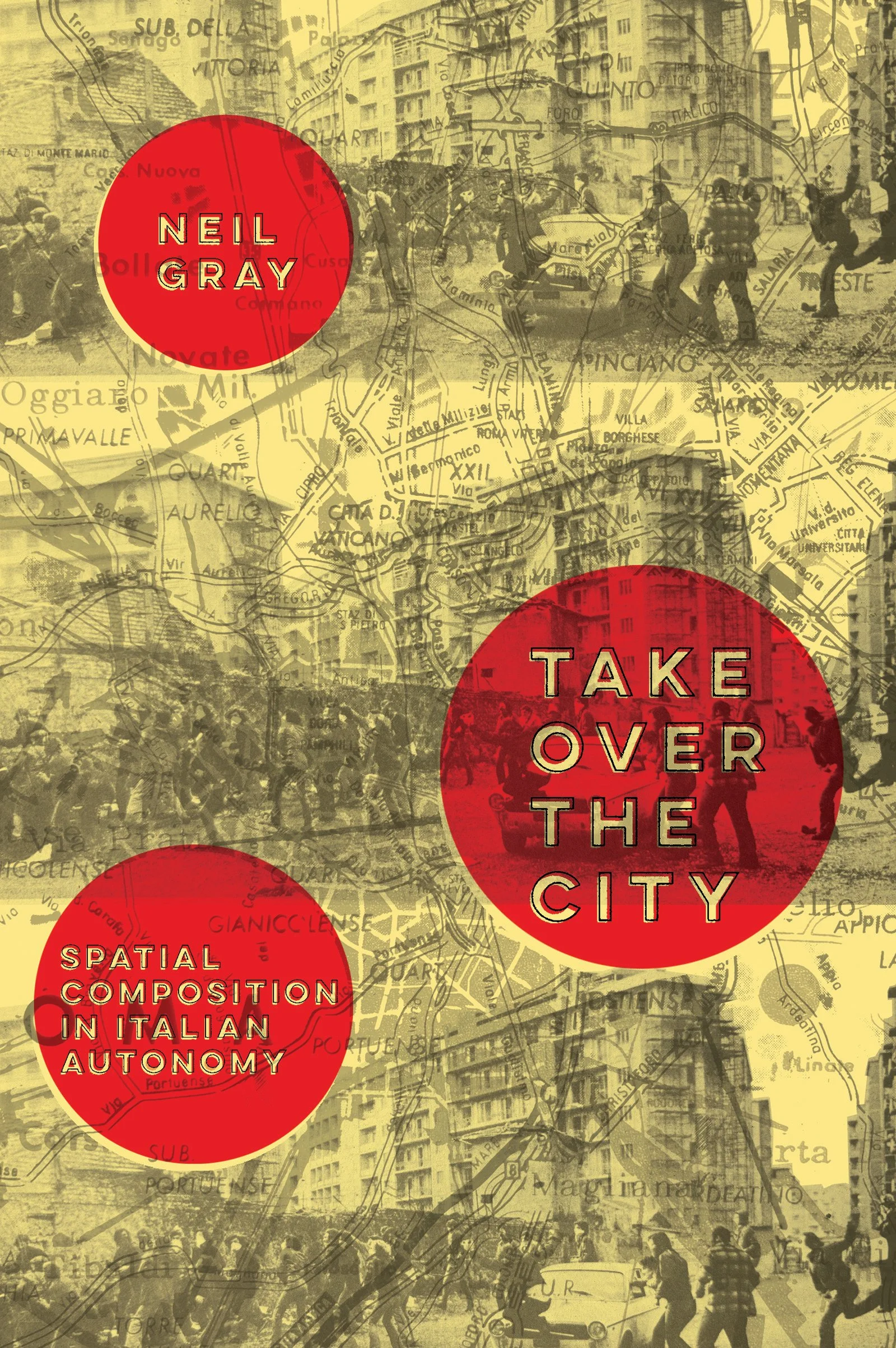
Neil Gray
Urban Studies / Capitalism / Philosophy
Take Over the City provides the first comprehensive spatial analysis of Italian operaismo and the extraordinary urban struggles of 1970s Italy.
Take Over the City is the first systemic spatial account of Italian operaismo. Drawing on the Marxist urban theory of Henri Lefebvre and others, the book situates the struggles of operaismo, especially in the 1970s, within an incipient-yet-tendential phase of global urbanization. In doing so, the book draws attention to previously neglected urban struggles in the wider social factory, recognizing these as immanent to the new spatial composition of capital in Italy.
The book argues that these innovative urban struggles carry important lessons for contemporary forms of organization and social conflict in the sphere of social reproduction. They drew attention to, and acted within, a tendency that has only become more entrenched since the 1970s: the centrality of urbanization and real estate to national political economies. If urbanization has become increasingly central for capital accumulation processes, it follows that urban struggle must become increasingly central to anti capitalist struggle. The struggles to ‘Take Over the City’ in 1970s Italy provide an important marker of how this might be done in the current era.
By excavating the urban struggles of 1970s Italy with a spatialized understanding of operaismo’s signature theoretical contribution—class composition—the book provides both an important contribution to radical urban history and a window into how current urban struggles might be theorized. It seeks to both spatialize readings of operaismo through the concept of spatial composition and to radicalize urban theory with Italian autonomist Marxist thought and practice. This should be of interest to those interested in autonomist praxis more generally, and those interested in radical urban history, contemporary urban struggles and social reproduction.
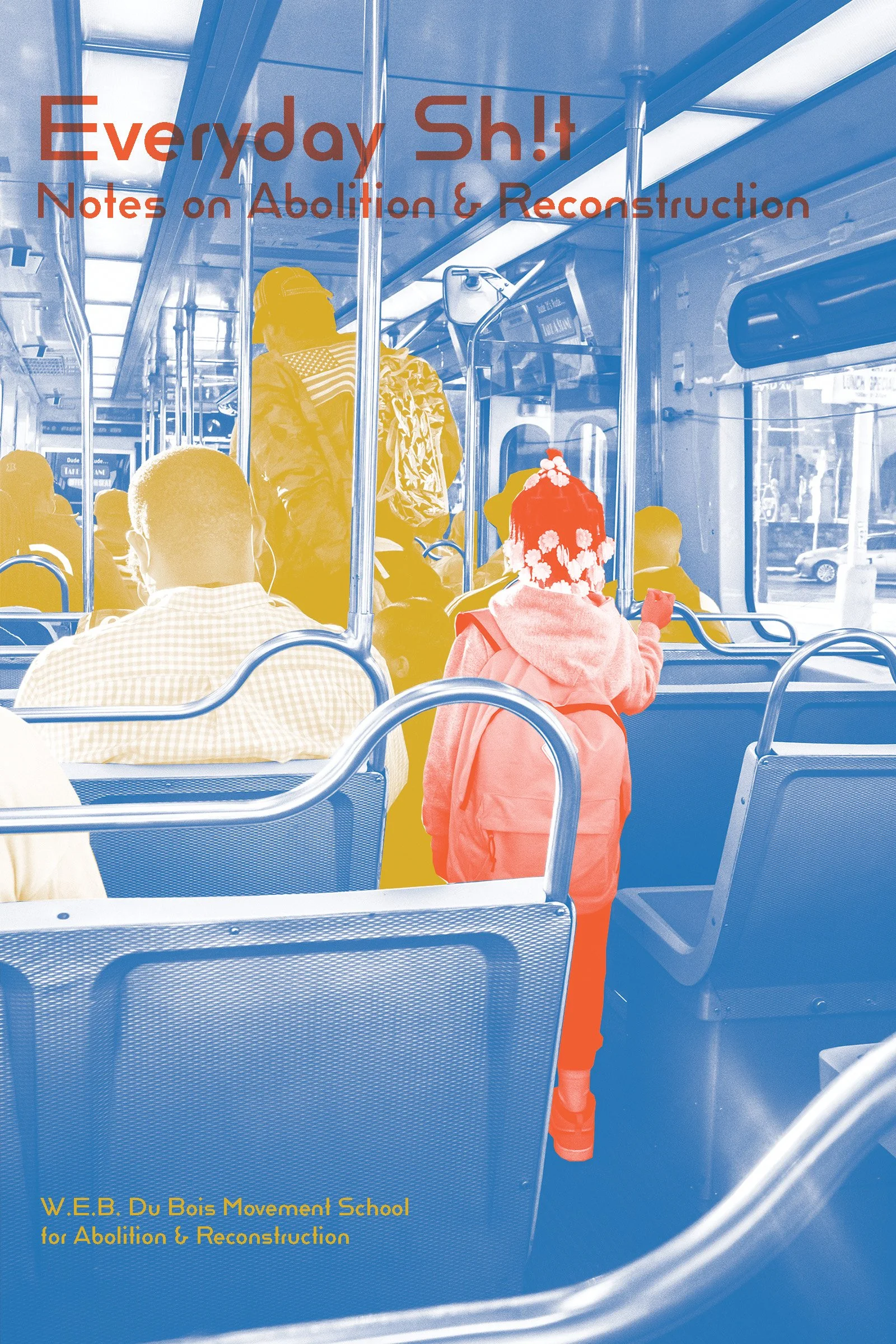
Abolition Journal Working Group
The inaugural issue of the movement-focused and future-forward Abolition Journal quarterly after it was relaunched by the Philadelphia-based Abolition School.
This pilot issue of the revived Abolition Journal is produced by the Philadelphia-based W.E.B. Du Bois Movement School for Abolition & Reconstruction. It brings together two dozen urgent and timely interventions in political debates around abolition and aims to show how this abstract idea manifests itself in our daily lives.
These interventions, authored by a diverse cast of contributors, including academics and attorneys, so-called felons and physicians, artists and educators, and parents, playwrights and poets, explore the everyday experiences that come with trying to live out an abolitionist politics. In the words of the editors, these experiences include “the daily victories and errands, reflections and runarounds, gestures and drama, habits and heartbreaks, setbacks and surrenders, excuses and evasions, breakdowns and breakthroughs.”
The issue curates a variety of content, including political essays, short stories, poetry, interviews, and speeches, each resonating and reflecting in their own unique way on the central theme “Everyday Sh!t.” They offer thoughts and reflections on structure, practice, care, and direction to deepen existing movement knowledge and invite new audiences to see themselves mirrored within this work.
Without exception, these are stories of sincere experience mixed with radical poetic visions culled from the issue contributors’ plurality of pasts, presents, and prefigurative futures. Grounded in Philadelphia, yet looking out onto the whole wide world, Abolition Journal aims to reflect the lived complexity that can be messy and self-defeating, but equally authentic and inspiring.

Danielle Chynoweth & Elizabeth Adams
How can we empower ourselves and our communities to make lasting social change?
Remaking Democracy is a guidebook for social change. We are at a watershed moment of rising fascism and rising seas: our institutions are failing us, health crises ravage our communities, and the natural world has been thrust into catastrophic climate freefall. Despair threatens to overtake hope in our visions of the future.
In these pages, organizers and teachers Danielle Chynoweth and Elizabeth Adams offer analysis and strategy for sustainable transformation. This accessible and practical resource presents case studies alongside a design toolkit that equips readers to participate in creating the abundant worlds we want. Remaking Democracy empowers us—individually and in groups—to make lasting social change on every level, so that we who are affected by systems can become their creators.

Steven Salaita
Rodrigo Suarez’s Coyote Road is a veritable smash hit. Anyone who’s anyone is reading it, and the accolades and speaking invitations are pouring in. There is just one problem: Rodrigo didn’t write it. Jerry Turley did. And no one believes him.
Thus, Jerry—an unimpressive professor at an Appalachian university—embarks on an obsessive, self-destructive crusade to prove his authorship and expose Rodrigo as a thief and an impostor. It doesn’t take much Googling to discover that “Rodrigo” is not the man he claims to be. Convincing people to care about it proves much harder.
In this uncomfortable campus farce, Steven Salaita holds a mirror to the nagging questions of authenticity and appropriation that occupy college campuses and literary institutions alike, daring to ask us who really stands to benefit from our era of sensitivity and self-regard.

Andrew Ross
Ecology / Anticolonial Politics
From acclaimed public scholar Andrew Ross, groundbreaking reporting on climate change and the horizons of a just future from Palestine, UAE, Arizona, and China.
Between the summers of 2023 and 2024, temperatures rose, coastal areas flooded, and droughts and fires raged inland. Unprecedented tornadoes, hurricanes, and typhoons of astonishing force revealed the disturbances roiling the air and the oceans. More species than ever before disappeared from the planet in what scientists are calling Earth’s Sixth Great Extinction. Reports from the front lines of the climate crisis have always been grim, but this past year was worse than any other, measurably more catastrophic in more ways for more animals and more people.
In his travels during this tumultuous year, public intellectual and noted scholar Andrew Ross criss-crossed the world, visiting Ramallah (Palestine), Dubai (UAE), Phoenix (USA), and Shanghai (China)—some of the landscapes most disturbed by human activity, whether through active warfare or massive development projects. But rather than offering another eco-polemic or recalling for us the dread prognostications of Malthus in the 19th century or Ehrlich in the 20th, The Weather Report is a clear-eyed and essentially optimistic book that proposes a pragmatic, just, and urgent new common ground reestablishing scalable projects of mutual aid and care as a new, essential center for our economic, ecological, and social well-being.

Dhoruba Bin Wahad
Edited by Kalonji Jama Changa
Foreword by Joy James
Black Liberation / Antifascist Politics
Lessons for the antifascist fight now and to come rooted in well-learned lessons from Black liberation.
Revolution In These Times delivers veteran Black Panther Party member, Black Liberation Army leader, and former political prisoner Dhoruba Bin-Wahad direct in his own words to offer us an analysis of how today's resurgent right-wing agenda is an outgrowth of the ongoing and historical political struggle between the oppressed masses and settler-colonialism of America and Europe. Bin-Wahad not only explores how white supremacist politics have recaptured the American imagination but also prescribes a radical grassroots response to counter this ideology and supplant the violent state repression that keeps it in power.
Bin Wahad pieces together fight-back strategies against the police and the state through a process of mobilizing in the streets, on the block, and in our communities, while gathering mass through antifascist coalition-building in a manner unrealized since the 1960s and 1970s. In this series of interviews, Bin Wahad grounds us in the now, seamlessly weaving together firsthand accounts of his own and other’s revolutionary past in the history of struggle, alongside lessons for today.
Edited by Alyosha Goldstein and Simón Ventura Trujillo
Antifascist Politics / Organizing
Explores the significance of fascism for understanding authoritarianism today and centers anti-imperialist movements of Black, Indigenous, and colonized peoples.
We must, as For Antifascist Futures urges, take antifascism as a major imperative of movements for social change. But we must not limit our analysis or historical understanding of the rise of the right-wing authoritarianism in our times by rooting it in mid-twentieth century Europe. Instead we turn to a collection of powerful BIPOC voices who offer a range of anticolonial, Indigenous, and Black Radical traditions to think with.
For Antifascist Futures takes seriously what is new in this moment of politics, exploring what the analytic of fascism offers for understanding the twenty-first century authoritarian convergence by centering the material and speculative labor of antifascist and antiracist social movement coalitions. By focusing on the long history of Black and Brown antifascist resistance that has been overlooked in both recent conversations about racial justice as well as antifascist resistance, the essays, interviews, and documents included here make clear how racialized and colonized peoples have been at the forefront of theorizing and dismantling fascism, white supremacy, and other modes of authoritarian rule.
By linking a deep engagement, both scholarly and practical, of racial justice movements with an antifascist frame, and a global analysis of capitalism the contributors have assembled a powerful toolbox for our struggles. The editors, widely recognized ethnic and American studies scholars, offer a groundbreaking collection with contributions from Johanna Fernandez, Manu Karuka, Charisse Burden-Stelly, Zoé Samudzi, and Macarena Gomez-Barris among others.

Jack Z. Bratich
Antifascist Politics / Gender / Necropolitics
Rooted in an understanding of how the fascist body is constructed, we can develop the collective power to dismember it.
Fascist and reactionary populist forces have undeniably swelled in the US in recent years. To effectively counter fascist movements, we need to understand them beyond their most visible and public expressions. To do this, Jack Bratich asserts, we must dig deeper into the psyche and body that gives rise to fascist formations. There we will find microfascism, or the cultural ways in which a fascist understanding of the world is generated from the hatreds that suffuse everyday life.
By highlighting the misogyny at fascism’s core, we are able to observe a key process in the formation of a fascist body. Recognizing the microfascism behind appeals to recover the past glory of white male subjects created by earlier foundational wars, we see how histories of settler colonialism, genocide, and domination are animating the deadly mission of fascism today. By focusing on the variety of ways the resurgent fascist tendency courts its own destruction (and demands the destruction of others), we can trace how fascism refines and expands the death and annihilation that underpins capitalist, colonial, and patriarchal systems.
The implications of On Microfascism are far-reaching and unsettling. Still, Bratich insists, the new fascism is not as powerful as its adherents wish us to believe. To defeat it, we must develop and defend a “micro-antifascism” grounded in the ethics of mutual aid and care in the everyday. Rooted in an understanding of how the fascist body is constructed, we can develop the collective power to dismember it.

Long-Haul is a quarterly magazine of worker writing about culture and organization on and off the shop floor, past and present, in and outside of unions.
Common Notions is proud to assist in their sales and distribution.
TRANSMISSIONS
Little Scraps and Memory: Lineages of Workers’ Inquiry in the United States
Patrick King
SHOPTALK
Nada Se Construye Sin Estas Manos
(Nothing Is Built Without These Hands)
Alexandra Thyme
We Feel It from the Warehouse Floor: Amazon’s Immigrant Workers Under Attack
Lula Valentine
Liquid Assets: How the Maquiladora System Built the World’s Most Profitable Blood Business
Sam Russek
WORKER INITIATIVE
If You Don’t Like the Smell, Blame It on Cherelle: The Philadelphia Municipal Strike of 2025
Dan Dedomenico
Sign of the Times: An Account of the First Tech Workers’ Strike
John Cruickshank, with other members of the New York Times Tech Guild
LETTERS
Letters to the Editors
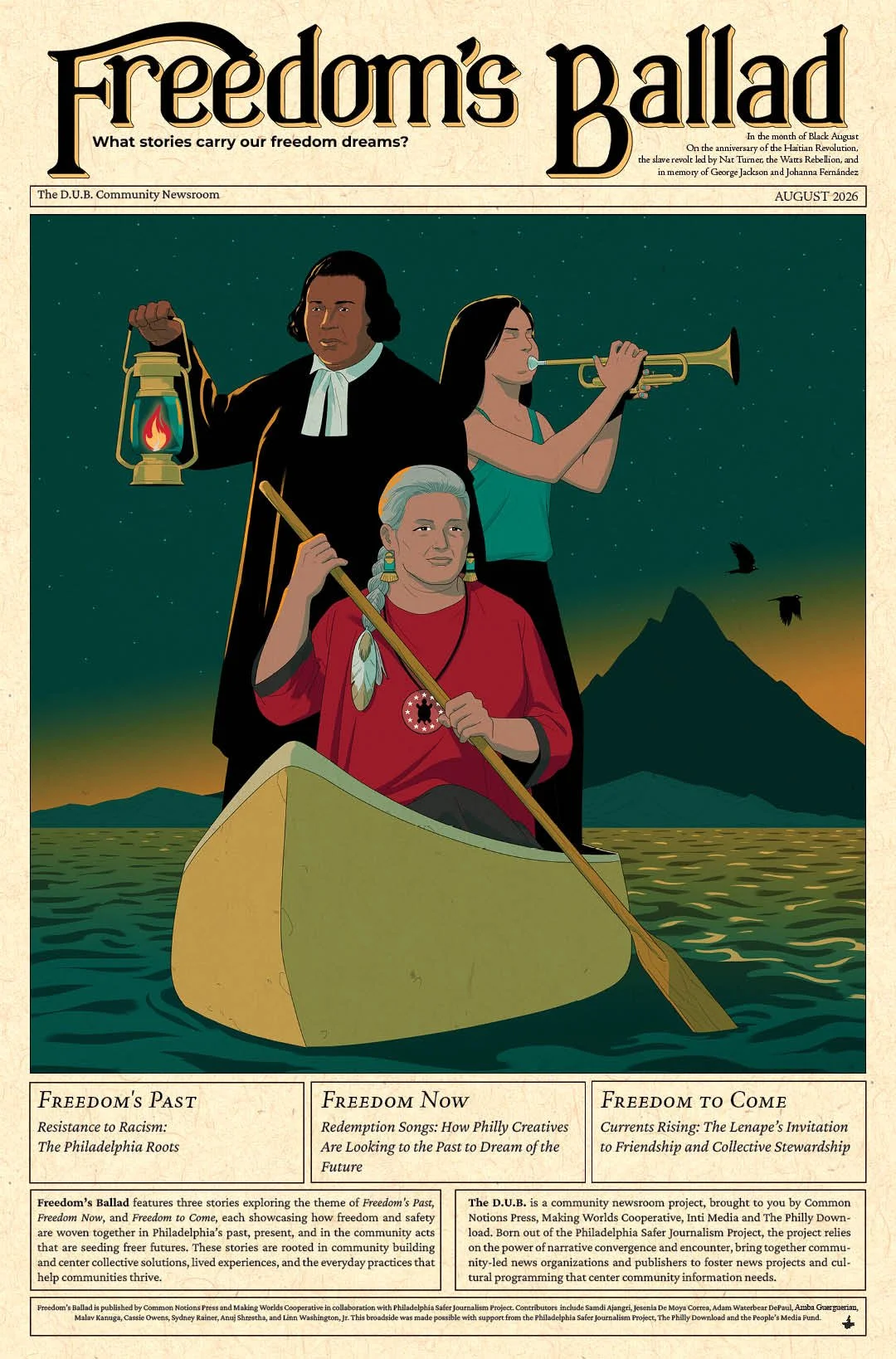
The D.U.B. Community Newsroom
Partner Publisher | Common Notions Press, Making Worlds Cooperative, Inti Media and The Philly Download
Freedom’s Ballad features three stories exploring the theme of Freedom Past, Freedom Now, and Freedom to Come, each showcasing how freedom and safety are woven together in Philadelphia’s past, present, and in the community acts that are seeding freer futures. These stories showcase community building and center collective solutions, lived experiences, and the everyday practices that help communities thrive.
Read the stories:
Freedom Past | Resistance to Racism: The Philadelphia Roots
By Linn Washington, Jr.
Freedom Now | Redemption Songs: How Philly Creatives Are Looking to the Past to Dream of the Future
By Cassie Owens
Freedom to Come | Currents Rising: The Lenape’s Invitation to Friendship and Collective Stewardship
By Malav Kanuga with Adam Waterbear DePaul
Freedom’s Ballad is published by Common Notions Press and Making Worlds Cooperative in collaboration with Philadelphia Safer Journalism Project. Contributors include Samdi Ajangri, Jesenia De Moya Correa, Adam Waterbear DePaul, Amba Guerguerian, Malav Kanuga, Cassie Owens, Sydney Rainer, Anuj Shrestha, and Linn Washington, Jr.
The D.U.B. is a community newsroom project, brought to you by Common Notions Press, Making Worlds Cooperative, Inti Media and The Philly Download. Born out of the Philadelphia Safer Journalism Project, the project relies on the power of narrative convergence and encounter, bring together community-led news organizations and publishers to foster news projects and cultural programming that center community information needs.
This broadside was made possible with support from the Philadelphia Safer Journalism Project, The Philly Download and the People’s Media Fund.
Published in the month of Black August; on the anniversary of the Haitian Revolution,the slave revolt led by Nat Turner, the Watts Rebellion, andin memory of George Jackson and Johanna Fernández.
Daniel Tucker
Josh MacPhee
Art & Culture / Abolition / Urban Studies / Partner Publisher
A new 2026 reprint of this zine originally published in 2018, slightly redesigned, some corrections, and better printing!
This issue of Pound the Pavement is a look back on—and documentation of—the God Bless Graffiti Coalition project. The God Bless Graffiti Coalition was a short lived public art project conceptualized by Josh MacPhee and Daniel Tucker, and actualized by an international network of graffiti writers, street artists, and sympathizers in the late 1990s and early 2000s.
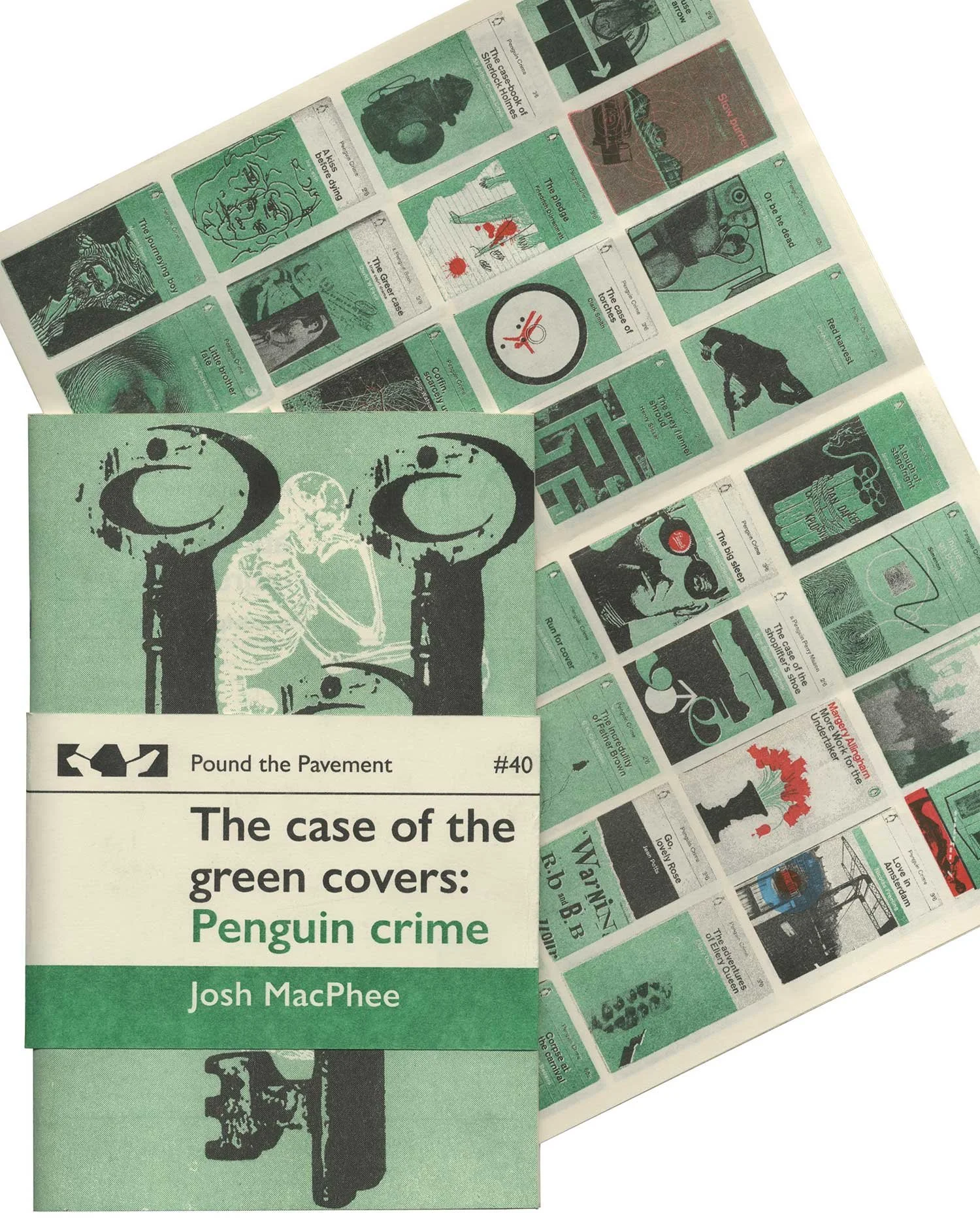
Josh MacPhee
Art & Culture / Partner Publisher
In 1962, Penguin Books carried out an unprecedented experiment in Anglophone paperback book cover design. Deploying a new design grid created by Romek Marber, they released a flood of crime and mystery novels wrapped in simple, efficient, green and black covers. An unheralded peak of late-Modernist design, many of these covers still stand out today as some of the most interesting and compelling ever created for Penguin—or any press!
This publication, in which Josh MacPhee tells the history of this design experiment, includes nearly 70 cover reproductions as well as a bibliography and bios of key designers. In addition, it features a 2-sided poster with a giant grids of 128 book covers.
The content draws on earlier research MacPhee had done on the Penguin Crime series for his Judging Books By Their Covers blog post series on Justseeds.
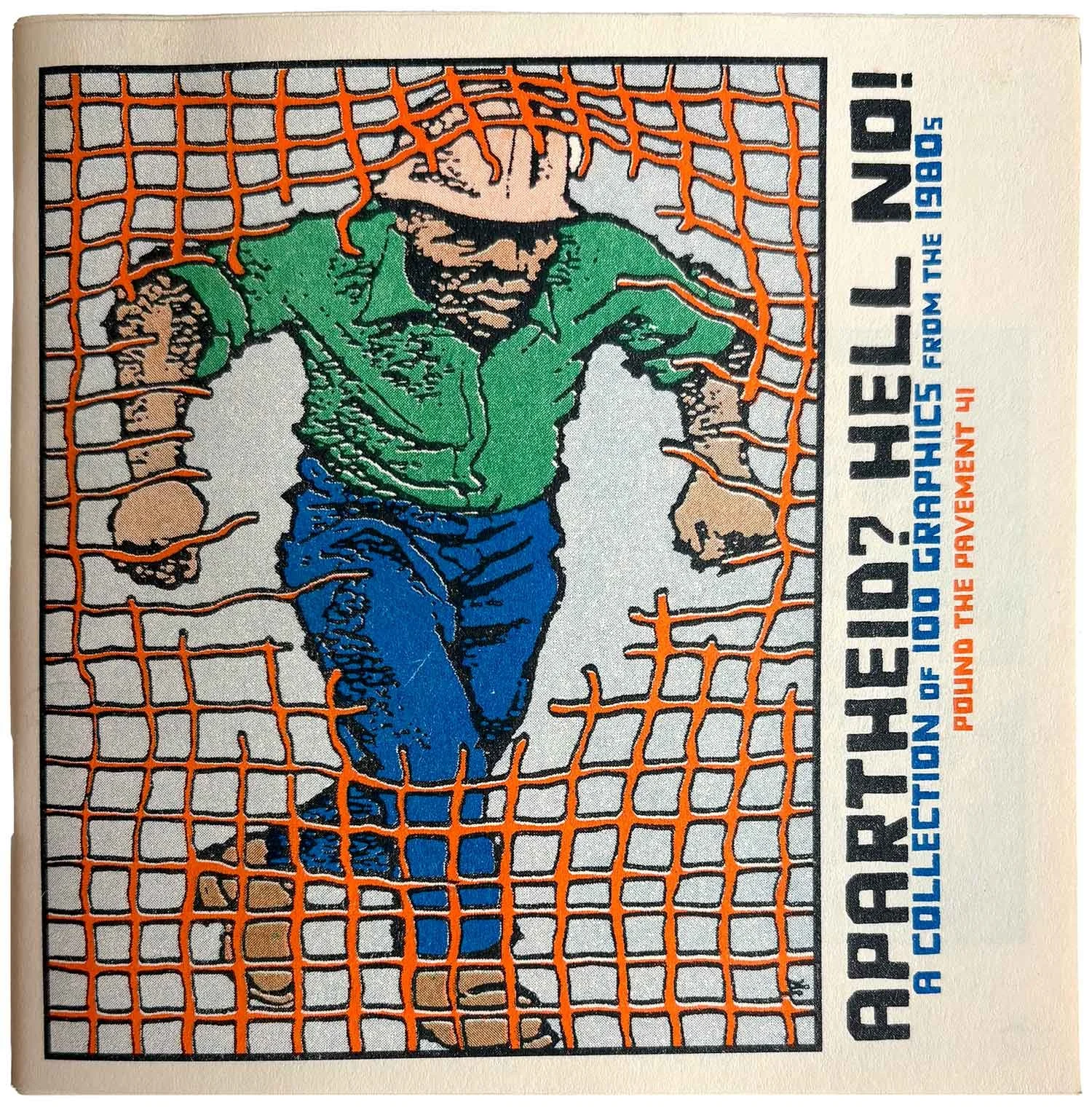
Josh MacPhee
Art & Culture / Social Movements / Partner Publisher
Apartheid? Hell No! is a zine collecting over 100 anti-apartheid graphics from South Africa and the anti-apartheid solidarity movement in the 1980s, and it really feels like there is really no better time to recirculate this treasure box of potent graphics.
I originally found much of this content in an large photocopied document I unearthed from the library of the University of Colorado back in the late 1990s. While I photographed a lot of the imagery, the larger frame for it has been lost to time—I have no documentation of who originally assembled the content, although I suspect it was a grad student project from the late 1980s.
I've collaged the material in a similar manner to my Free Leonard Peltier zine (Pound the Pavement #22) from years back, but have also attributed the content whenever possible.
![In One Hand the Gun: Militancy in South Asia [Jamhoor Magazine]](https://images.squarespace-cdn.com/content/v1/53f742fee4b017241942bdbe/5cfd6bd2-cc9b-424b-86fc-cf1935655a7c/Screenshot+2025-11-18+at+1.28.02%E2%80%AFPM.png)
This issue explores armed resistance from the vantage point of South Asia. It delves into debates surrounding revolutionary violence and seeks answers in the subcontinent. Thanks to the glorification of Gandhi and his non-violent tactics, South Asia occupies a prominent place in the alleged success story of pacifism. Yet it is also a region where numerous national liberation and anti-imperialist struggles show that revolutionary violence has often been a key instigator and driver of history’s so-called locomotive. The issue presents the political and historical contexts that necessitated such revolutionary violence in lesser-known liberation movements across South Asia, from Balochistan to Bangladesh.
Launched in 2018, Jamhoor is a Left media platform for South Asia and its diasporas. Our name — “the people” in Urdu — distills our commitments: we are for the people. To be for the people means understanding and combating the structures that weigh us down: imperialism, capitalism, patriarchy, casteism, racism, and queerphobia. To be for the people is to refuse the borders that divide us: it is internationalism. To be for the people is to imagine and build radical alternatives that let us thrive: it is to remake the world.

Carry your books in style and and and and and think about the endless possibilities of new worlds to build!
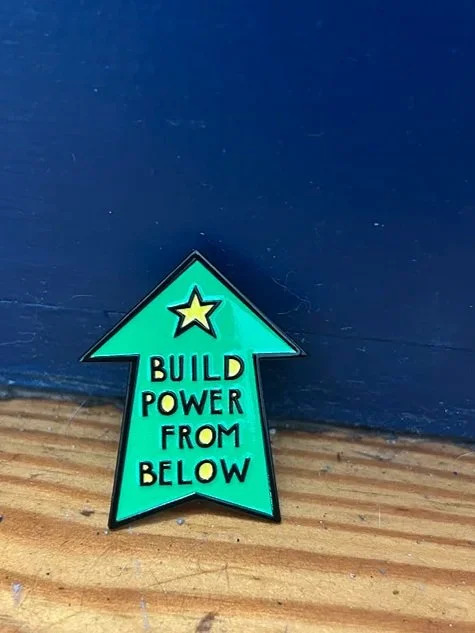
Build Power From Below!
This pin was designed by Josh MacPhee to accompany the publication of Yes, It’s Possible! A Handbook For Building Power From Below by João França and The Platform for People Affected by Mortgages (PAH).
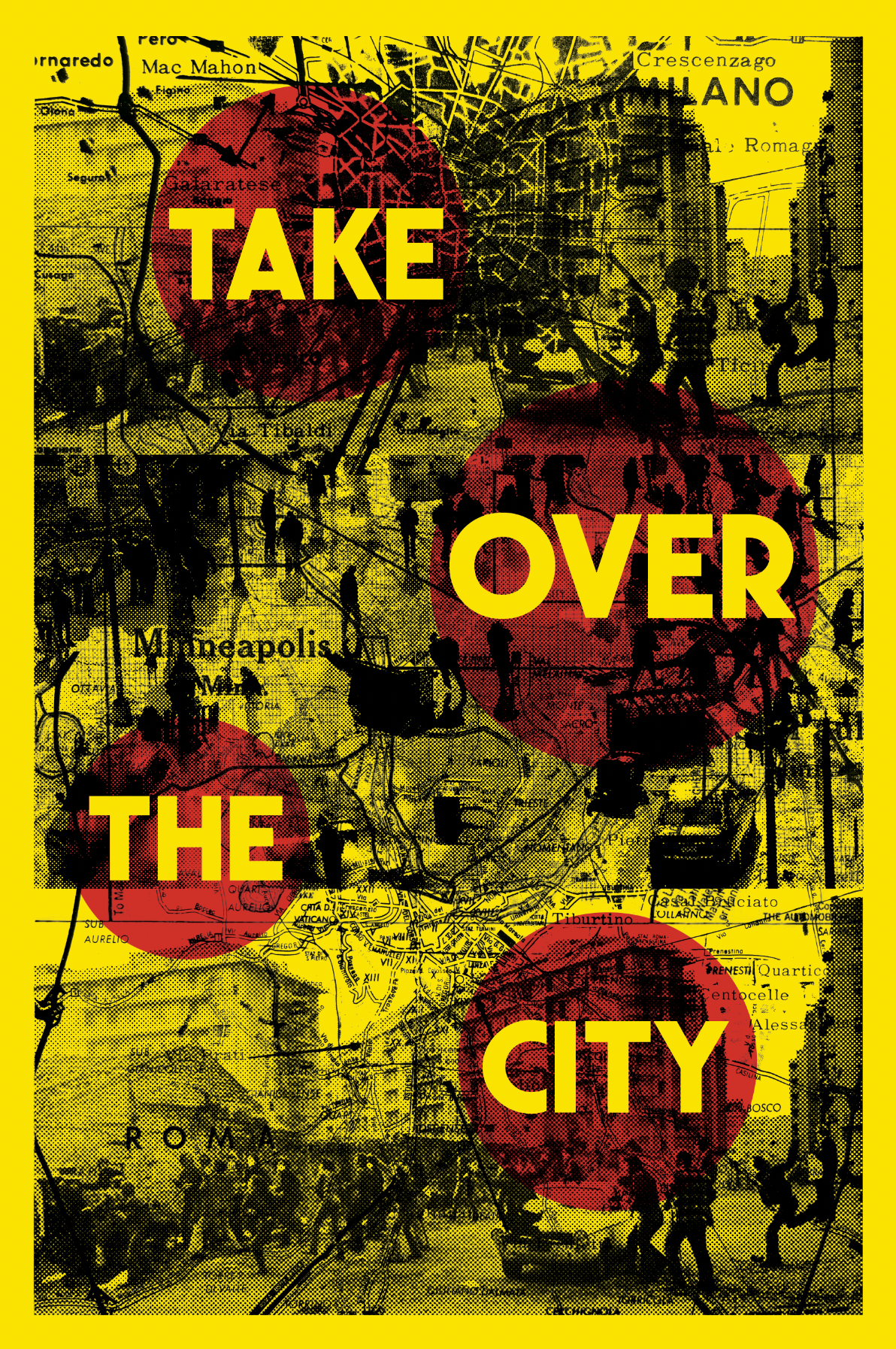
Designed by Josh MacPhee to accompany the publication of Take Over the City by Neil Gray.

Kennedy Block & Josh MacPhee | Pound the Pavement #39/PIT Tapes #3
Strike While the Needle Is Hot! is a 60-minute cassette collecting 24 songs detailed in the book Strike While the Needle Is Hot: A Discography of Workers' Revolt (Common Notions, 2025), mixed from vinyl records by me (Josh MacPhee) and Kennedy Block, and mastered to tape by Jim McHugh at The P.I.T. in Los Sures, Brooklyn.
Workers have been engaged in a culture of resistance for as long as there have been bosses. Across every movement and in every language, we have joined our voices together in rebellion and solidarity, singing songs that still echo through the history of organized labor. But in the last hundred years, new technology has allowed these militant rhythms and rebellious melodies to be recorded as they were sung–the voices of miners in Northern England, fieldworkers in California, autoworkers in France, and many others–etched into wax, shellac, and vinyl as strike records.

Poster featuring images of records from Strike While The Needle Is Hot by Josh MacPhee and Kennedy Block.

Josh MacPhee
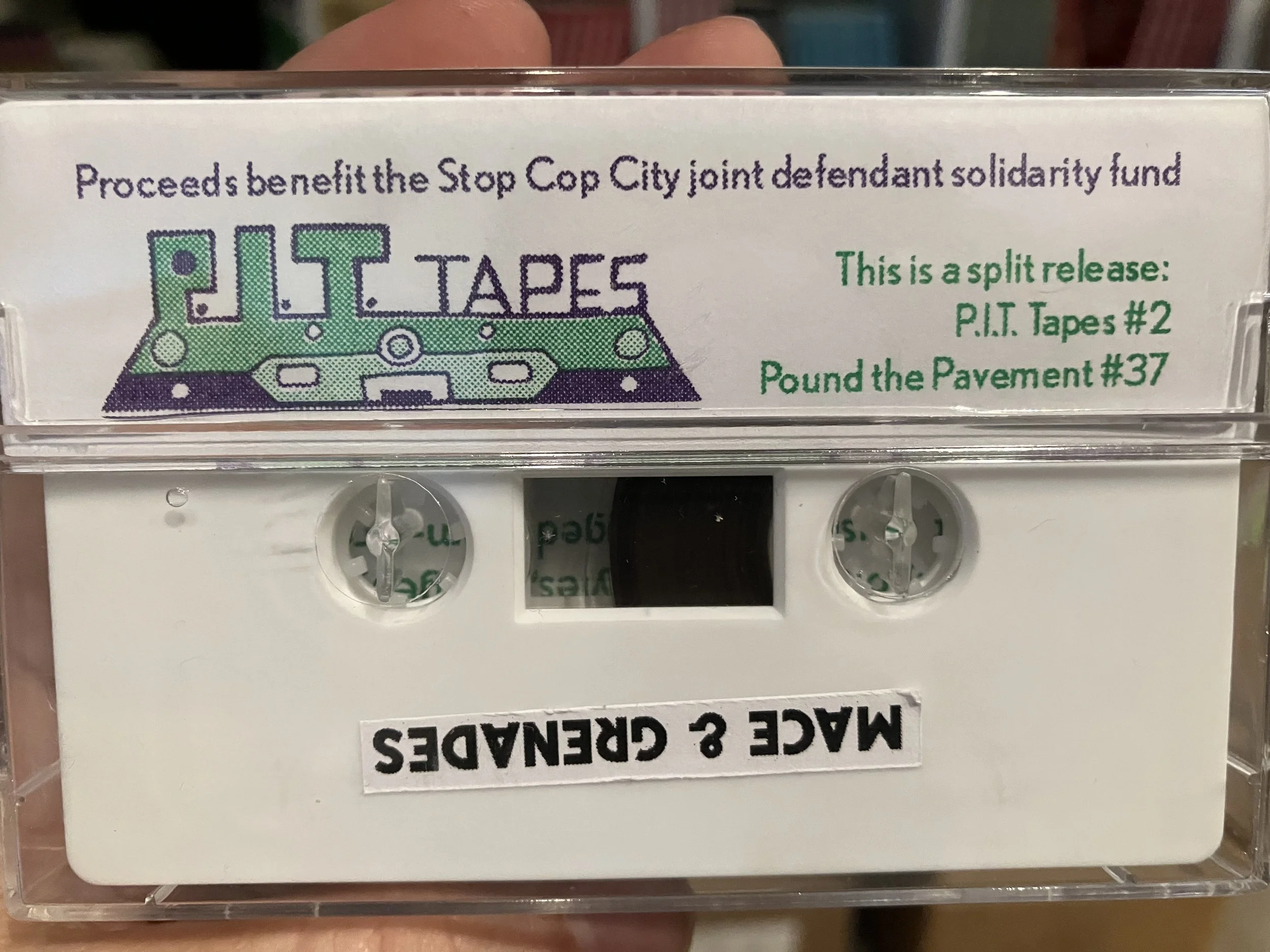
Mace & Grenades is a 60-minute cassette collecting 21 songs, mixed from vinyl records by me (Josh MacPhee) and edited to tape by Jim McHugh at The P.I.T. in Los Sures, Brooklyn. The songs trace a loose path through a broad conception of antifascist movements, from Indigenous America and Aboriginal Australia to anti-Nazi tracks, songs from the fight against Pinochet in Chile to the anti-apartheid movement in South Africa. All tracks are from records I've been collecting over the past decade, with recordings from Angola, Australia, Canada, Chile, France, Italy, Lebanon, Northern Ireland, Norway, Philippines, South Africa, Spain, Sweden, Switzerland, UK, and the US. The oversized j-card is 2-color printed, contains a complete track list, as well as a short written piece on anti-fascism and music.
This cassette is an edition of 250. It is Pound the Pavement #37/P.I.T. Tapes #2.
This mixtape is now a benefit for the Prairieland Defendants. A $500 initial donation has already been given.
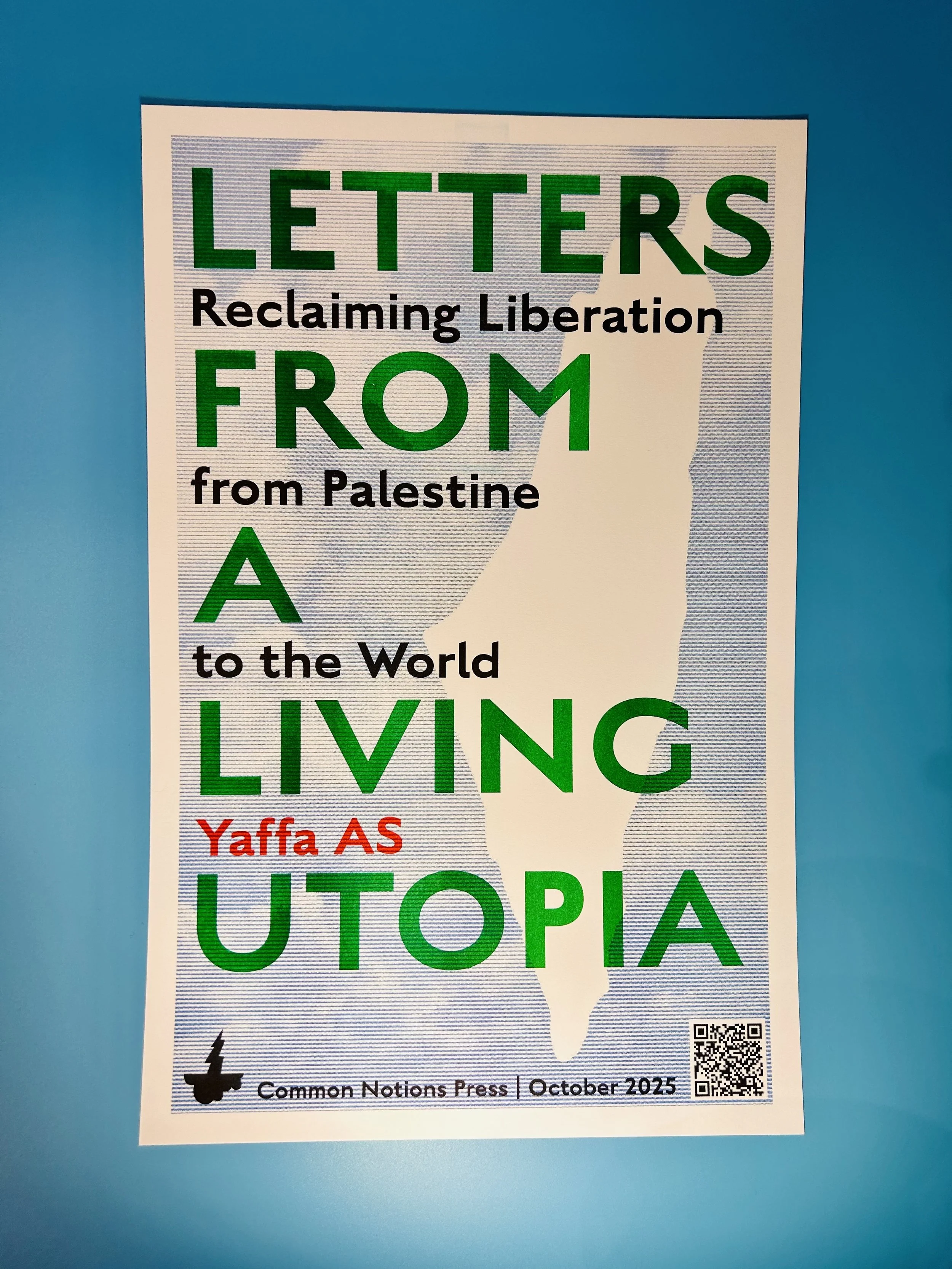
Risograph printed poster featuring the cover art for Letters From A Living Utopia: Reclaiming Liberation From Palestine to the World by Yaffa As.

Risograph printed poster featuring cover art from Rise Up Or Die!: The Struggle Against the Genocide of Black People in Brazil.

Two-sided, offset printed broadside. One side is black and white with text from Andrew Ross’s book THE WEATHER REPORT. The other side is full color and features the cover of the book.

Full color poster promoting Armed By Design. This four-language book preserves the legacy of OSPAAAL poster design.

Risograph printed poster featuring the cover art for Homeland Security: Myths and Monsters.

Tell the world "We Want Freedom for Mumia Abu-Jamal" with this hand-printed poster (limited edition)

Tell the world "We Want Freedom for Mumia Abu-Jamal" with this limited edition hand-printed tote bag.

Not sure which book or books will most help your comrade in the struggle? That’s where a gift card can come in handy. Available in $25, $50, $75, and $100 values.
This digital gift card never expires and can be used multiple times.

Common Notions is a publishing house and programming platform that advances new formulations of liberation and living autonomy.
Our books provide timely reflections, clear critiques, and inspiring strategies that amplify movements for social justice.
By any media necessary, we seek to nourish the imagination and generalize common notions about the creation of other worlds beyond state and capital. Our publications trace a constellation of critical and visionary meditations on the organization of freedom. Inspired by various traditions of autonomism and liberation—in the U.S. and internationally, historically and emerging from contemporary movements—our publications provide resources for a collective reading of struggles past, present, and to come.
Forthcoming, ships November 2026
Edited by Carla Orendorff, Anthony Orendorff, Lupita Limon Corrales, Ananya Roy, and Marisa Lemorande
Preface by Robin D. G. Kelley
Urban Studies / Health & Care / Organizing
Written by unhoused people and their allies, We Live in Public is an invitation to revolutionary care in a time of class war.
Los Angeles is one of the richest and most unequal cities in the world, where nine unhoused people die every day. As rent rises, evictions increase, and houselessness grows, the homeless encampment becomes both a symptom of organized abandonment and a site of insurgent knowledge and practice. We Live in Public was conceptualized and written by residents and organizers of one such encampment, Aetna Street, whose experiences offer strategies for solidarity and survival in the face of escalating state violence.
Many people’s worst fear is to be homeless, equating it with social death. But within the encampment, we see people living with wisdom and maps to offer. Throughout this book, Aetna residents and organizers generously share such insights and analysis. We Live in Public insists that these histories provide crucial lessons in modes of collective living and must be at the center of public history and knowledge.
Centering those who care for others on the street, it is an invitation to revolutionary care in the time of war. That war is the more immediate criminalization of homelessness and the longer arc of the unrelenting settlement of the US. We Live in Public is a refusal of such settler-colonial logics in the making of home and place.