
Pound the Pavement #32: Liberation Support Movement
Pound the Pavement #32: Liberation Support Movement
Josh MacPhee
Black Liberation / Art & Culture / Social Movements / Partner Publisher
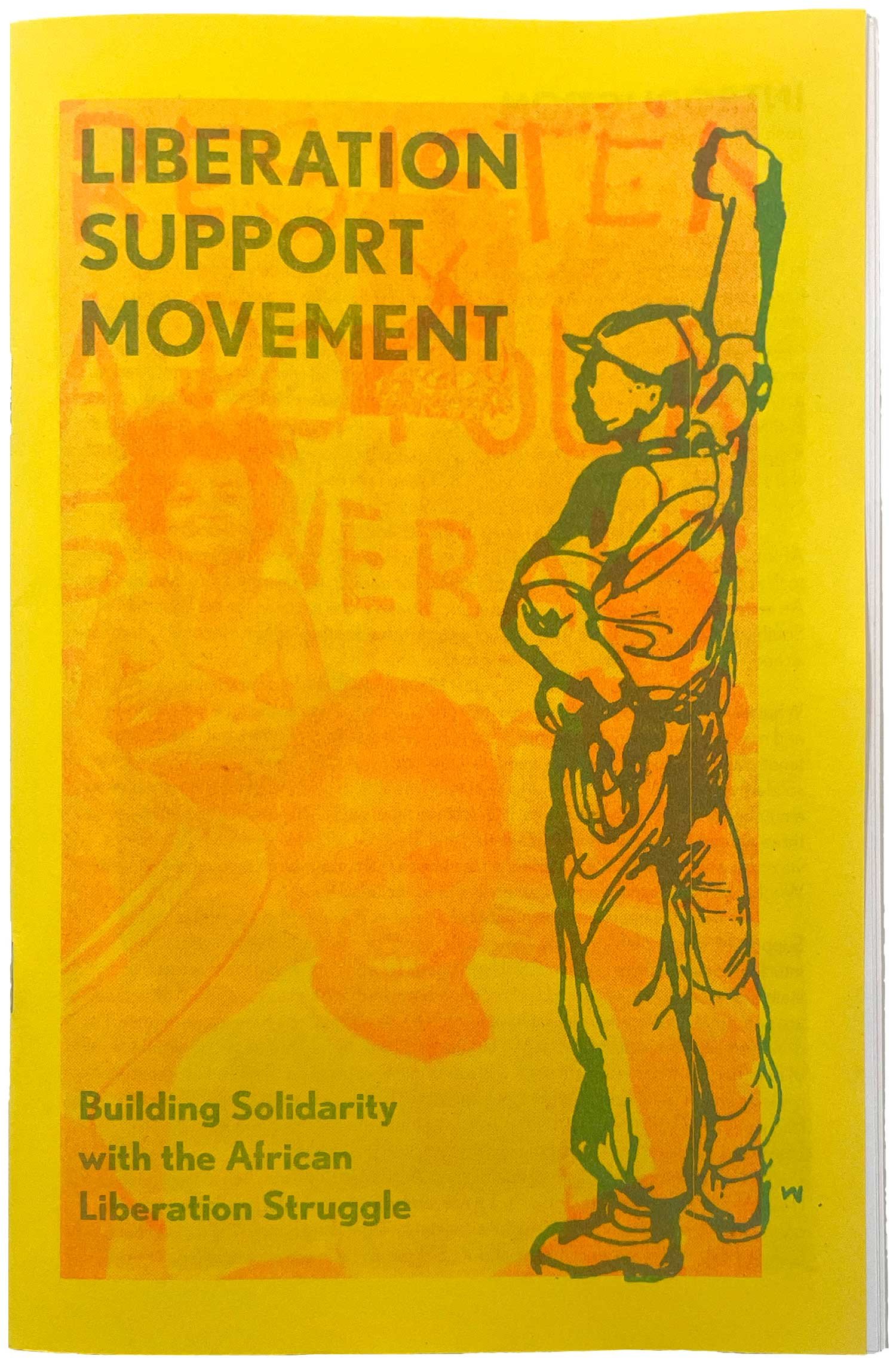
The Liberation Support Movement (LSM) was a North American solidarity organization which existed from 1968 to 1982. Marxist and anti-imperialist in orientation, they primarily sought to build support within the U.S. and Canada for African liberation movements. They built direct connections with representatives of movements from Angola, Mozambique, Namibia, South Africa, Zimbabwe, and more. With their own print shop and an ambitious political program, they published dozens of pamphlets, newsletters, posters, buttons, and even record albums featuring the stories, theories, and culture of African revolutionaries. In addition they booked tours, film screenings, and collected money for direct material aid. At a time when most political groups in N. America were either focused on the domestic sphere or Vietnam, LSM brought the struggles of people from across Africa into the consciousness of the Left.
Product Details
Published by Josh MacPhee
-
Pound the Pavement is an ongoing zine and publishing project organized by Justseeds member Josh MacPhee. Originally launched in 2000 to release a series of zines collecting photographs of street stencils (which would eventually evolve into the 2004 book Stencil Pirates), MacPhee has continued using the name to publish over twenty zines and publications. Although there is no single subject matter that connects all of the publications, overall they are a place for MacPhee to work out his twin obsessions of collecting and organizing. Most issues are limited in print run and tend to sold out, but a number are still available here at Justseeds, and as new issues are released, they will be featured here.
-
Josh MacPhee is a designer, artist, and archivist. He is a founding member of both the Justseeds Artists’ Cooperative and Interference Archive, a public collection of cultural materials produced by social movements based in Brooklyn, NY. MacPhee is the author and editor of numerous publications, including Strike While the Needle is Hot: A Discography of Workers’ Militancy, An Encyclopedia of Political Record Labels, and Graphic Liberation: Image Making and Political Movements. He has organized the Celebrate People's History poster series since 1998 and has contributed to the art and culture of the campaigns of dozens of community organizations and unions.


Abolition Journal Working Group
Abolition / Black Liberation
The inaugural issue of the movement-focused and future-forward Abolition Journal quarterly after it was relaunched by the Philadelphia-based Abolition School.
This pilot issue of the revived Abolition Journal is produced by the Philadelphia-based W.E.B. Du Bois Movement School for Abolition & Reconstruction. It brings together two dozen urgent and timely interventions in political debates around abolition and aims to show how this abstract idea manifests itself in our daily lives.
These interventions, authored by a diverse cast of contributors, including academics and attorneys, so-called felons and physicians, artists and educators, and parents, playwrights and poets, explore the everyday experiences that come with trying to live out an abolitionist politics. In the words of the editors, these experiences include “the daily victories and errands, reflections and runarounds, gestures and drama, habits and heartbreaks, setbacks and surrenders, excuses and evasions, breakdowns and breakthroughs.”
The issue curates a variety of content, including political essays, short stories, poetry, interviews, and speeches, each resonating and reflecting in their own unique way on the central theme “Everyday Sh!t.” They offer thoughts and reflections on structure, practice, care, and direction to deepen existing movement knowledge and invite new audiences to see themselves mirrored within this work.
Without exception, these are stories of sincere experience mixed with radical poetic visions culled from the issue contributors’ plurality of pasts, presents, and prefigurative futures. Grounded in Philadelphia, yet looking out onto the whole wide world, Abolition Journal aims to reflect the lived complexity that can be messy and self-defeating, but equally authentic and inspiring.