
Currents Rising: The Lenape’s Invitation to Friendship and Collective Stewardship
Malav Kanuga with Adam Waterbear DePaul
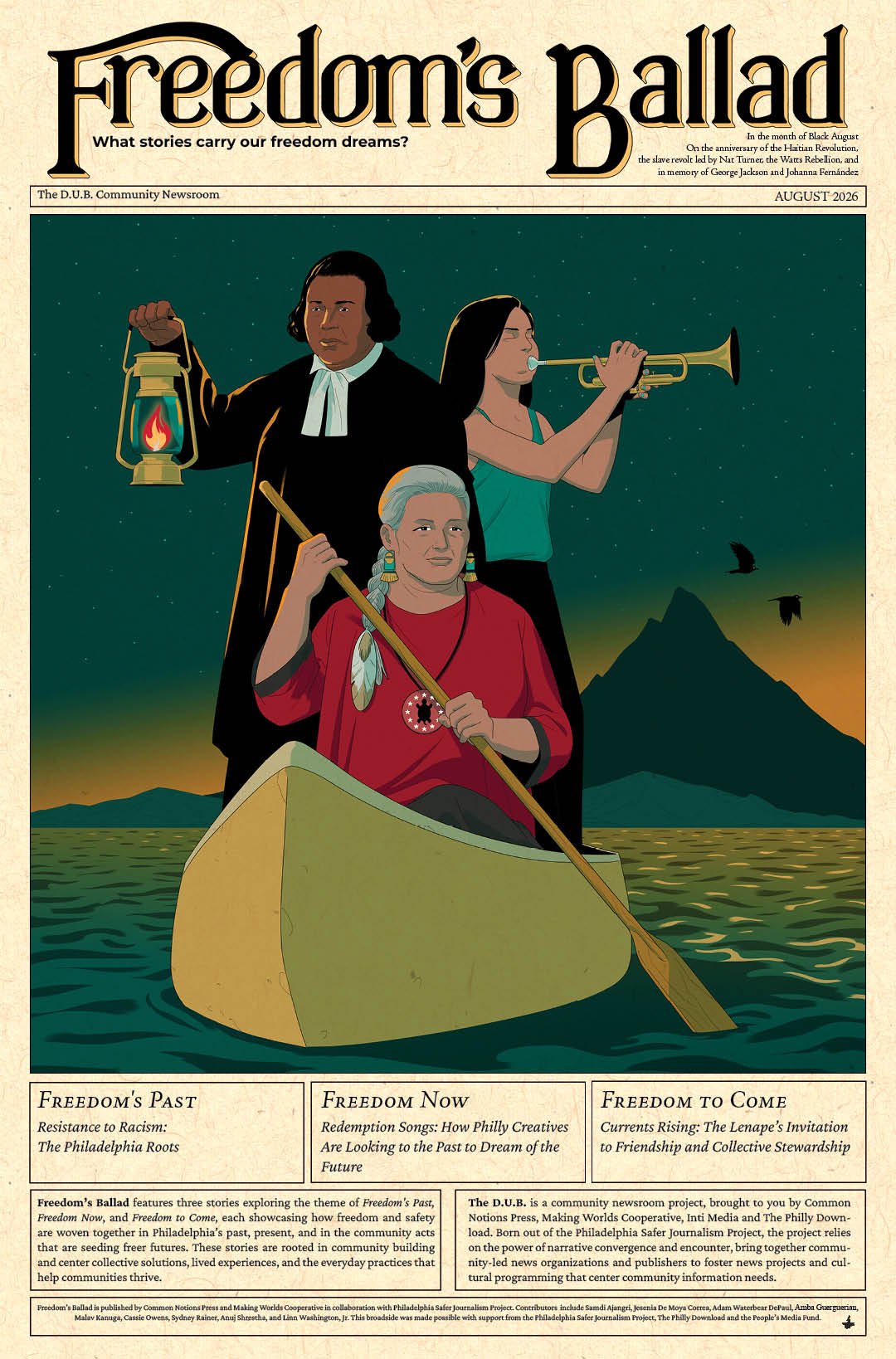
The currents that stretch across the 330 miles of the Delaware River and its 216 tributaries carry some of the oldest and most enduring stories of the land and waterways on which present-day Philadelphia sits. A commercial and cultural line for the colonial settling of Lenapehokink and the emergence of the United States, Lenapewihittuk, the Lenape’s name for the river, has been revered as a source of life and balance for millennia.
Before colonization, many agreements based on reciprocity and peaceful diplomacy were made by the Lenape and their neighbors on this land. The Lenape People were among the first that the newly established government of the United States encountered as they engineered a centuries-long — and ongoing — process of dispossession and transformation of this richly interconnected ecosystem of land and people into property relations based on commodified land.
“Our Lenape people never saw this land as property, which created the biggest conflict with the Europeans, who saw it as property, who saw it as conquest. Lenapehokink is a living, spiritual entity. It is our relative, and it is our obligation to take care of it,” says Lenape historian Curtis Zunigha.
Now, 250 years later, even as the state of Pennsylvania does not officially recognize Indigenous peoples in its borders, those twin legacies — of Indigenous relationality, protocol, and governance rooted in reciprocity and of colonial separation, settler violence, and privatization — live with us and on the land.
Twin legacies — Indigenous relationality, protocol, and governance rooted in reciprocity; and colonial separation, settler violence, and privatization— live with us and on the land.
According to Chief Adam Waterbear DePaul, tribal storykeeper and director of education for the Lenape Nation of Pennsylvania, the goal of reconnection and restoration runs through the everyday activities of the Lenape people. They steward this land for future generations, as their ancestors did before them, with harmony, good relations and reciprocity.
To get there, DePaul says, “we have a long history to make up for.” That future depends on acknowledging a “wider whole history” beyond “the colonial narrative of this land.” For him, an honest reflection on the past’s shaping of the present requires both an openness to re-learn our entangled relations to one another and this land and an ongoing retelling of Lenape stories. It requires recognizing survivance and revitalization amid dislocation and erasure, renewing ancestral teachings, and honoring the inheritance of Lenape knowledge systems preserved in ceremony and traditions of storytelling.
The Lenape Nation of Pennsylvania, for instance, promotes awareness of its history alongside an expansion of its language and cultural traditions through a variety of arts and events at its cultural center, including teachings on environmental stewardship and preservation.
Guiding this approach is the story of the Fourth Crow, a prophecy of repair and reunification passed down for generations in Lenapehokink among the Lenape people.
DePaul describes the flight of the First Crow in a time of harmony before the arrival of the colonizers. The Second Crow signifies for the Lenape people their experiences of persecution, family separation and Indian boarding schools, and other terrors of colonialism. The Third Crow was the time of forced hiding and assimilation. Now is the time of the Fourth Crow, a renewed harmony found by “looking around and working with all of our new neighbors here,” those who don’t necessarily know the history of the people who’ve lived here forever because “that history and that friendship and partnership was robbed from them also,” says De Paul.
“The Fourth Crow is about healing the damage that has been done not only to the Lenape people, but to everybody,” he says.
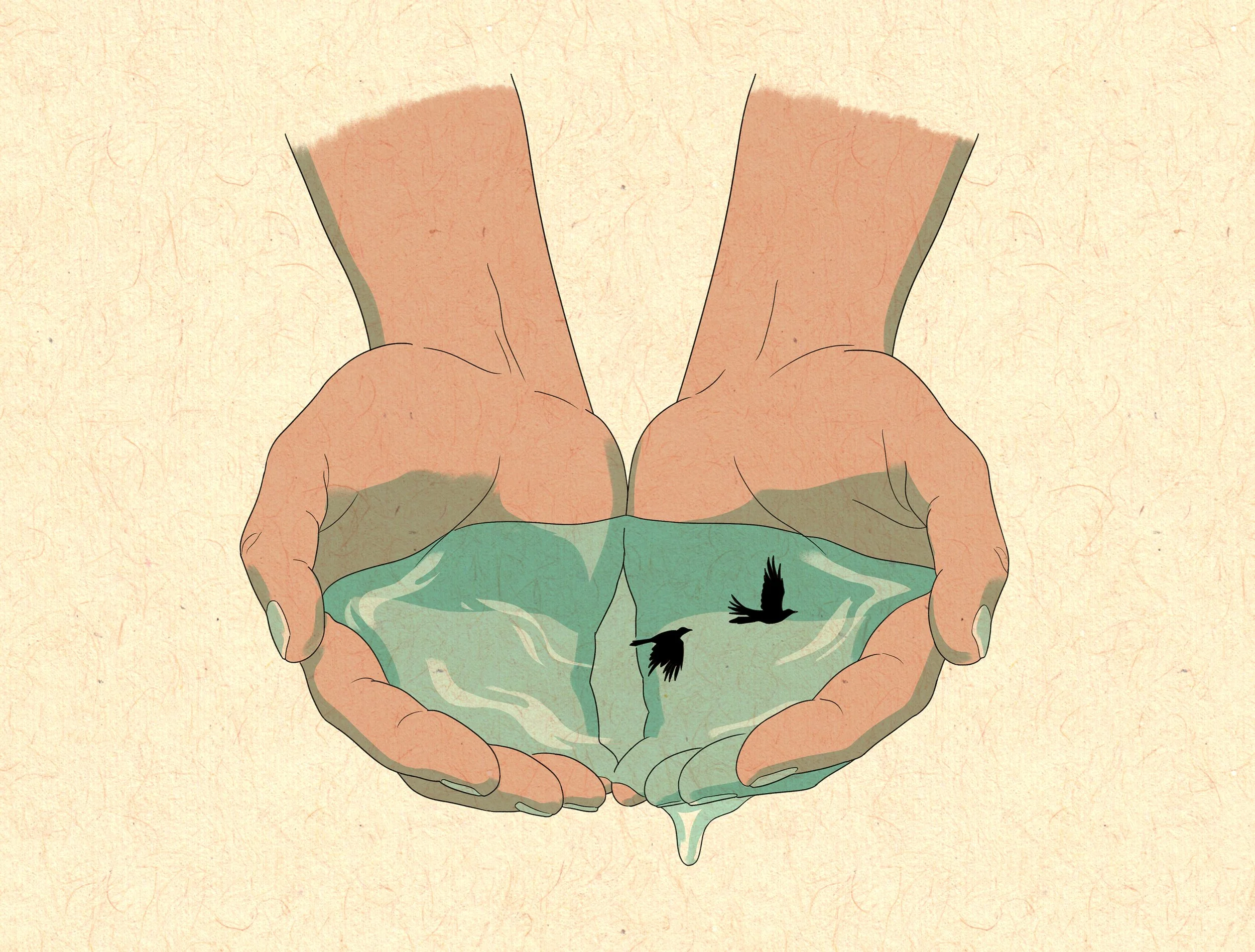
Every four years since 2002, in the spirit of the Fourth Crow, the Lenape Nation of Pennsylvania has hosted the Rising Nation River Journey, where participants traverse the length of the Delaware River in canoes and kayaks over three weeks in August.
The journey, like the water it depends upon, is about what carries us to a recognition of our shared existence. Along the way, the journeyers gather with supporters, allies and partner organizations around the Treaty of Renewed Friendship, which, according to DePaul, is aimed primarily at two things: “[one,] to acknowledge the Lenape people as the Indigenous people of this land; and two, to work on stewarding the homeland, on stewarding the rivers and the watershed, especially the Delaware River, which is our sacred river, so central to the ecosystem all throughout our lands.”
Recognizing that we must face unprecedented and novel ecological problems, the journey aims to build relations and to create points of entry for multiple perspectives to shape the conversation about what we do now. The Lenape offer guidance through their Indigenous knowledge systems, including long-established marine and horticultural sciences, while also recognizing the need for cooperation and learning together.
Where the Pennsylvania legislature doesn’t acknowledge the original people of this land, “friendship is so hugely important,” says DePaul. “Building that network of friends is our way of working towards combating what we’re facing.”
For DePaul, the essential recognition comes when neighbors know they exist, not in the past tense, but in the present and in the future, when they know what the Lenape people are doing, that their perspective is part of the story here, and that they can depend on one another for a mosaic of awareness. It’s friends and collaborators who come to the Nation and say, “Hey, your voice should be in on this.”
This is especially important as these times demand careful deliberation, and even community defense, to get microplastics out of the water or to fight the construction of facilities for storing and transporting natural gas and AI data centers — which require massive amounts of water and energy and further threaten the Delaware ecosystem and our entire way of life.
Like the river itself, a world of connectivity and interdependence continues to shape our existence. Moving within these currents is not only an act of friendship; it is a step in the journey toward a freer future.
__________________________________________________________
Malav Kanuga is a cultural anthropologist, editor, and publisher.
Adam Waterbear DePaul is a tribal leader, scholar, and activist who serves as a Chief, Director of Education, and Tribal Storykeeper for the Lenape Nation of Pennsylvania.