
A Brief History of the Workers’ Inquiry
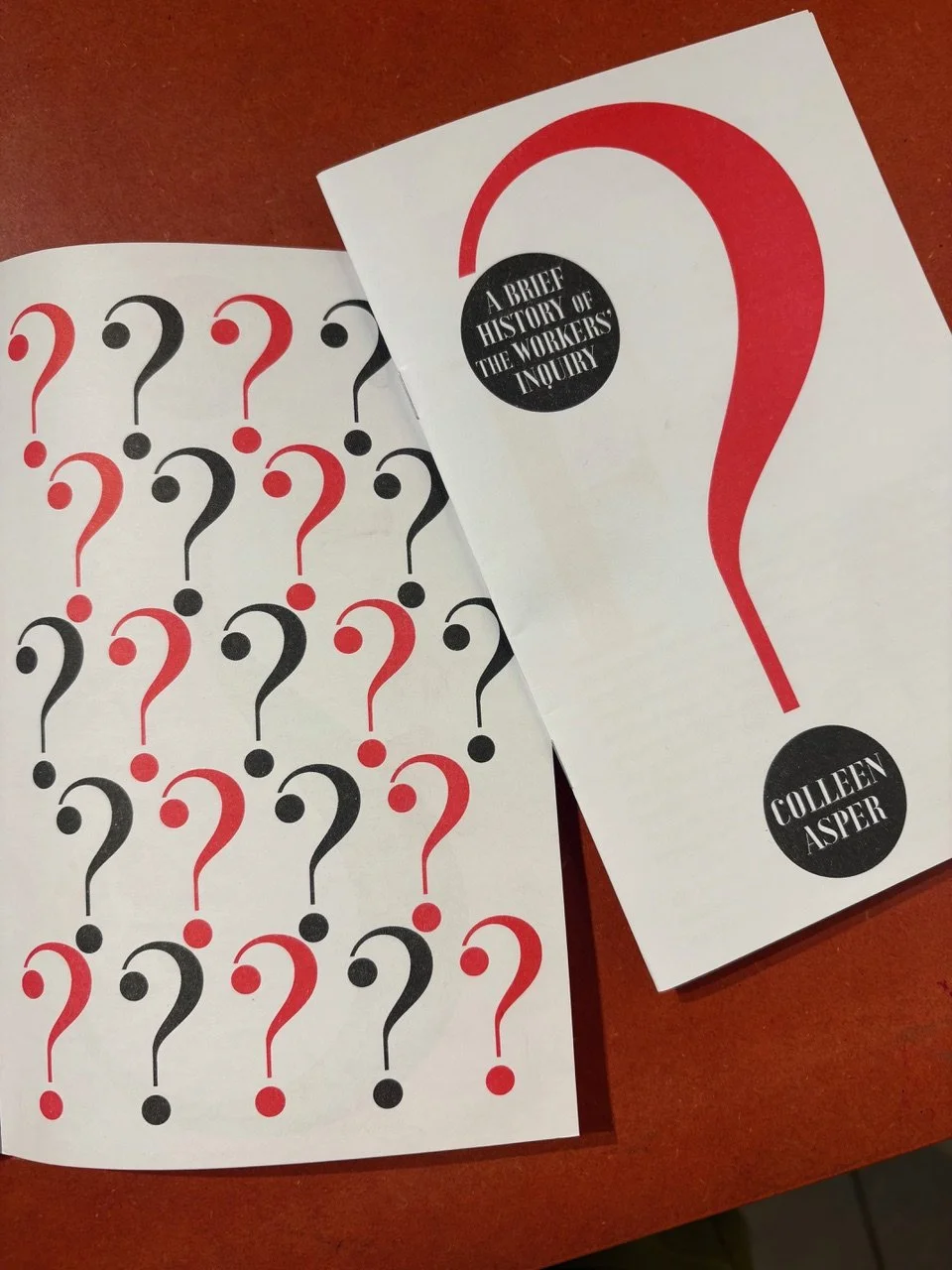
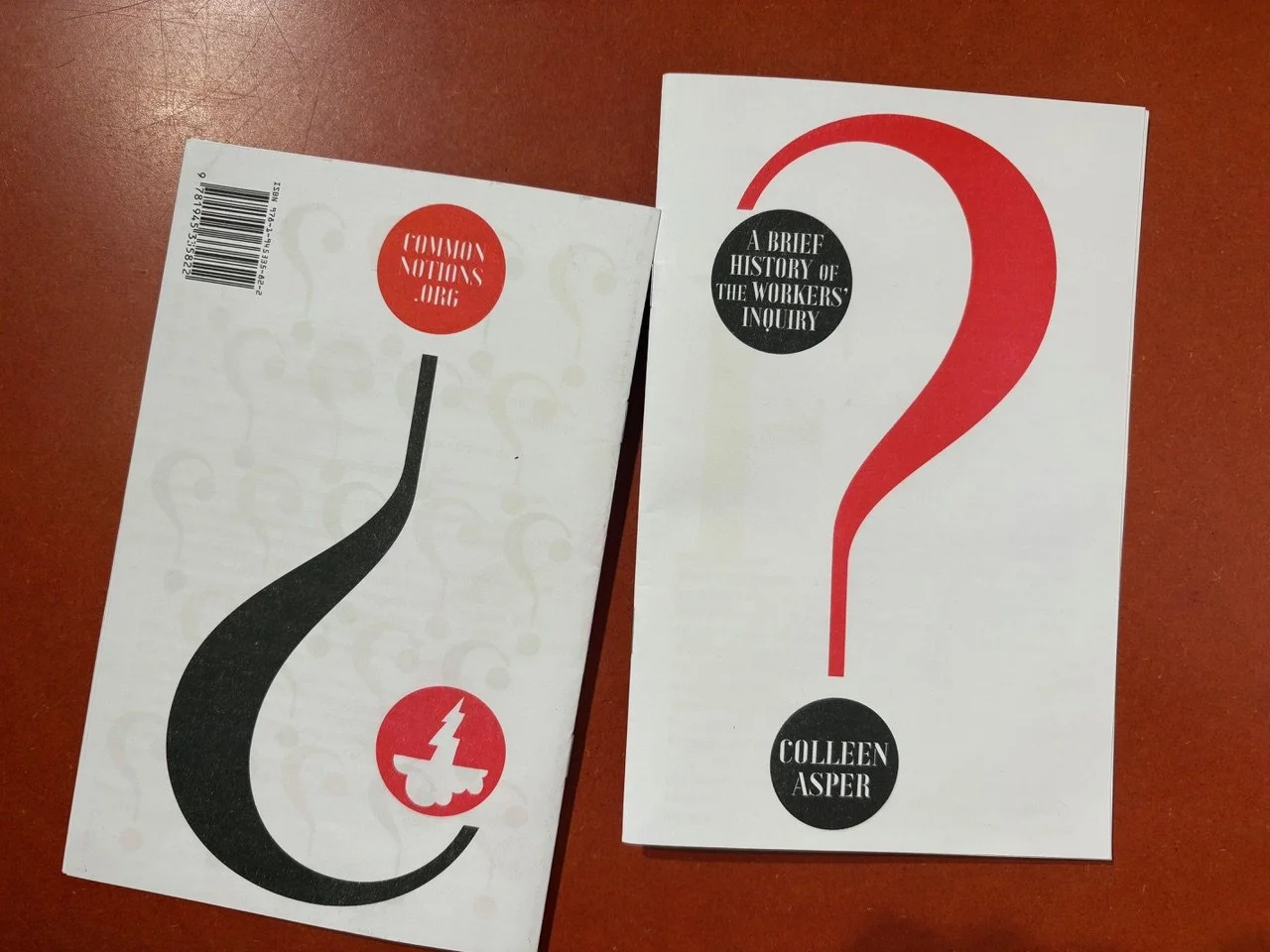
A Brief History of the Workers’ Inquiry
Colleen Asper
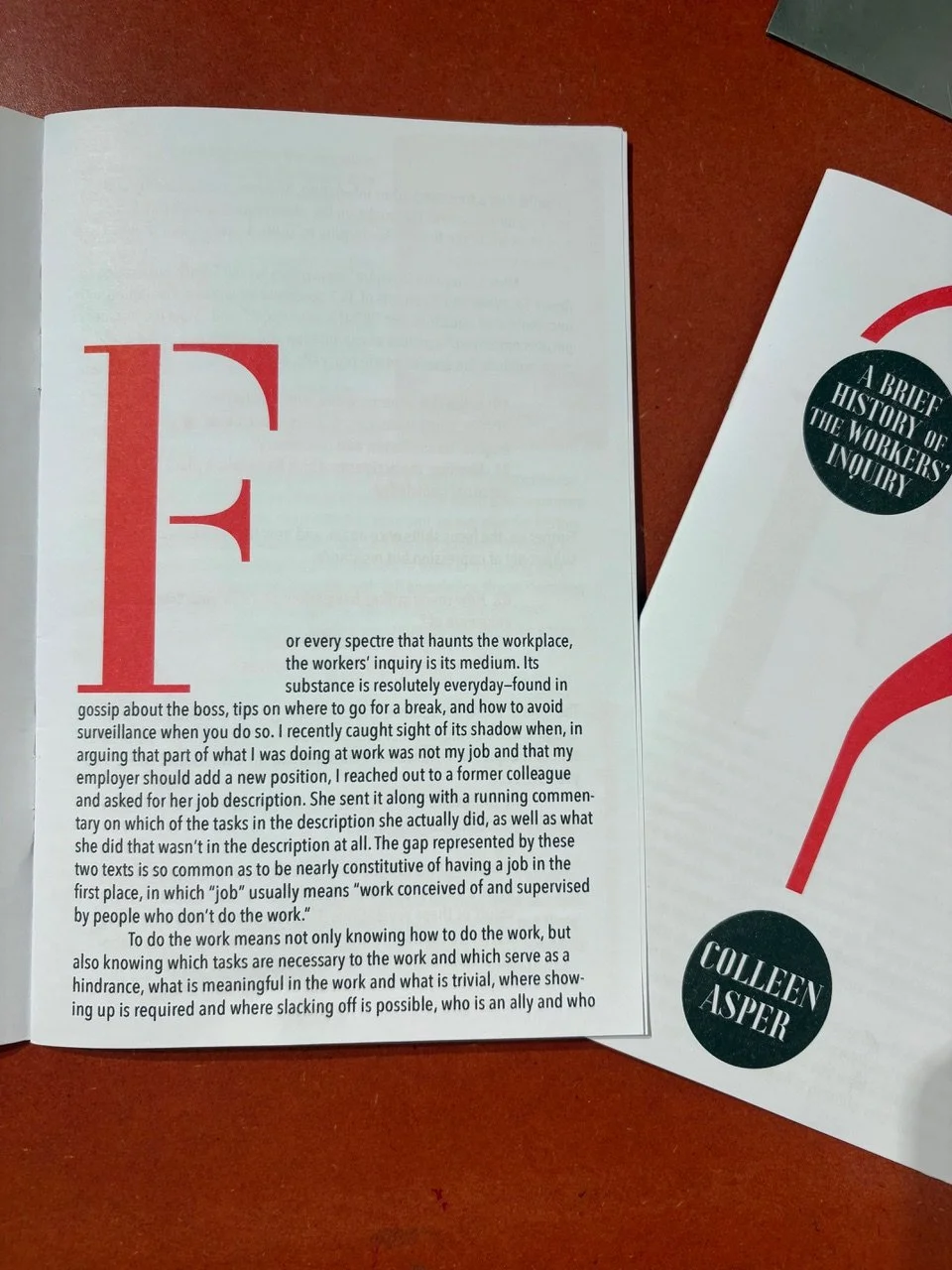
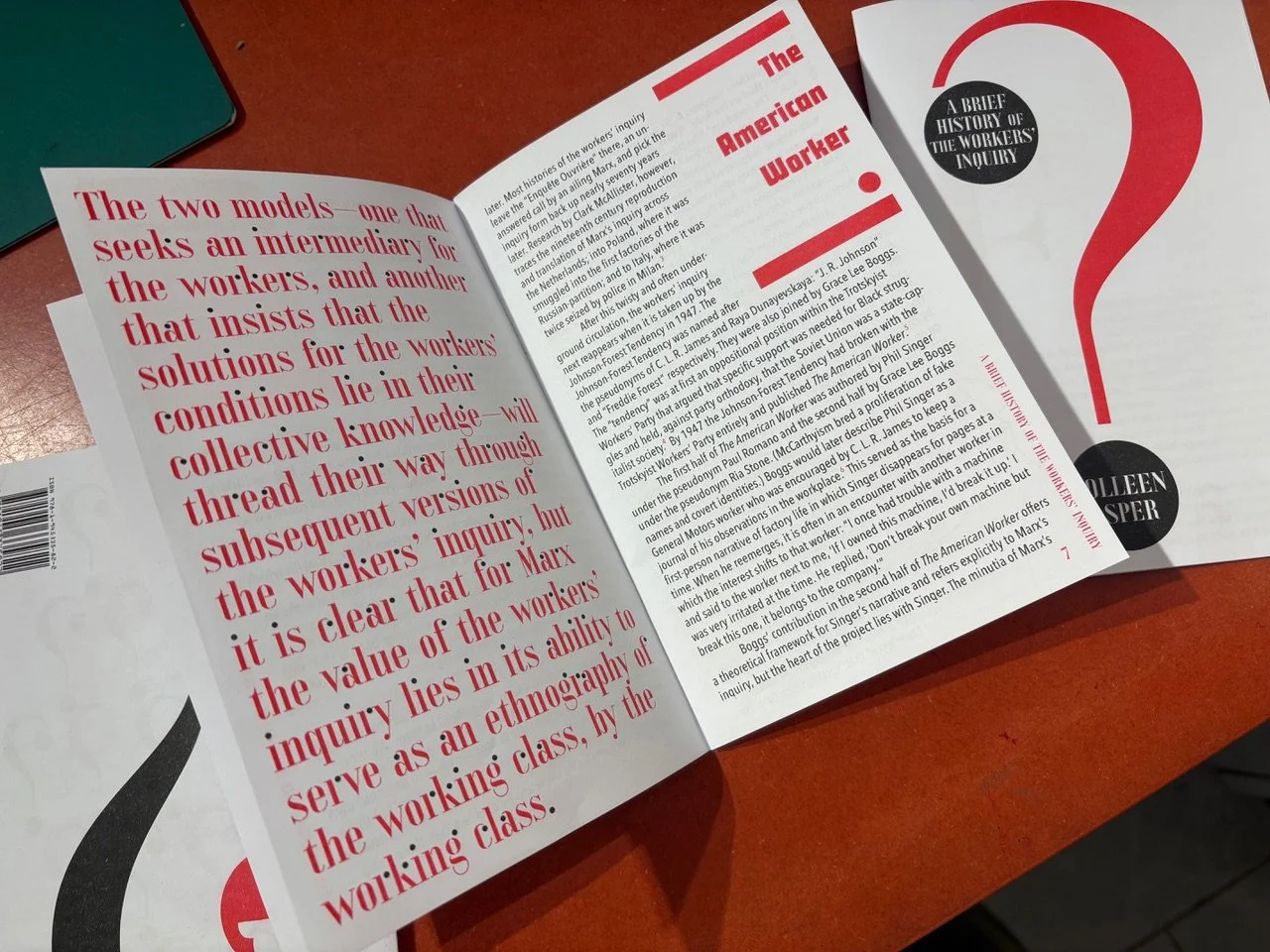
A Brief History of the Workers’ Inquiry introduces and reinvigorates the long tradition of research and inquiry coming from workers’ initiative, as part of their self-activity and organizing against their bosses, and ultimately as the sharpest tool in the arsenal of class struggle: collective intelligence wielded in solidarity against the exploitative and oppressive conditions that extract our time, power, and value from our very laboring together. In this short pamphlet, we enter the “hidden abode” of production, where everywhere our knowledge as workers’ haunts the boss—from contemporary offices and networked workplaces, to the factories where Karl Marx first employed the technique in 1880 in search of “an exact and postive knowledge” of the class struggles, to its uses by the Johnson-Forest Tendency in 1947 in the auto factories of New Jersey and Detroit, to postwar France, where it was again taken up by Socialism ou Barbarie, and then again in the militant struggles of Italy in the 60s and 70s. This long tradition has accompanied many moments of worker militancy, including recent ones, and it's a hypothesis worth testing that it will continue to be an essential tool of struggles to come.
Product Details
Published: March 2026
Format: Saddle-stitched
Size: 5.5 x 8.5 in
Page count: 16
2 color risograph printed
First printing of 250 copies
-
Colleen Asper is a painter, writer, and performer based in Brooklyn, NY. She is a part of Art Workers’ Inquiry, which published Art Work During a Pandemic and Cops Out of the Art World.

Harry Cleaver
Edited by Robert Ovetz and Kevin Van Meter
Capitalism / Labor / Philosophy
Class Compositions
End capitalism before it ends us.
Harry Cleaver is one of the most expansive Marxist theorists of the global class struggle over work of the last fifty years. Points of Departure is the definitive collection of Cleaver’s best unpublished, translated, or lesser known writings—both historical and current—on working class refusal, class composition, unwaged work, debt, and what he calls the “inversion of the class perspective.” This book puts an essential theoretical weapon into the hands of a new generation of militant workers and organizers re-energizing the class struggle. In these essays, Cleaver rereads Marx to address the crisis of capitalism, articulate strategy for the international anticapitalist movement, and to advance our collective search for points of departure from capitalism, so we can end it before it ends us.