
Take Over the City Poster
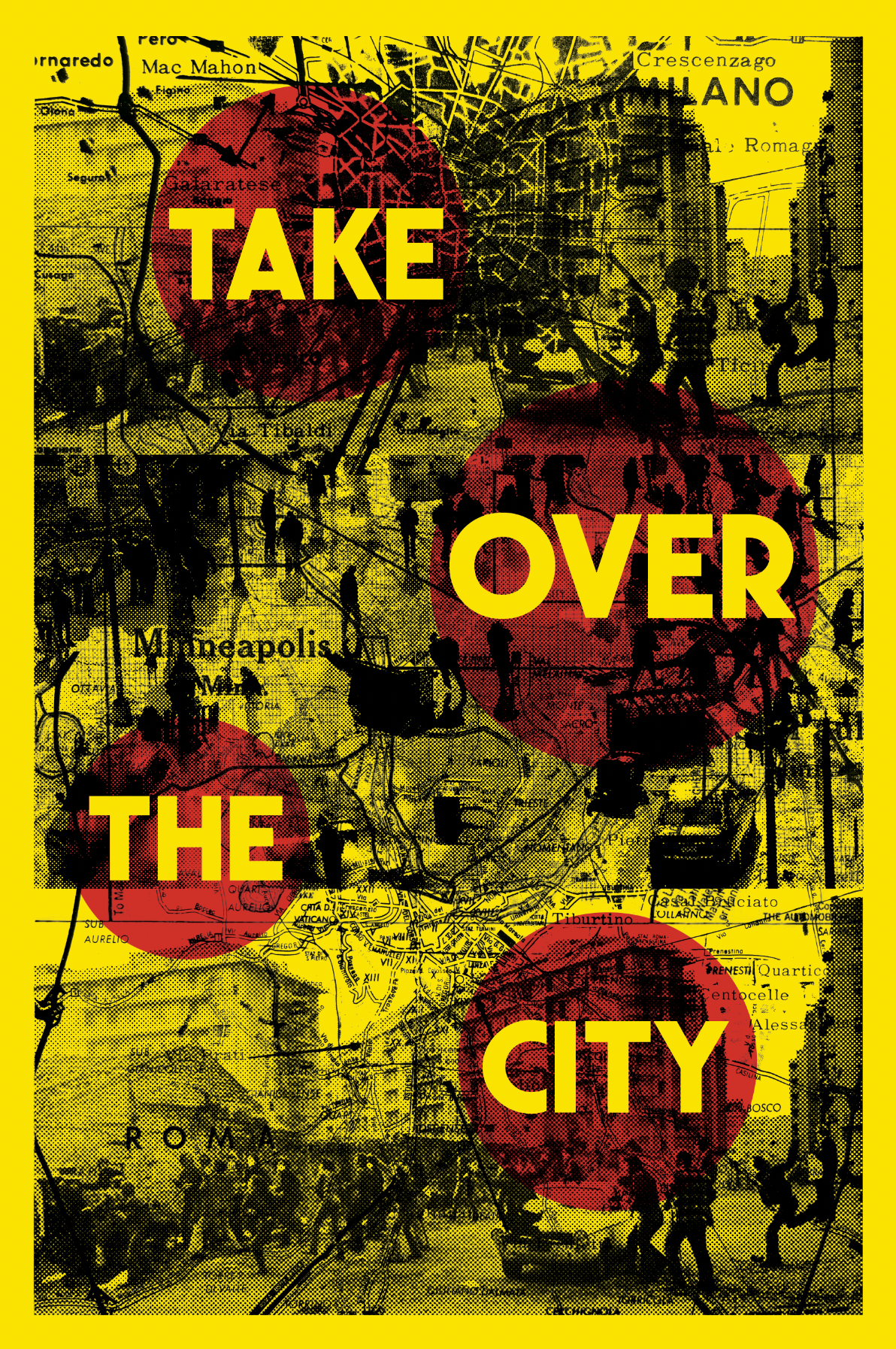
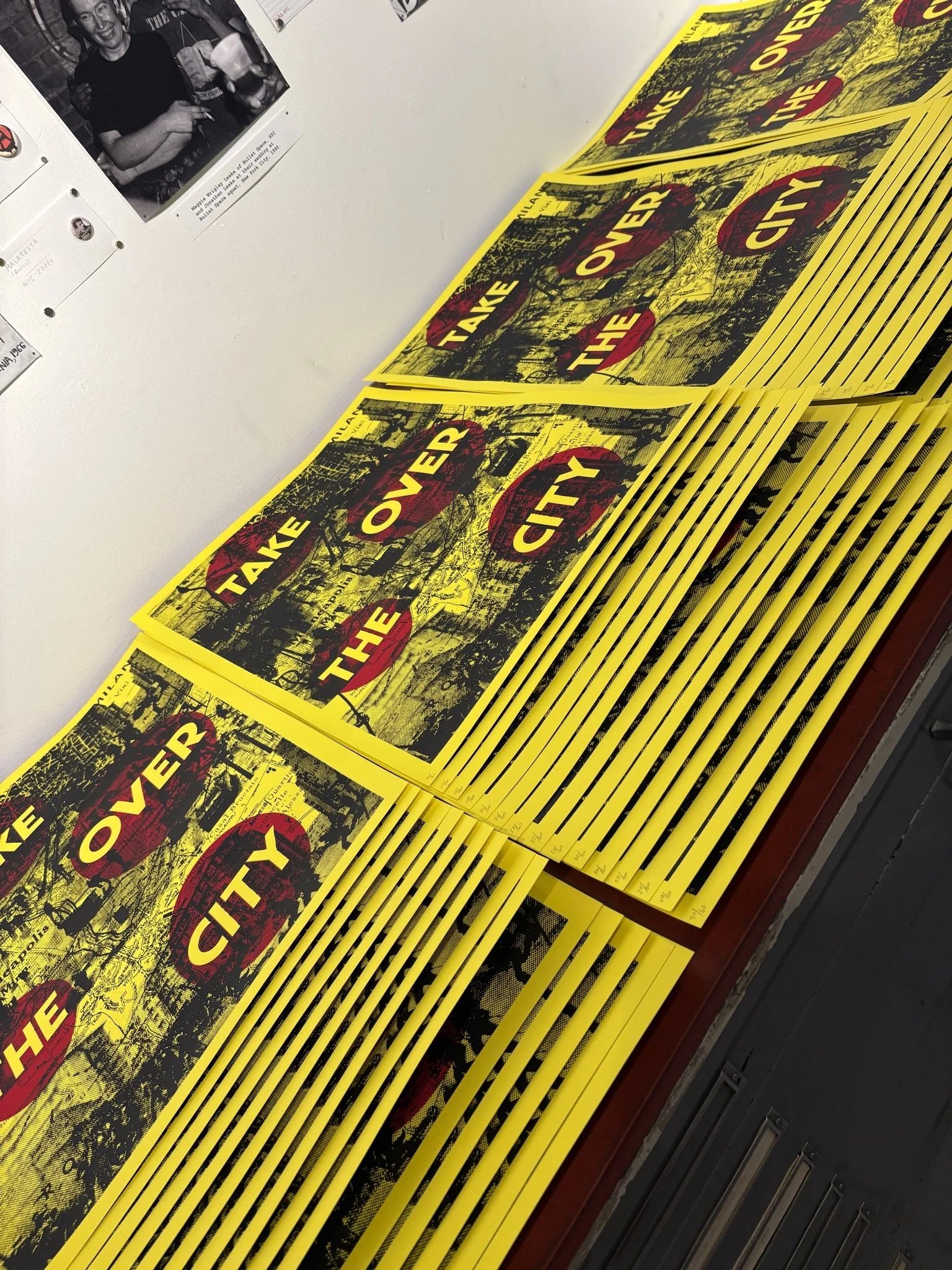
Take Over the City Poster
Designed by Josh MacPhee to accompany the publication of Take Over the City by Neil Gray.
Product Details
2-color screen print
18 x 24 in
Forthcoming, ships January 2027
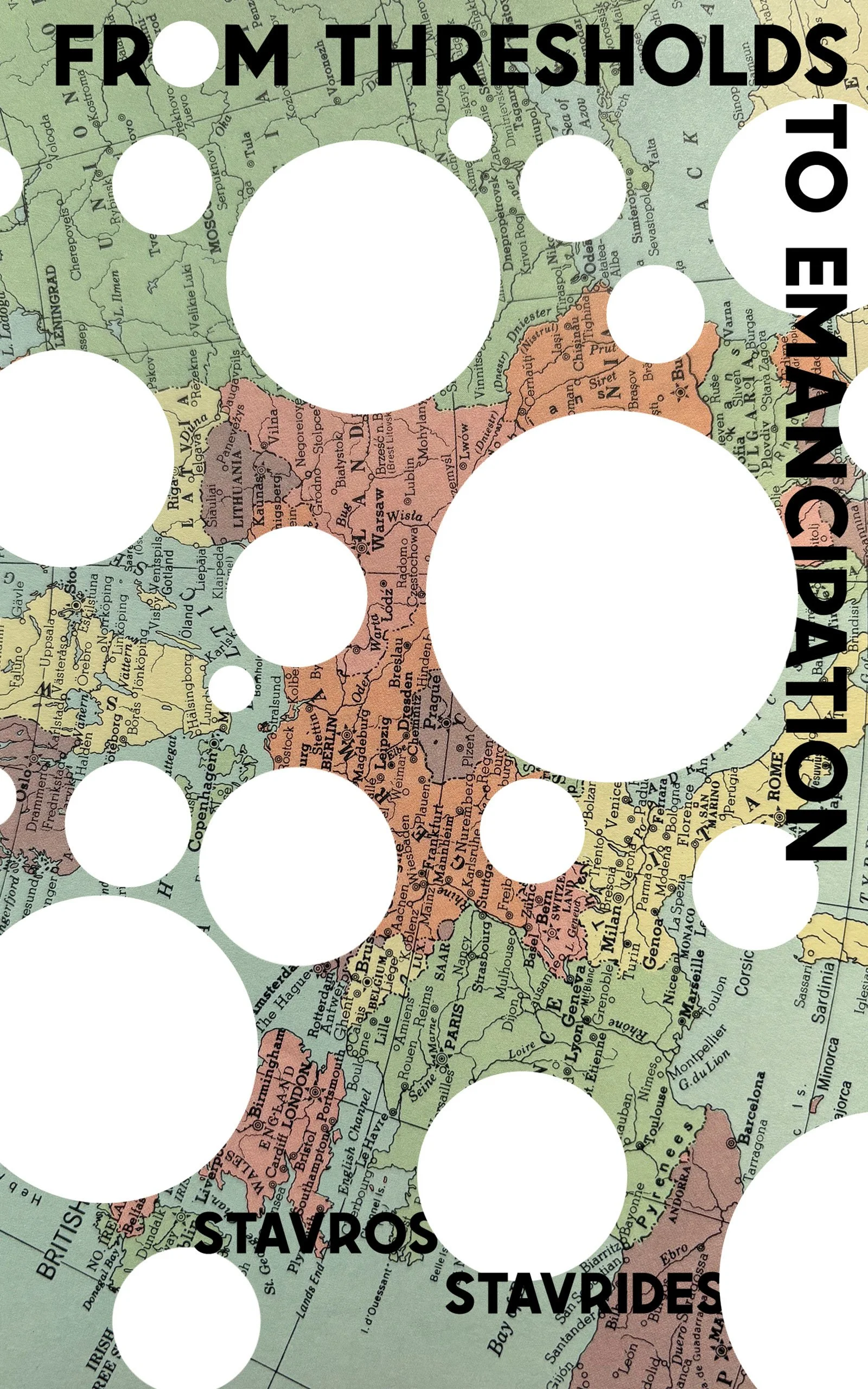
Stavros Stavrides
Could we see in today’s urban movements the seeds of an emancipatory future? And could their experiments in collective life teach us that another city and world are imminently possible?
In more than thirty short, aphoristic texts, architect, activist, and theorist Stavros Stavrides explores the “thresholds” of the urban commons in the present. Drawing primarily on three years of documentation from Athens during and after COVID—originally written as monthly contributions to Stavrides’ commissioned column “Thresholds to Emancipation” for Desinformémonos – Periodismo de abajo—these essays examine how practices of commoning shape subjectivity, space, and political imagination.
Stavrides focuses on affective solidarity, “polyrhythmic” urban life, resistance to the domestication of nature and behavior, and the collective cultivation of what he calls “emancipatory habits.” Across these short texts, the city emerges as a site of struggle and experimentation, where everyday practices can open pathways toward autonomy, radical imagination, and democratic life in common.
This new Common Notions edition is a pocket-sized, interventionist volume, with several texts appearing here for the first time. Situating the project in dialogue with thinkers from Benjamin and Barthes to contemporary media theorists—and with Stavrides’ own earlier work on cities as thresholds—the book balances theoretical framing with political urgency. From Thresholds to Emancipation offers both a conceptual entry point to Stavrides’ work and an open field for the experimental and performative directions the essays pursue.
Neil Gray
Urban Studies / Capitalism / Philosophy
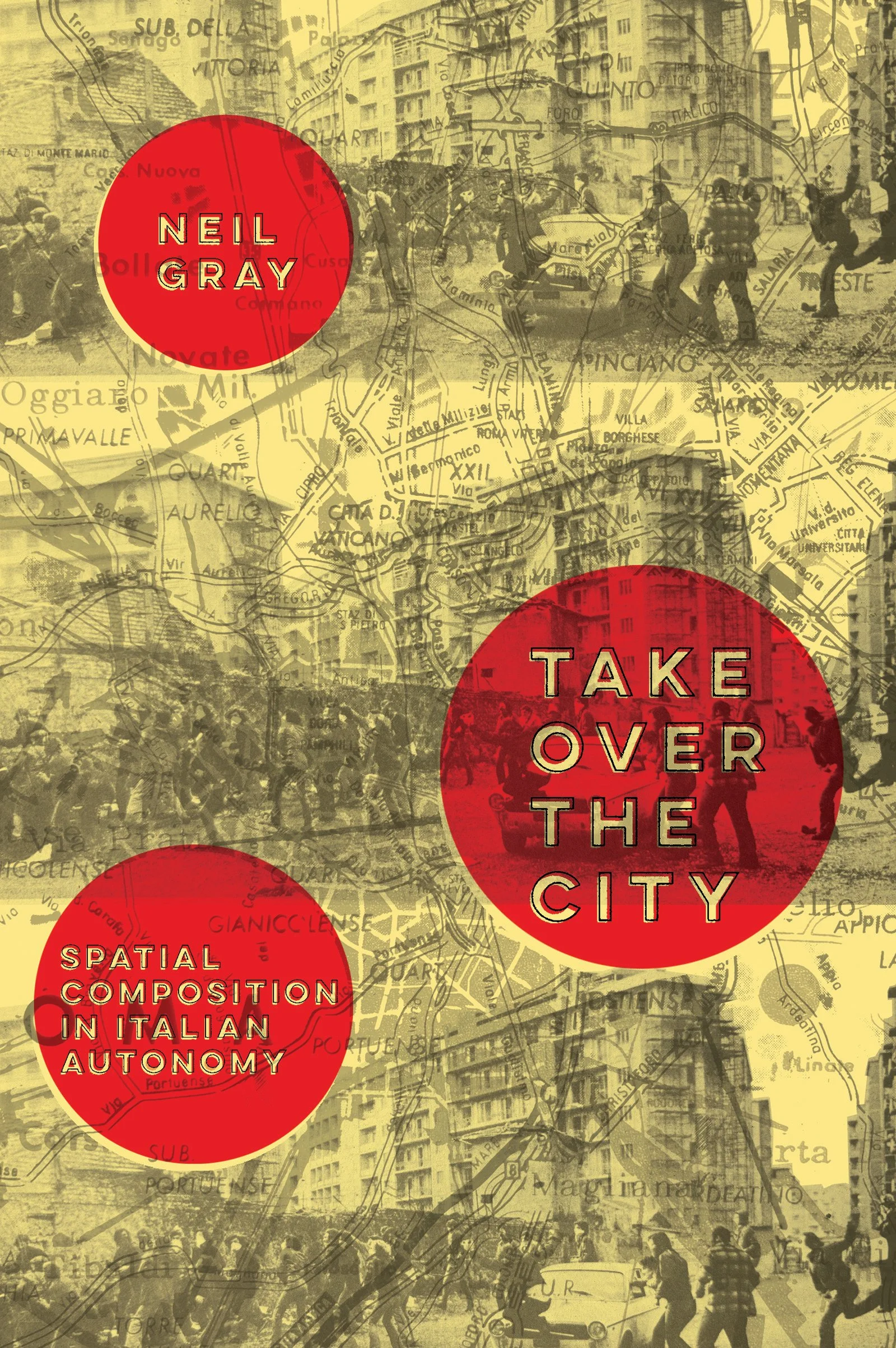
Take Over the City provides the first comprehensive spatial analysis of Italian operaismo and the extraordinary urban struggles of 1970s Italy.
Take Over the City is the first systemic spatial account of Italian operaismo. Drawing on the Marxist urban theory of Henri Lefebvre and others, the book situates the struggles of operaismo, especially in the 1970s, within an incipient-yet-tendential phase of global urbanization. In doing so, the book draws attention to previously neglected urban struggles in the wider social factory, recognizing these as immanent to the new spatial composition of capital in Italy.
The book argues that these innovative urban struggles carry important lessons for contemporary forms of organization and social conflict in the sphere of social reproduction. They drew attention to, and acted within, a tendency that has only become more entrenched since the 1970s: the centrality of urbanization and real estate to national political economies. If urbanization has become increasingly central for capital accumulation processes, it follows that urban struggle must become increasingly central to anti capitalist struggle. The struggles to ‘Take Over the City’ in 1970s Italy provide an important marker of how this might be done in the current era.
By excavating the urban struggles of 1970s Italy with a spatialized understanding of operaismo’s signature theoretical contribution—class composition—the book provides both an important contribution to radical urban history and a window into how current urban struggles might be theorized. It seeks to both spatialize readings of operaismo through the concept of spatial composition and to radicalize urban theory with Italian autonomist Marxist thought and practice. This should be of interest to those interested in autonomist praxis more generally, and those interested in radical urban history, contemporary urban struggles and social reproduction.
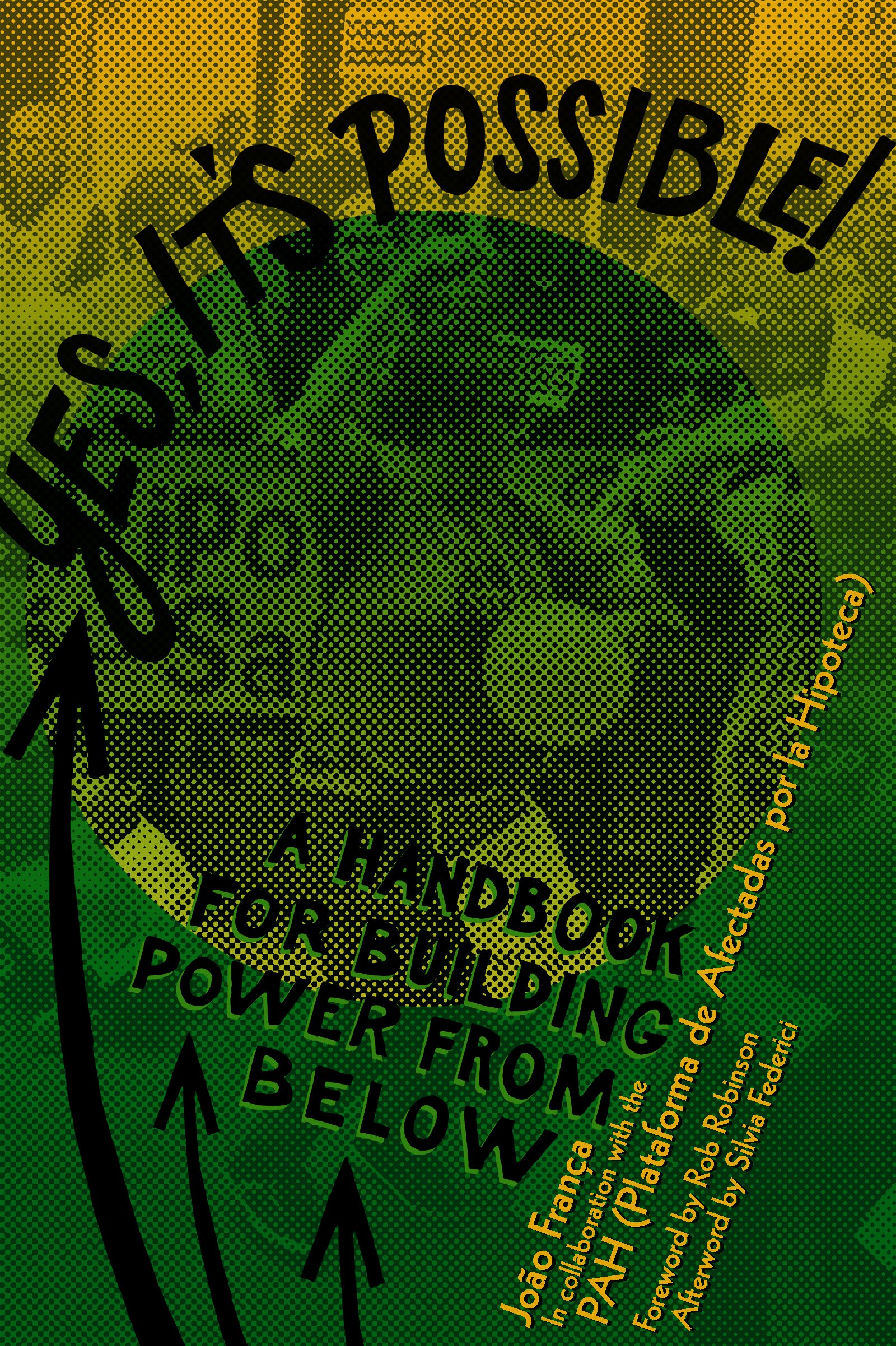
João França and The Platform for People Affected by Mortgages (PAH)
Preface by Rob Robinson
Afterword by Silvia Federici
Organizing / Social Movements / Urban Studies
A handbook for achieving social change through collective action based on lessons from a revolutionary movement’s struggle for housing justice in Spain.
Founded in Spain in 2009 as an immediate response to the devastating effects of the 2008 Global Financial Crisis, the Platform for People Affected by Mortgages (Plataforma de Afectados por la Hipoteca – PAH) has since grown into a nationwide movement with over two hundred local chapters. Together, they have stopped thousands of evictions, negotiated with banks, forced legislative change, occupied fifty buildings, and, most importantly, rescued thousands of people from the edge of the abyss. It achieved all of this without backing from any party, union, or major NGO, and without full-time staff or external funding.
As the PAH faced off some of the country’s most powerful institutions, its members learned how to organize themselves, how to look after one another, how to do politics from the street, and how to bring about legislative reform. They managed to change the dominant narrative that blamed the victims of speculation on the housing market, they’ve won broad popular support, and through civil disobedience, they forced political parties to pass laws and pressured wealthy property owners and international corporations to negotiate and accept their demands.
How did they do this? This handbook collects and curates more than a decade-and-a-half worth of experience in social movement and community organizing. The lessons offered here, ranging from how to run a citizens’ assembly and manage conflicts to reflections on negotiation tactics, street-level organizing, and collective care, are drawn from the PAH’s struggle for housing justice, but can be useful for groups of citizens fighting collectively anywhere in the world. The PAH’s message to the world? “Only by organizing in the streets can we force legislative change, and only through legislative change can we gain more rights.”
Forthcoming, ships November 2026
Edited by Carla Orendorff, Anthony Orendorff, Lupita Limon Corrales, Ananya Roy, and Marisa Lemorande
Preface by Robin D. G. Kelley
Urban Studies / Health & Care / Organizing
Written by unhoused people and their allies, We Live in Public is an invitation to revolutionary care in a time of class war.
Los Angeles is one of the richest and most unequal cities in the world, where nine unhoused people die every day. As rent rises, evictions increase, and houselessness grows, the homeless encampment becomes both a symptom of organized abandonment and a site of insurgent knowledge and practice. We Live in Public was conceptualized and written by residents and organizers of one such encampment, Aetna Street, whose experiences offer strategies for solidarity and survival in the face of escalating state violence.
Many people’s worst fear is to be homeless, equating it with social death. But within the encampment, we see people living with wisdom and maps to offer. Throughout this book, Aetna residents and organizers generously share such insights and analysis. We Live in Public insists that these histories provide crucial lessons in modes of collective living and must be at the center of public history and knowledge.
Centering those who care for others on the street, it is an invitation to revolutionary care in the time of war. That war is the more immediate criminalization of homelessness and the longer arc of the unrelenting settlement of the US. We Live in Public is a refusal of such settler-colonial logics in the making of home and place.