
19 and 20: Notes for a New Insurrection
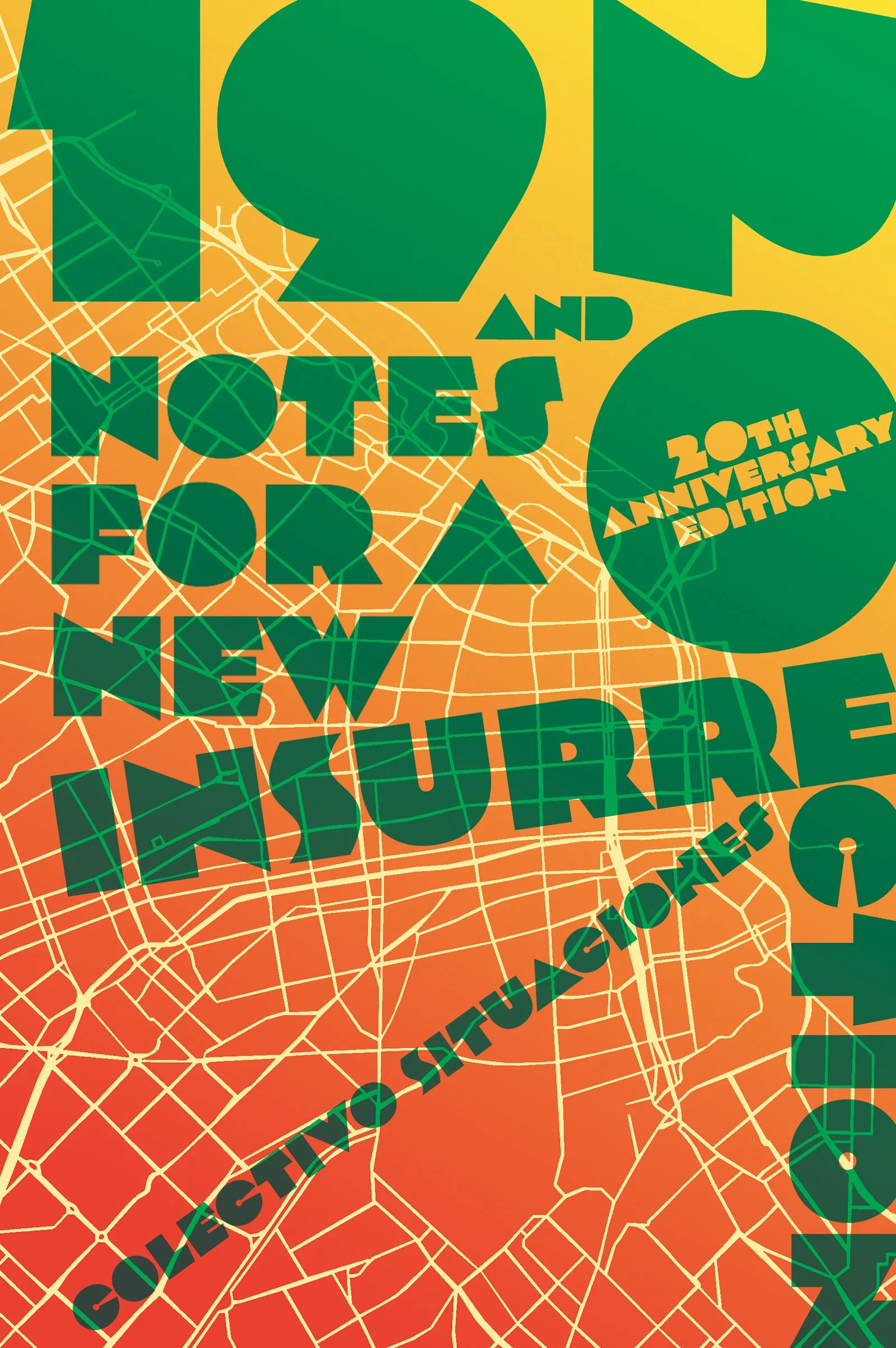
19 and 20: Notes for a New Insurrection
Colectivo Situaciones
From a rebellion against neoliberalism’s miserable failures, notes for a new insurrection and a new society.
19 and 20 tells the story of one of the most popular uprising against neoliberalism: on December 19th and 20th, 2001, amidst a financial crisis that tanked the economy, ordinary people in Argentina took to the streets shouting “¡Qué se vayan todos!” (They all must go!) Thousands of people went to their windows banging pots and pans, neighbors organized themselves into hundreds of popular assemblies, workers took over streets and factories. In those exhilarating days, government after government fell as people invented a new economy and a new way of governing themselves.
It was a defining moment of the antiglobalization movement and Colectivo Situaciones was there, thinking and engaging in the struggle. Their writings during the insurrection have since been passed hand to hand and their practice of militant research modelled widely as a way of thinking together in a time of rebellion. Today, as a staggering debt crisis deepens amidst an already COVID-shaken economy, we see the embers from that time twenty years ago in the mutual aid initiatives and new forms of solidarity amidst widespread vulnerability.
Revisiting the forms of counterpower that emerged from the shadow of neoliberal rule, Colectivo Situaciones reminds us that our potential is collective and ungovernable.
Product Details
ISBN: 9781942173489
Published: November 2021
Format: Paperback
Size: 6 x 9 in
Page count: 288
Other Formats
ISBN: 9781942173601
Format: EPUB
From a rebellion against neoliberalism’s miserable failures, notes for a new insurrection and a new society.
19 and 20 tells the story of one of the most popular uprising against neoliberalism: on December 19th and 20th, 2001, amidst a financial crisis that tanked the economy, ordinary people in Argentina took to the streets shouting “¡Qué se vayan todos!” (They all must go!) Thousands of people went to their windows banging pots and pans, neighbors organized themselves into hundreds of popular assemblies, workers took over streets and factories. In those exhilarating days, government after government fell as people invented a new economy and a new way of governing themselves.
It was a defining moment of the antiglobalization movement and Colectivo Situaciones was there, thinking and engaging in the struggle. Their writings during the insurrection have since been passed hand to hand and their practice of militant research modelled widely as a way of thinking together in a time of rebellion. Today, as a staggering debt crisis deepens amidst an already COVID-shaken economy, we see the embers from that time twenty years ago in the mutual aid initiatives and new forms of solidarity amidst widespread vulnerability.
Revisiting the forms of counterpower that emerged from the shadow of neoliberal rule, Colectivo Situaciones reminds us that our potential is collective and ungovernable.
-
Colectivo Situaciones is a collective of militant researchers based in Buenos Aires, Argentina. They have participated in numerous grassroots coresearch projects with unemployed workers, peasant movements, neighborhood assemblies, and alternative education experiments.


Colectivo Situaciones
Latin America / Organizing
Documents the theories, debates, successes, and failures of a rebellious tactic to build popular power.
Genocide in the Neighborhood documents the autonomist practice of the “escrache,” a system of public shaming that emerged in the late 1990s to vindicate the lives of those disappeared under the Argentinean dictatorship and to protest the amnesty granted to perpetrators of the killing. The book is an example of militant research, an investigative method that Colectivo Situaciones has pioneered. Through a series of hypotheses and two sets of interviews, Genocide in the Neighborhood documents the theories, debates, successes, and failures of the escraches—what Whitener provisionally defines as “something between a march, an action or happening, and a public shaming—investigates the nature of rebellion, discusses the value of historical and cultural memory to resistance, and suggests decentralized ways to agitate for justice.
The book follows the popular Argentine uprising in 2001, a period of intense social unrest and political creativity that led to the collapse of government after government. The power that ordinary people developed for themselves in public space soon gave birth to a movement of neighborhoods organizing themselves into hundreds of popular assemblies across the country, the unemployed workers struggle mobilizing, and workers taking over factories and businesses. These events marked a sea change, a before and an after for Argentina that has since resonated around the world. In its wake Genocide in the Neighborhood tactfully deploys a much needed model of political resistance.