
BOOK STORE ORDER FORM
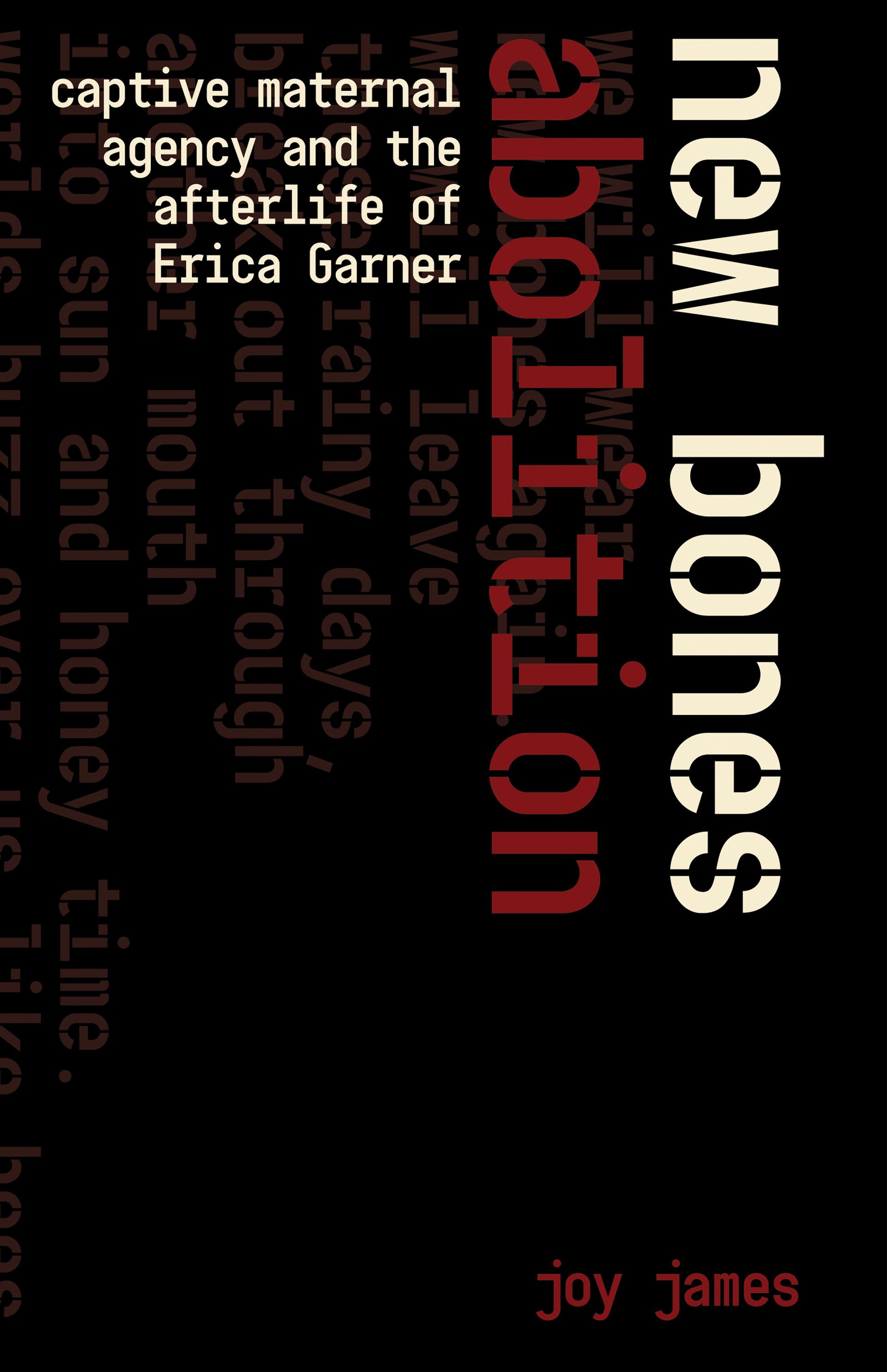
Joy James
Abolition / Black Liberation / Feminism
New Bones Abolition addresses “those of us broken enough to grow new bones” in order to stabilize our political traditions that renew freedom struggles.
Reflecting on police violence, political movements, Black feminism, Erica Garner, Mumia Abu-Jamal, caretakers and compradors, Joy James analyzes the “Captive Maternal,” which emerges from legacies of colonialism, chattel slavery and predatory policing, to explore the stages of resistance and communal rebellion that manifest through war resistance. She recognizes a long line of gendered and ungendered freedom fighters, who, within a racialized and economically-stratified democracy, transform from coerced or conflicted caretakers into builders of movements, who realize the necessity of maroon spaces, and ultimately the inevitability of becoming war resisters that mobilize against genocide and state violence.
New Bones Abolition weaves a narrative of a historically complex and engaged people seeking to quell state violence. James discusses the contributions of the mother Mamie Till-Mobley who held a 1955 open-casket funeral for her fourteen-year-old Emmett Till, murdered by white nationalists; the 1971 rebels at Attica prison; the resilience of political prisoners despite the surplus torture they endured; the emergence of Black feminists as political theorists; human rights advocates seeking abolition; and the radical intellectualism of Erica Garner, daughter of Eric Garner slain in 2014 by the NYPD.
Joy James positions the Captive Maternal within the evolution of contemporary abolition. Her meditation on, and theorizing of, Black radicals and revolutionaries works to honor Agape-driven communities and organizers that deter state/police predatory violence through love, caretaking, protest, movements, marronage, and war resistance.

Edited by David Luis Glisch-Sánchez and Nic Rodriguez-Villafañe
A bridge that interrupts a legacy of pain with the honest sharing of stories.
Sana, Sana is a witness to the multiple wounds etched into the landscape of Latinx experience and a testimonial to community efforts to heal them. A multi-genre anthology rooted in the deep desire to not only acknowledge and name the various forms of pain and trauma Latinx people experience regularly, but to do so in the service of imagining new futures and ways of being that prioritize healing and justice not just for Latinx people, but for Queer BIPOC communities and, ultimately, for all people.
The book’s vision and understanding of Latinidad is broad and expansive. It centers Black, Indigenous, Queer, Trans, and Feminist Latinidades. By advancing an unapologetically radical antiracist, anticapitalist, feminist, and queer politic Sana Sana holds creative and defiant space for identifying economic, social, political, emotional, and spiritual strategies to forge individual and collective healing and justice.

Colectivo Situaciones
Documents the theories, debates, successes, and failures of a rebellious tactic to build popular power.
Genocide in the Neighborhood documents the autonomist practice of the “escrache,” a system of public shaming that emerged in the late 1990s to vindicate the lives of those disappeared under the Argentinean dictatorship and to protest the amnesty granted to perpetrators of the killing. The book is an example of militant research, an investigative method that Colectivo Situaciones has pioneered. Through a series of hypotheses and two sets of interviews, Genocide in the Neighborhood documents the theories, debates, successes, and failures of the escraches—what Whitener provisionally defines as “something between a march, an action or happening, and a public shaming—investigates the nature of rebellion, discusses the value of historical and cultural memory to resistance, and suggests decentralized ways to agitate for justice.
The book follows the popular Argentine uprising in 2001, a period of intense social unrest and political creativity that led to the collapse of government after government. The power that ordinary people developed for themselves in public space soon gave birth to a movement of neighborhoods organizing themselves into hundreds of popular assemblies across the country, the unemployed workers struggle mobilizing, and workers taking over factories and businesses. These events marked a sea change, a before and an after for Argentina that has since resonated around the world. In its wake Genocide in the Neighborhood tactfully deploys a much needed model of political resistance.
BACKLIST

Edited by Ashley Dawson, Fiore Longo, and Survival International
Ecology / Anticolonial Politics
Frontline voices from the worldwide movement to decolonize climate change and revitalize a dying planet.
With a deep anticolonial and antiracist critique of what “conservation” currently is, Decolonize Conservation presents an alternative vision—one already working—of the most effective and just way to fight against biodiversity loss and climate change.
This powerful collection of voices takes us to the heart of the climate justice movement and the struggle for life and land across the globe. With Indigenous Peoples and their rights at its center, the book exposes the brutal and deadly realities of colonial and racist conservation for people around the world, while revealing the problems of current climate policy approaches that do nothing to tackle the real causes of environmental destruction.
Evidence proves Indigenous people understand and manage their environment better than anyone else. Eighty percent of the Earth’s biodiversity is in tribal territories and when Indigenous peoples have secure rights over their land, they achieve at least equal if not better conservation results at a fraction of the cost of conventional conservation programs. But in Africa and Asia, governments and NGOs are stealing vast areas of land from tribal peoples and local communities under the false claim that this is necessary for conservation.
As the editors write, “This is colonialism pure and simple: powerful global interests are shamelessly taking land and resources from vulnerable people while claiming they are doing it for the good of humanity.” Through the voices of largely silenced or invisibilized Indigenous Peoples and local communities, the devastating consequences of making 30 percent of the globe “Protected Areas,” and other so-called “Nature-Based Solutions” are made clear.

Johanna Isaacson
Capitalism and patriarchy create monsters—but inside the darkness there lurks a strange utopia. In Stepford Daughters, Johanna Isaacson explores an emerging wave of horror films that get why class horror and gender horror must be understood together. In doing so, Isaacson makes the case that this often-maligned genre is in fact a place where oppressed people can understand, navigate and confront an increasingly ugly and horrifying world.
What happens when your smile is no longer yours? Films like Hereditary and The Babadook show women coming apart at the seams as the promises of both the family and waged work fail them. In Get Out, we see how poor women and women of color perform the invisible labor that makes society run while experiencing domestic work as a kind of possession. In “coming of rage” films such as Assassination Nation and Teeth,we see the ways social reproduction leads to a futureless horizon. Robbed of their dreams but not their power to resist, these heroines emerge as the monsters and avengers we need.
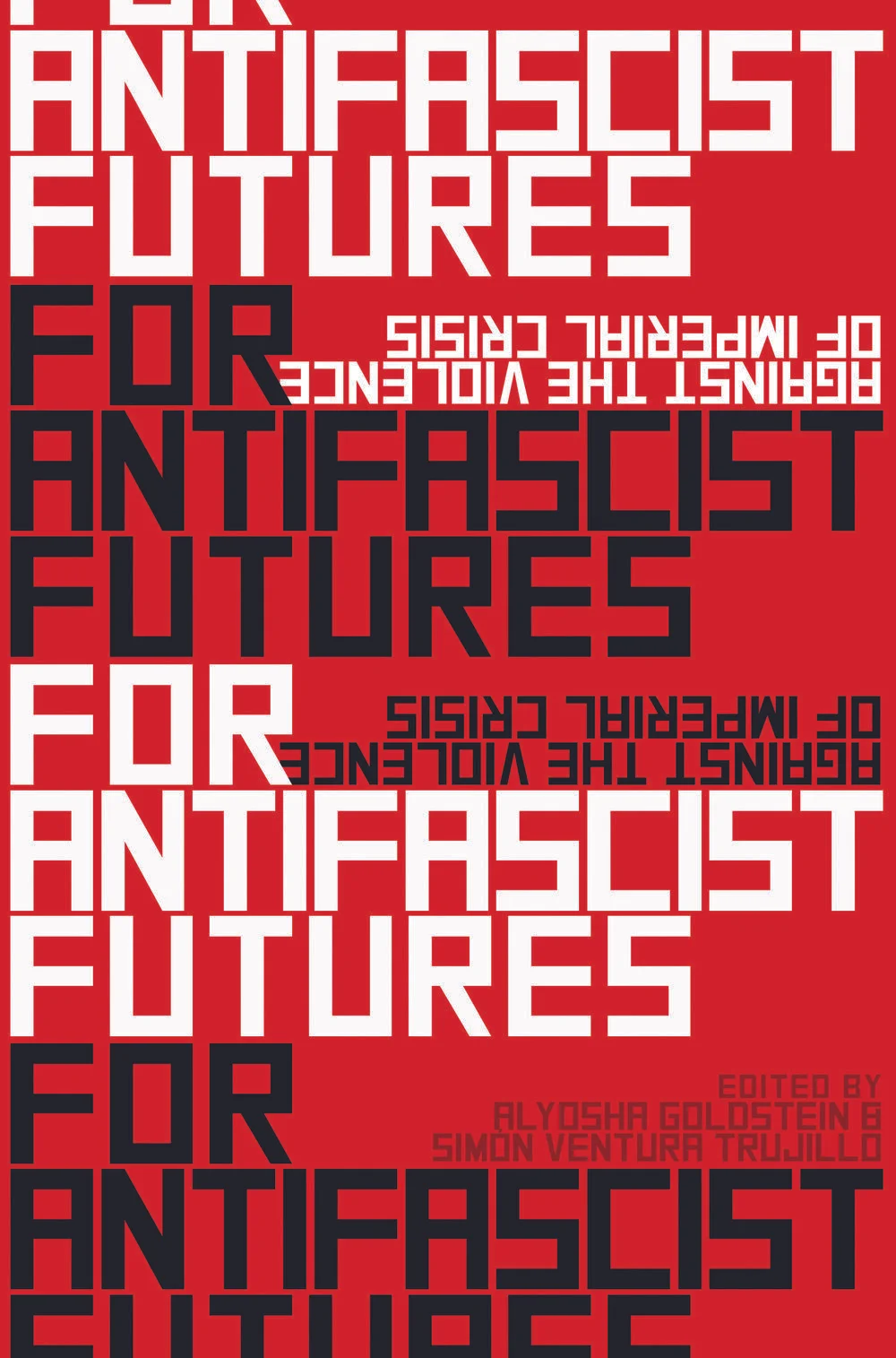
Edited by Alyosha Goldstein and Simón Ventura Trujillo
Antifascist Politics / Organizing
Explores the significance of fascism for understanding authoritarianism today and centers anti-imperialist movements of Black, Indigenous, and colonized peoples.
We must, as For Antifascist Futures urges, take antifascism as a major imperative of movements for social change. But we must not limit our analysis or historical understanding of the rise of the right-wing authoritarianism in our times by rooting it in mid-twentieth century Europe. Instead we turn to a collection of powerful BIPOC voices who offer a range of anticolonial, Indigenous, and Black Radical traditions to think with.
For Antifascist Futures takes seriously what is new in this moment of politics, exploring what the analytic of fascism offers for understanding the twenty-first century authoritarian convergence by centering the material and speculative labor of antifascist and antiracist social movement coalitions. By focusing on the long history of Black and Brown antifascist resistance that has been overlooked in both recent conversations about racial justice as well as antifascist resistance, the essays, interviews, and documents included here make clear how racialized and colonized peoples have been at the forefront of theorizing and dismantling fascism, white supremacy, and other modes of authoritarian rule.
By linking a deep engagement, both scholarly and practical, of racial justice movements with an antifascist frame, and a global analysis of capitalism the contributors have assembled a powerful toolbox for our struggles. The editors, widely recognized ethnic and American studies scholars, offer a groundbreaking collection with contributions from Johanna Fernandez, Manu Karuka, Charisse Burden-Stelly, Zoé Samudzi, and Macarena Gomez-Barris among others.
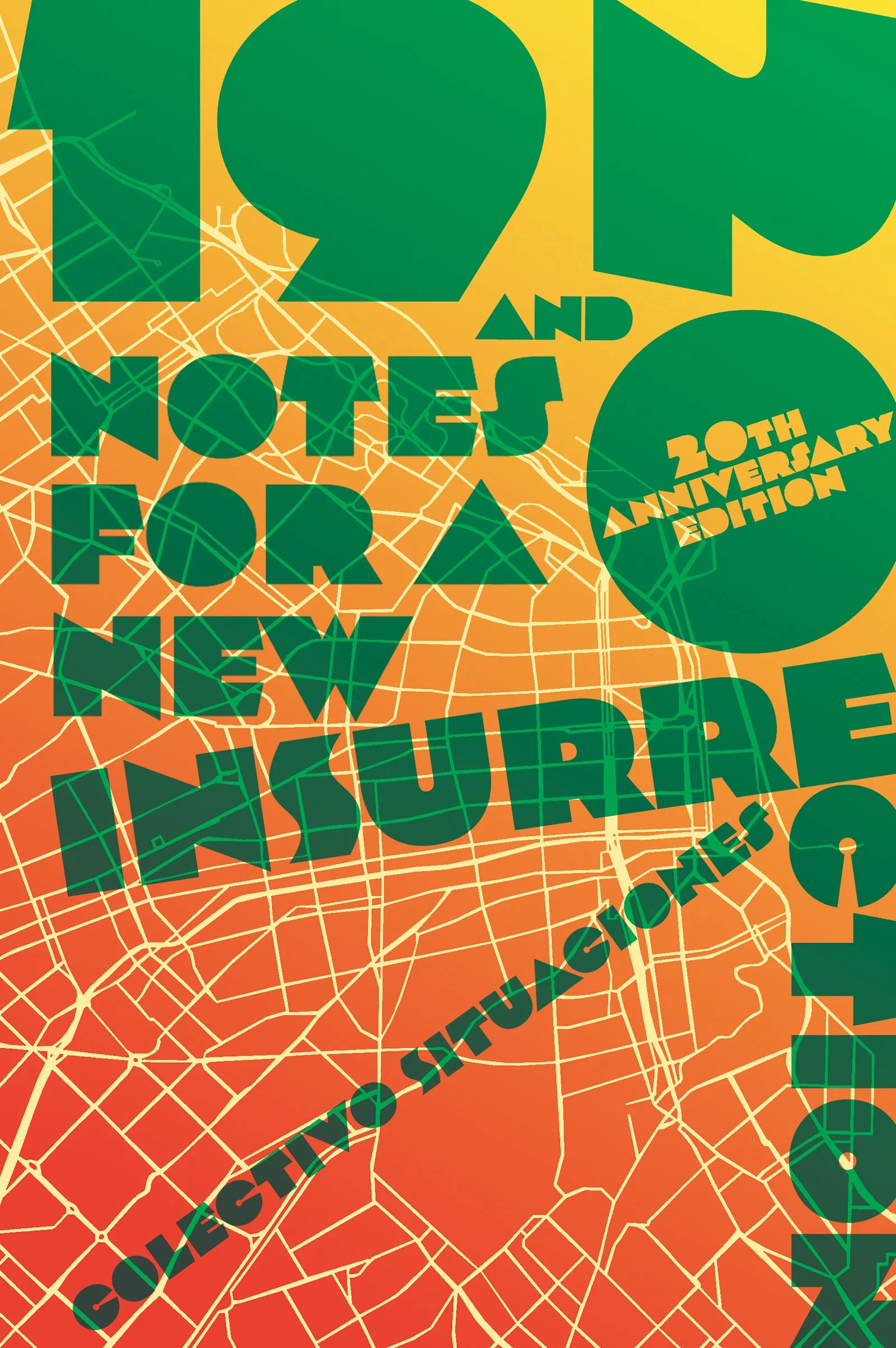

Colectivo Situaciones
From a rebellion against neoliberalism’s miserable failures, notes for a new insurrection and a new society.
19 and 20 tells the story of one of the most popular uprising against neoliberalism: on December 19th and 20th, 2001, amidst a financial crisis that tanked the economy, ordinary people in Argentina took to the streets shouting “¡Qué se vayan todos!” (They all must go!) Thousands of people went to their windows banging pots and pans, neighbors organized themselves into hundreds of popular assemblies, workers took over streets and factories. In those exhilarating days, government after government fell as people invented a new economy and a new way of governing themselves.
It was a defining moment of the antiglobalization movement and Colectivo Situaciones was there, thinking and engaging in the struggle. Their writings during the insurrection have since been passed hand to hand and their practice of militant research modelled widely as a way of thinking together in a time of rebellion. Today, as a staggering debt crisis deepens amidst an already COVID-shaken economy, we see the embers from that time twenty years ago in the mutual aid initiatives and new forms of solidarity amidst widespread vulnerability.
Revisiting the forms of counterpower that emerged from the shadow of neoliberal rule, Colectivo Situaciones reminds us that our potential is collective and ungovernable.

Marcello Tarì
Translated by Richard Braude
In a era of ongoing political, economic, and climate crisis, Marcello Tarì reclaims the revolutionary task of making life worth living : )
Can we afford our collective unhappiness any longer? There Is No Unhappy Revolution gives expression to the age of revolution unfolding before us. With equal parts sophistication and raw urgency, Marcello Tarì identifies the original moments as well as the powerful disruptive and creative content haunting our times like a specter.
One hundred years after the October Revolution, amidst our current civilizational crisis, is it still possible to think and build communism? Yes, Tarì responds, provided we radically rethink the tradition of revolutionary movements that have followed one century to another.
Offering both a militant philosophy and a philosophy of militancy, he deftly confronts the different contemporary movements from the Argentinean insurrection of 2001 to Occupy Wall Street, the Spanish Indignados, the French movement against the labor law, and the Arab spring, resurrecting and renewing a destituent lineage of revolutionary thought, from Walter Benjamin to Giorgio Agamben, that promises to make life livable.

Abolition: A Journal of Insurgent Politics
Abolition Collective
What does an abolitionist world look like? Insights from today’s international abolitionist movement reveal a world to win.
Making Abolitionist Worlds gathers key insights and interventions from today’s international abolitionist movement to pose the question: what does an abolitionist world look like? The Abolition Collective investigates the core challenges to social justice and the liberatory potential of social movements today from a range of personal, political, and analytical points of view, underscoring the urgency of an abolitionist politics that places prisons at the center of its critique and actions.
In addition to centering and amplifying the continual struggles of incarcerated people who are actively working to transform prisons from the inside, Making Abolitionist Worlds animates the idea of abolitionist democracy and demands a radical re-imagining of the meaning and practice of democracy. Abolition Collective brings us to an Israeli prison for a Palestinian feminist reflection on incarceration within settler colonialism; to protest movements in Hong Kong and elsewhere, who use “abolition democracy” to advocate for the abolition of the police; to the growing culture in the United States of “aggrieved whiteness,” which trucks in fear, anger, victimhood, and a need for vengeance to maintain white supremacy; to the punitive landscapes that extend from the incarceration of political prisoners to the mass deportations and detentions along the U.S. southern border.
Making Abolitionist Worlds shows us that the paths forged today for a world in formation are rooted in antiracism, decolonization, anticapitalism, abolitionist feminism, and queer liberation.

Josh MacPhee
Art & Culture / Social Movements
A groundbreaking exploration of the parallel rise of social movements and the vinyl record as the dominant form of music distribution in the second half of the twentieth century, alongside a compendium of over 750 record labels that propelled political music and resistance on an international scale.
An Encyclopedia of Political Record Labels is a compendium of information about political music and radical cultural production. Focusing on vinyl records and the labels that released them, this groundbreaking book traces the parallel rise of social movements in the second half of the twentieth century and the vinyl record as the dominant form of music distribution.
Just as the Civil Rights Movement leaps onto mainstream headlines in the early 1960s, the 33rpm “Long Player” and 45rpm single invade people’s stereos. All the major Civil Rights organizations release vinyl records of speeches, movement songs, and field recordings—setting the pace for the intertwining of social movements and easily distributed sound recordings. This relationship continues through the end of the twentieth century, which marked both the end of apartheid in South Africa and the dominance of the vinyl format.
From A-Disc (the record label of the Swedish Labor Movement) to Zulu Records (the label of free jazz pioneer Phil Choran), An Encyclopedia of Political Record Labels is a compelling panorama of political sound and action, including over 750 record labels that produced political music. Each entry features the logo of the label, a brief synopsis of its history, and additional interesting information. Truly international in scope, over two dozen countries and territories are represented, as well as a myriad of musical styles and forms.

Liaisons
This truly internationalist and collectivist publication boldly examines the forms of right and left wing populism emergent in the fissures of the political world. Experimental in both form and analysis, In the Name of the People is the commune form of thought and text.
In the Name of the People is an analysis and reflection on the global populist surge, written from the local forms it takes in the places we inhabit: the United States, Catalonia, France, Italy, Japan, Korea, Lebanon, Mexico, Quebec, Russia, and Ukraine. The upheaval and polarizations caused by populist policies around the world indicates above all the urgency to develop a series of planetary revolutionary interpretations, and to make the necessary connections in order to understand and act in the world.
The ghost of the People has returned to the world stage, claiming to be the only force capable of correcting or taking charge of the excesses of the time. The relationship between the collapse of certain orders, the multiplication of civil wars, and the incessant appeal to the People is clear: as the liberal mode of governance experiences a global legitimation crisis, different forms of right and left populism gain strength within the fractures of ever expanding ruins.
Populism has now become familiar as a global phenomenon: from the eruptions of the far right in the West to the populist capture of the movement of the squares—Syriza in Greece, Podemos in Spain, the Five Star Movement in Italy, or Our Revolution in the United States—to the electoral victories of Rodrigo Duterte, Recep Tayyip Erdoğan, Narendra Modi, Benjamin Netanyahu, Vladimir Putin, Donald Trump, and Brexit, all alongside large populist gains in every European country. While disparate in many ways, these dynamics all share an appeal to combat the rule and sensibility of the elites, with the help of a figure that can channel the affective energies of discontent through operations of identification and exclusion.
And yet, from the Narodniki to the Black Panthers and Zapatistas, to the emancipatory political movements which expressed themselves as the authentic people—Nuit Debout, the 99%, the indignados—history reminds us of revolutionary populisms.
How do we distinguish the new from the old? What are their limits and potentials? What is the nature of the affective flows that characterize their relations? How do we address the indeterminacy inherent in mass movements and mobilizations, as well as their confusions, fears, and hesitancies?
Friends: we pose the question of populism to you because it is the question our time poses to us.
“One day perhaps we will write, think, and act en masse; entire communes will undertake a work.” —Novalis

Written by the 'Wages for Students' Students
Edited by Jakob Jakobsen, María Berríos, and Malav Kanuga
Wages for Students was published anonymously by three activists in the fall of 1975. It was written as “a pamphlet in the form of a blue book” by activists linked to the journal Zerowork during student strikes in Massachusetts and New York.
Deeply in influenced by the Wages for Housework Campaign’s analysis of capitalism, and relating to struggles such as Black Power, anticolonial resistance, and the antiwar movements, the authors fought against the role of universities as conceived by capital and its state. The pamphlet debates the strategies of the student movement at the time and denounces the regime of forced unpaid work imposed every day upon millions of students. Wages for Students was an affront to and a campaign against the neoliberalization of the university, at a time when this process was just beginning. Forty years later, the highly pro table business of education not only continues to exploit the unpaid labor of the students, but now also makes them pay for it. Today, when the student debt situation has us all up to our necks, and when students around the world are refusing to continue this collaborationism, we again make this booklet available “for education against education.”
This new trilingual edition includes an introduction by George Caffentzis, Monty Neill, and John Willshire-Carrera alongside a transcript of a collective discussion organized by Jakob Jakobsen, Malav Kanuga, Ayreen Anastas, and Rene Gabri, following a public reading of the pamphlet by George Caffentzis, Silvia Federici, Cooper Union students, and other members and friends of 16 Beaver.
Wages for Students was anonymously authored and published in the fall of 1975 by George Caffentzis, Monty Neill, and John Willshire-Carrera, three activists associated with the journal Zerowork and later with the Midnight Notes Collective. This trilingual edition includes an introduction by the original authors and is edited by Jakob Jakobsen, María Berríos, and Malav Kanuga.
Collective Spanish translation: Catalina Valdés, Carlos Labbé, Mónica Ríos, Romina Pistacchio, Constanza Ceresa, Javier Osorio, Catalina Donoso. Special thanks to Carolina Alonso Bejarano for editorial assistance and Edison Pérez for Spanish proofreading.
Collective French translation: Alponse Girard, Frédéric Racine, and Paulin Dardel of Éditions de l’Asymétrie. Special thanks to Adrien Tournier of Éditions Entremonde and Gabrielle Gérin for editorial assistance.
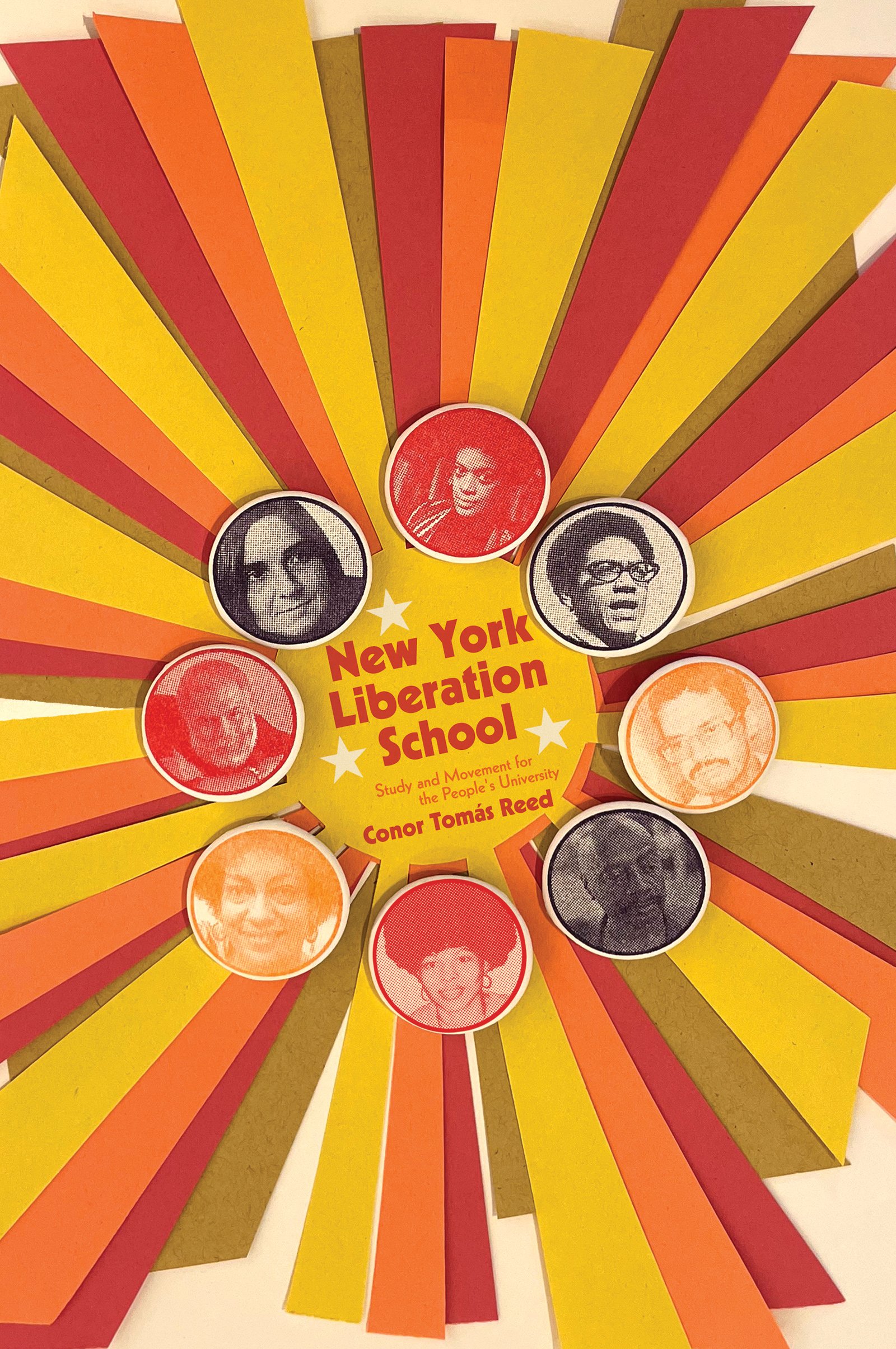
Conor Tomás Reed
In the 1960s and ’70s—when Toni Cade Bambara, Samuel Delany, David Henderson, June Jordan, Audre Lorde, Guillermo Morales, Adrienne Rich, and Assata Shakur all studied and taught at CUNY—New York City’s classrooms and streets radiated as epicenters of Black, Puerto Rican, queer, and women’s liberation.
Conor Tomás Reed is part of the next generation of insurgent CUNY thinkers nourished by these legacies. Highlighting the decolonial feminist metamorphosis that transformed our educational landscape, New York Liberation School explores how study and movement coalesced across classrooms and neighborhoods. Reed’s immersive and wide-ranging narrative brings us into the archives and up close to the stories of its main participants in order to reactivate these vibrant histories. The result is a radiant reclamation of collective history that charts a vision for liberating education and society today.
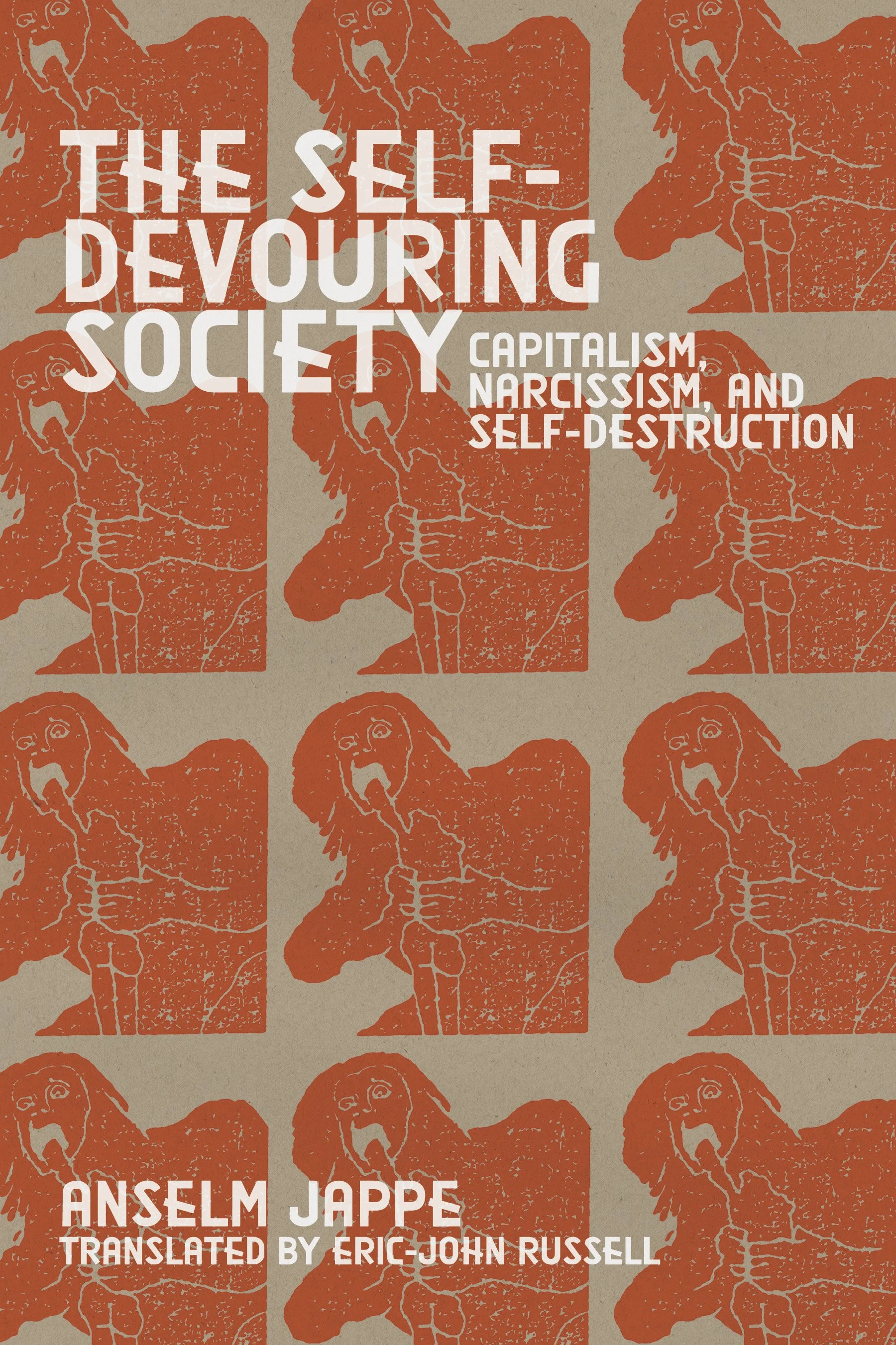
Anselm Jappe
Translated by Eric-John Russell
Renowned theorist Anselm Jappe explains how contemporary capitalism has turned everyone into a narcissist.
Liberals smirk at Trump’s narcissism, but, as renowned theorist Anselm Jappe explains, contemporary capitalism has turned everyone into a narcissist.
The Greek myth of Erysichthon describes the fate of a king whose hunger drove him to eat until the only thing left to devour was himself. This image—of a society spiraling inexorably in a self-destructive dynamic—forms the starting point of Anselm Jappe’s investigation into the relationship between contemporary capitalism and subjectivity, or our personal experience of the world.
In a work that unites the critique of political economy and the psychoanalytic tradition, Jappe explores the dynamics of contemporary capitalism and explains how internalizing them creates a specific kind of person—a narcissist, someone who can only interact with the world by consuming it and who cannot conceive of limits to this consumption. In conversation with Marx as well as Freud, Erich Fromm, Herbert Marcuse, and Christopher Lasch, Jappe probes the ways in which the churning of the capitalist machine, ceaseless and yet devoid of real purpose, creates an endless hunger that increasingly ends in spectacular violence.
Everyone can feel that the world is getting angrier. The Self-Devouring Society provides an original and rigorous explanation of why.

Josh MacPhee
From the fight against the AIDS crisis to the struggle for Black liberation and international solidarity, Graphic Liberation! digs deep into the history, present, and future of revolutionary political image making.
What is the role of image and aesthetic in revolution? Through a series of interviews with some of the most accomplished designers, Josh MacPhee charts the importance of revolutionary aesthetics from the struggle for abolition by Black Panthers, the agitation during the AIDS crisis from ACT-UP, the fight against apartheid in South Africa and Palestine, as well as everyday organizing against nuclear power, for housing, and international solidarity in Germany, Japan, China, and beyond.
In twelve interviews, political designer and street artist Josh MacPhee talks to decorated graphic designers such as Avram Finkelstein, Emory Douglas, and more, focussing on each of their contributions to the field of political graphics, their relationships to social movements and political organizing, the history of political image making, and issues arising from reproduction and copyright.

Edited by Ashon Crawley and Roberto Sirvent, with the Abolition Collective
Abolition / Spirituality / Social Movements
Abolition can be a spiritual practice, a spiritual journey, and a spiritual commitment. What does abolition entail and how can we get there as a collective and improvisational project?
To posit the spirituality of abolition is to consider the ways historical and contemporary movements against slavery; prisons; the wage system; animal and earth exploitation; racialized, gendered, and sexualized violence; and the death penalty necessitate epistemologies that have been foreclosed through violent force by Western philosophical and theological thought. It is also to claim that the material conditions that will produce abolition are necessarily Black, Indigenous, queer and trans, feminist, and also about disabled and other non-conforming bodies in force and verve.
Spirituality and Abolition asks: what can prison abolition teach us about spiritual practice, spiritual journey, spiritual commitment? And, what can these things underscore about the struggle for abolition as a desired manifestation of material change in the worlds we currently inhabit? Collecting writings, poetry, and art from thinkers, organizers, and incarcerated people, the editors trace the importance of faith and spirit in our ongoing struggle towards abolitionist horizons.
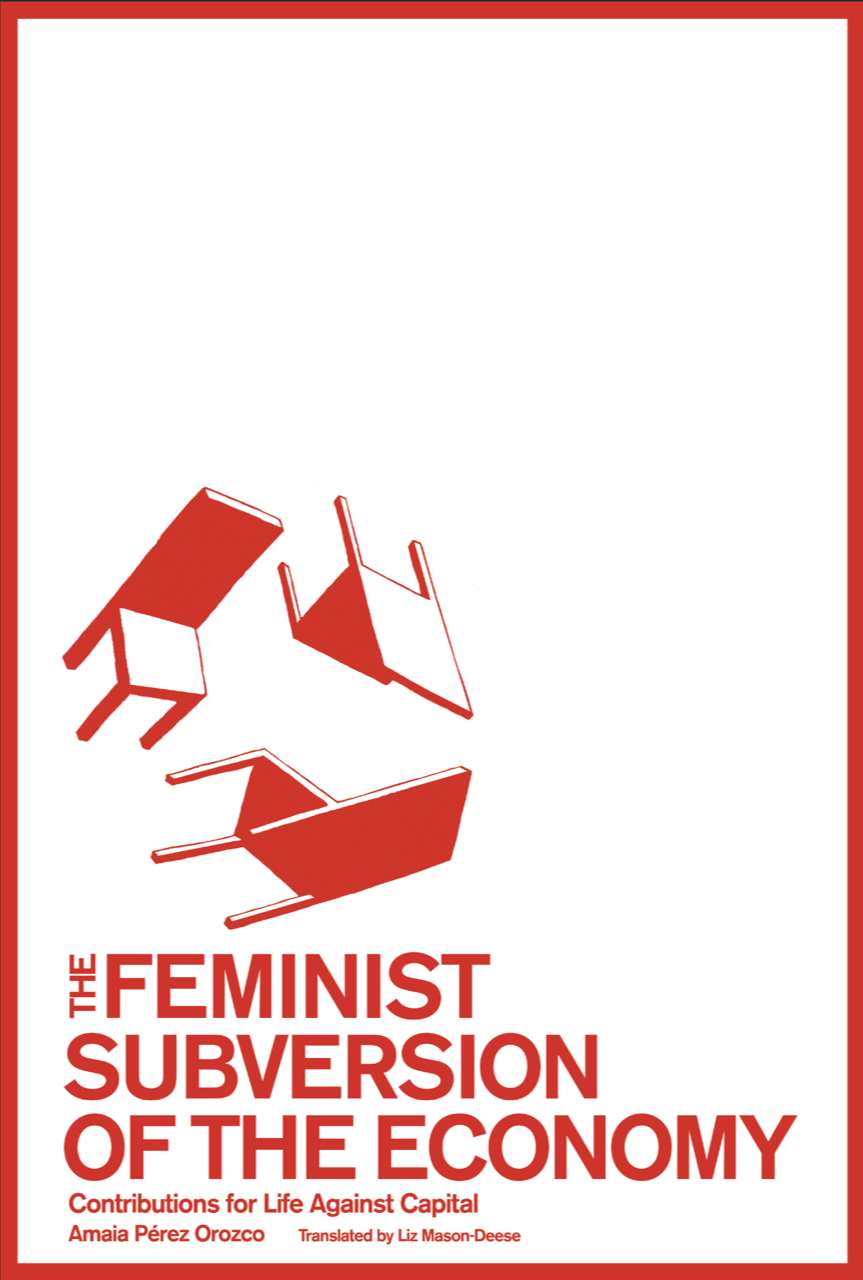
Amaia Pérez Orozco
Translated by Liz Mason-Deese
Feminism / Ecology / Philosophy
The Feminist Subversion of the Economy shows the urgent need to radically and democratically discuss what we mean by a dignified life and how we can organize to sustain life collectively.
In the face of unending economic crises and climate catastrophe, we must consider, what does a dignified life look like? Feminist intellectual and activist Amaia Pérez Orozco powerfully and provocatively outlines a vision for a web of life sustained collectively with care, mutualism, and in balance with our ecological world. That vision is a call to action to subvert the foundational order of racial capitalism, colonial violence, and a heteropatriarchal economy that threatens every form of life.
The Feminist Subversion of the Economy makes the connection between the systems that promise more devastation and destruction of life in the name of profit—and rallies women, LGBTQ+ communities, and movements worldwide to center gender and social reproduction in a vision for a balanced ecology, a just economy, and a free society.
Newly translated and updated in collaboration with Liz Mason-Deese, who has won a PEN translation award for her work on feminist economics, The Feminist Subversion of the Economy shows the urgent need to radically and democratically discuss what we mean by a dignified life and how we can organize to sustain life collectively.

Edited by Marc James Léger and David Tomas
With Emory Douglas, EDELO, Rigo 23, and Saúl Kak
Art & Culture / Latin America / Black Liberation
What is the role of revolutionary art? Zapantera Negra, the result of an encounter between Emory Douglas of the Black Panthers and autonomous Indigenous and Zapatista communities, helps us find out.
What is the role of revolutionary art in times of distress? When Emory Douglas, former Minister of Culture of the Black Panther Party, accepted an invitation from the art collective EDELO and the Rigo 23 to meet with autonomous Indigenous and Zapatista communities in Chiapas, Mexico, they addressed just this question. Zapantera Negra is the result of their encounter. It unites the bold aesthetics, revolutionary dreams, and dignified declarations of two leading movements that redefine emancipatory politics in the twentieth and twenty-first century.
The artists of the Black Panthers and the Zapatistas were born into a centuries-long struggle against racial capitalism and colonialism, state repression and international war and plunder. Not only did these two movements offer the world an enduring image of freedom and dignified rebellion, they did so with rebellious style, putting culture and aesthetics at the forefront of political life. A powerful elixir of hope and determination, Zapantera Negra provides a galvanizing presentation of interviews, militant artwork, and original documents from these two movements’ struggle for dignity and liberation.

Edited by Otras Negras … y ¡Feministas!
Introductions by Silvia Federici, Susana Draper, and Liz Mason-Deese
Afterword by Sheila Gruner
Epilogue by Betty Ruth Lozano Lerma
Feminism / Latin America / Social Movements
The global struggles against racism, capitalism, and patriarchy revealed by the Black and Indigenous women and trans communities leading its resistance.
Feminicide and Global Accumulation brings us to the frontlines of an international movement of Black, Indigenous, popular, and mestiza women’s organizations fighting against violence—interpersonal, state sanctioned, and economic—that is both endemic to the global economy and the contemporary devalued status of racialized women, trans, and gender non-conforming communities in the Global South.
These struggles against racism, capitalism, and patriarchy show how crucially linked the land, water, and other resource extraction projects that crisscross the planet are to devaluing labor and nature and how central Black and Indigenous women and trans leadership is to its resistance.
The book is based on the first ever International Forum on Feminicide among ethnicized and racialized groups—which brought together activists and researchers from Colombia, Guatemala, Italy, Brazil, Iran, Guinea Bissau, Bolivia, Canada, the U.S., Ecuador, Spain, Mexico, among other countries in the world to represent different social movements and share concrete stories, memories, experiences and knowledge of their struggles against racism, capitalism and patriarchy.
Feminicide and Global Accumulation reflects, in a collective fabric, the communitarian and enraged struggles of women, trans, and gender non-conforming communities who commit themselves to the transformation of their communities by directly challenging the murder and assassination of women and violence in all its forms.

Sundus Abdul Hadi
Artist Sundus Abdul Hadi’s reflections on self-care as a community act depict care as crucial to creating a just society.
“Take care of yourself. How many times a week do we hear or say these words? If we all took the time to care for ourselves, how much stronger would we be? More importantly, how much stronger would our communities be?”
In Take Care of Your Self, Sundus Abdul Hadi turns a critical and inventive eye to the notion of care and how it relates to social justice. In contrast to the billion-dollar industry of self-care, Abdul Hadi identifies care as a necessary practice—rooted in self, community, and the world—in the collective process of decolonization, empowerment, and liberation.
Abdul Hadi explores the role of art in building regenerative narratives to confront and undo systemic oppression and trauma. Weaving in the work of visionary transcultural artists who engage the liberatory intersections of struggle and care, Abdul Hadi centers the voices of those most-often relegated to the margins and emphasizes the importance of creating brave spaces for their stories and art. The transformative power of care exists in these spaces, building a foundation for a world in desperate need of healing and change.
Featuring words and artwork by Emory Douglass, Leila Abdelrazaq, Ahmad Naser-Eldein, Monique Bedard, Roï Saade, Jessica Powless, Susu Attar, Jihan Kikhia, Sadaf Rassoul Cameron, Narmeen Hashim, Niti Marcelle Mueth, Shanna Strauss and Kevin Calixte, Nora Patrich, Samira Idroos, Tara Jaffar, Julay “Sacred Spirit Ink” and Allos Abis, Joseph Cuillier, Suhad Khatib, and Dana El Masr.

Mario Tronti
Edited and Translated by Andrew Anastasi
Never before translated texts powerfully present Italian autonomist Marxist Mario Tronti’s resonance with contemporary questions of revolutionary organization.
Mario Tronti was the principal theorist of the radical political movement of the 1960s known in Italy as operaismo and in the Anglophone world as Italian workerism, a current which went on to inform the development of autonomist Marxism. His “Copernican revolution”—the proposal that working class struggles against exploitation propel capitalist development, which can only be understood as a reaction that seeks to harness this antagonism—has inspired dissident leftists around the world.
Tronti’s influence as a theorist thus already reaches far beyond Italy to activists and writers working in different sectors on different problems historically and geographically. While his imposing and acclaimed Workers and Capital has only recently appeared in English translation, Tronti has influenced many of the most creative social and political theorists of our time.
Antonio Negri and Michael Hardt have long acknowledged the influence of Tronti on their thinking, drawing especially on his inversion of strategy and tactics in their influential collaborations. Tronti’s work in the 1960s also furnished important building blocks for a Marxist feminist critique of unwaged labor—as developed by Mariarosa dalla Costa, Silvia Federici, and many others working on social reproduction theory—as Tronti showed how capitalist control extends beyond the factory to all of society. Fred Moten and Stefano Harney have echoed Tronti’s calls for a radical antagonism “within and against” institutions and the state.
The Weapon of Organization is a crucial introduction to Tronti, presenting a variety of never-before-translated texts—personal letters, public talks, published articles. With an incisive and provocative introduction that situates Tronti and highlights his relevance to contemporary political struggle, Anastasi translates and restores key writing from the birth of Italian operaismo—days of street fighting and theorizing for a renewed age of revolution. Tronti’s goal, Anastasi writes, was not to become a revered thinker but to participate in the destruction of capitalist society.

Abolition Collective
The bold voices and inspiring visions of today’s revolutionary abolitionist movement.
Beyond border walls and prison cells—carceral society is everywhere. In a time of mass incarceration, immigrant detention and deportation, rising forms of racialized, gendered, and sexualized violence, and deep ecological and economic crises, abolitionists everywhere seek to understand and radically dismantle the interlocking institutions of oppression and transform the world in which we find ourselves. These oppressions have many different names and histories and so, to make the impossible possible, abolition articulates a range of languages and experiences between (and within) different systems of oppression in society today.
Abolishing Carceral Society presents the bold voices and inspiring visions of today’s revolutionary abolitionist movements struggling against capitalism, patriarchy, colonialism, ecological crisis, prisons, and borders.
In the first of a series of publications, the Abolition Collective renews and boldly extends the tradition of “abolition-democracy” espoused by figures like W.E.B. Du Bois, Angela Davis, and Joel Olson. Through study and publishing, the Abolition Collective supports radical scholarly and activist research, recognizing that the most transformative scholarship is happening both in the movements themselves and in the communities with whom they organize.
Abolishing Carceral Society features a range of creative styles and approaches from activists, artists, and scholars to create spaces for collective experimentation with the urgent questions of our time.
Through essays, interviews, visual art, and poetry, each presented in an accessible manner, the work engages with the meaning, practices, and politics of abolitionism in a range of historical and geographical contexts, including: prison and police abolitionism, border abolition, decolonization, slavery abolitionism, antistatism, antiracism, labor organizing, anticapitalism, radical feminism, queer and trans politics, Indigenous people’s politics, sex worker organizing, migrant activism, social ecology, animal rights and liberation, and radical pedagogy.


Tasos Theofilou
Translated by Eleni Pappa
Preface by Ben Morea
Writings from a Greek Prison is a literary work of biting realism. Tasos Theofilou gives testimony on the brutality of prison life, and its centrality in contemporary capitalism, through a blur of memoir, social commentary, free verse, and a glossary of the idiom used by inmates in Greek prisons.
A political prisoner in Greece from 2012 to 2017, Theofilou’s work centers on exposing the conditions of widespread exploitation and social struggle that persist in Greece as a result of the debt crisis—in prisons as well as in mainstream society. Common Notions’ new imprint, ΔΙΠΛΗ / DIPLI, taking its name from the Greek word “double,” refers to the way in which prisoners from different prisons communicate by way of the double telephone line. With this strategy, two to five prisoners in different locations call the same telephone number at an agreed upon time and the owner of that telephone number, living outside prison, connects them together. Proceeds raised through the DIPLI imprint will support political prisoners.
ΔΙΠΛΗ / DIPLI imprint

Mariarosa Dalla Costa and Monica Chilese
Ecology / Anticolonial Politics
The ocean today is a central protagonist in the ongoing battle for life on earth. It is the site of a violent clash between the right to live and the right to profit, as corporate interests enclose the ocean’s vast common of living riches through tourism and industrial fishing—distorting landscapes, depleting fish stocks, and destroying barriers to protection against climate disaster.
Our Mother Ocean tells the story of the Fisherman’s Movement from its beginnings in Southern India to its central role in the struggle against neoliberal globalization. Since the 1970s, the Fisherman’s Movement has been one of the ocean’s closest and most impassioned protectors, raising key questions concerning the relationship between work and the safeguarding of common resources, the provision of community needs and environmental limits of the devastating industrialization of our oceans. While a remarkable political awareness has spread over the last forty years around questions of food, agriculture and land, the issues of the sea have remained concealed, despite the protracted struggles between fish workers and those who oversee the sector and the exploitation of the ocean’s resources.
In this crucial intervention, Mariarosa Dalla Costa and Monica Chilese offer the ocean to the land-locked history of food sovereignty movements led primarily workers in the global South against dispossession.
Dalla Costa and Chilese draw attention to the polyvalent functions of the ocean as a source of food, medicine, raw materials, biodiversity and culture—and as a site of human labour and livelihood threatened by vast enclosures through industrial fishing and tourism. This book is an urgent reminder that the ocean is today the site of a heroic struggle for the preservation of life on earth. It points crucially to impassioned sectors of the movement of movements that endure in the global South, and details the stakes of the struggles and its outcomes on land and at sea as central for the future of life on earth.

E Morales-Williams
A powerful guidebook for healing and resistance for young girls and gender-expansive youth of color on how to unite, heal, protect, and lead their communities.
Turn Up For Freedom helps youth leaders hone their skills to build personal, emotional, and collective freedom. It centers youth leadership through principled positions, such as being a healer, a protector, a scholar-activist, a community organizer, and being radically joyful, in order to build personal emotional and collective freedom. Through memoir, story telling, and political education, E Morales-Williams grounds these principles in the material experiences of working-class youth and reflects on the possibilities and challenges in practicing them as a collective in under-resourced communities.
These were the principles of leadership and lessons learned from a Black and Brown girls and gender expansive youth-collective called TUFF Girls (Turning Up for Freedom), based in North Philadelphia. Morales-Williams carefully guides young readers through the challenging issues that confront their lives, helping to identify the traumatic impact that structural violence has on Black and Brown communities, restoring traditions of healing and collective care, and recentering leadership in community as an abolitionist and decolonizing practice. Turn Up For Freedom calls on young people to unite, heal, protect, and lead.

Interference Archive
A sweeping and poignant history of community response to the violence of white supremacy and carceral systems in the US, told through interviews, archival reproductions, and narrative.
In the summer of 2020, the deaths of George Floyd, Breonna Taylor, and Tony McDade ignited a movement that led to the largest street protests in American history. Abolitionist grassroots organizers around the country unified around a clear demand: defund the police and refund our communities. While the majority of the country supported the call to reform the police, what followed was a backlash from mainstream politicians and the press, all but defeating the movement to end the continued violence against Black Americans.
Defend / Defund examines the history of how communities have responded to the violence of white supremacy and carceral systems in the United States and asks what lessons the modern abolitionist movement can draw from this past. Organized in a series of thematic sections from the use of self-defense by Black organizers, to queer resistance in urban spaces, the narrative is accompanied by over one hundred full-color images including archival materials produced by Emory Douglas, the Black Panther Party for Self-Defense and the Young Lords in the 1960s and 70s, CopWatch and the Stolen Lives Project in the 1980s and 1990s, and contemporary material from the Movement for Black Lives, Project NIA, and INCITE!, Defend / Defund shows how deep the struggles for abolition go and how urgent they remain.
In addition to full-color reproduction of archival materials, the narrative includes transcripts of interviews with activists, scholars, and artists such as Mariame Kaba, Dread Scott, Dennis Flores, Dr. Joshua Myers, Jawanza Williams (VOCAL-NY and Free Black Radicals), Cheryl Rivera (NYC-DSA Racial Justice Working Group and Abolition Action), and Bianca Cunningham (Free Black Radicals). Each conversation dives into the history of specific struggles with, and organizing against, police and police brutality.
In total, the publication shows how the modern Defund movement builds on powerful Black feminist and abolitionist movements past and imagines alternatives to policing for community safety for our present.

Edited by Mary N. Taylor & Noah Brehmer
How do we move from defensive tactics that respond to the latest stages of capitalist urbanization, to transformative, strategic revolts, attacking the root causes and putting into practice alternative forms of urban life? One proposal for such a revolutionary alternative to capital’s organization of our lived environment has been the commons, wherein inhabitants communally control the multi-faceted conditions that make up their daily reproduction.
As a district behind the train station in the post-socialist city of Vilnius Lithuania faces gentrification, an autonomous community center there has sought to use commoning to resist. Taken up in the former state-socialist Eastern Block, commoning practices are embraced as a method for criticising the vicious wave of enclosures that began after the fall of state-socialism while at the same time not relying on the heavily stigmatized politics of state-socialism.
Emerging from a process of thinking together,The Commonist Horizon features five interventions by movement thinkers. Beginning in the post-Soviet city of Vilnius, the dialogical process stretches outward to two other formerly state-socialist countries, and then beyond. Speaking from their experiences in social movement formations, the authors take up the lived experience of building what might be called urban commons, offering insights on the conceptual and political potentials and limitations of this terminology and associated practices.
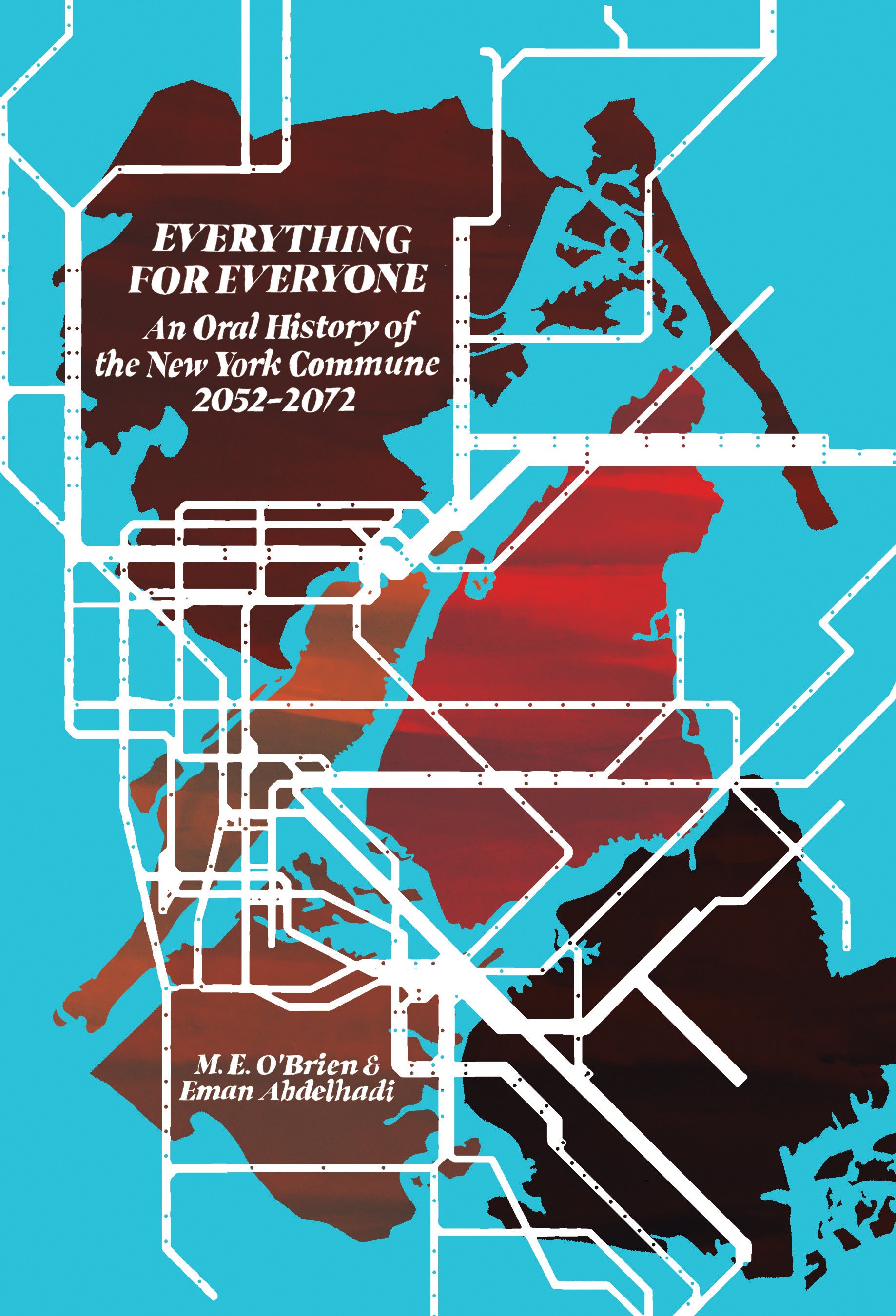
M. E. O’Brien and Eman Abdelhadi
By the middle of the twenty-first century, war, famine, economic collapse, and climate catastrophe had toppled the world's governments. In the 2050s, the insurrections reached the nerve center of global capitalism—New York City. This book, a collection of interviews with the people who made the revolution, was published to mark the twentieth anniversary of the New York Commune, a radically new social order forged in the ashes of capitalist collapse.
Here is the insurrection in the words of the people who made it, a cast as diverse as the city itself. Nurses, sex workers, antifascist militants, and survivors of all stripes recall the collapse of life as they knew it and the emergence of a collective alternative. Their stories, delivered in deeply human fashion, together outline how ordinary people's efforts to survive in the face of crisis contain the seeds of a new world.


Jack Z. Bratich
Antifascist Politics / Gender / Necropolitics
Rooted in an understanding of how the fascist body is constructed, we can develop the collective power to dismember it.
Fascist and reactionary populist forces have undeniably swelled in the US in recent years. To effectively counter fascist movements, we need to understand them beyond their most visible and public expressions. To do this, Jack Bratich asserts, we must dig deeper into the psyche and body that gives rise to fascist formations. There we will find microfascism, or the cultural ways in which a fascist understanding of the world is generated from the hatreds that suffuse everyday life.
By highlighting the misogyny at fascism’s core, we are able to observe a key process in the formation of a fascist body. Recognizing the microfascism behind appeals to recover the past glory of white male subjects created by earlier foundational wars, we see how histories of settler colonialism, genocide, and domination are animating the deadly mission of fascism today. By focusing on the variety of ways the resurgent fascist tendency courts its own destruction (and demands the destruction of others), we can trace how fascism refines and expands the death and annihilation that underpins capitalist, colonial, and patriarchal systems.
The implications of On Microfascism are far-reaching and unsettling. Still, Bratich insists, the new fascism is not as powerful as its adherents wish us to believe. To defeat it, we must develop and defend a “micro-antifascism” grounded in the ethics of mutual aid and care in the everyday. Rooted in an understanding of how the fascist body is constructed, we can develop the collective power to dismember it.


Mariarosa Dalla Costa
Preface by Silvia Federici
Foreword by Liz Mason-Deese
Did the New Deal save the working class or destroy its ability to struggle for the well-being of all?
“Dalla Costa shows that with the New Deal, the state began to plan the ‘social factory’—that is, the home, the family, the school, and above all women’s labor, on which the productivity and pacification of industrial relations was made to rest.” —Silvia Federici
A groundbreaking study, Family, Welfare, and the State offers a comprehensive reading of the welfare system through the dynamics of women’s resistance and class struggle. Mariarosa Dalla Costa, a key figure in the International Wages for Housework campaigns, highlights how the New Deal concretized the central role of women and the family in ensuring the capacity for economic growth and the reproduction of labor power necessary for the maintenance of capitalism. As social movements fight for and secure government relief for mass unemployment in a way not seen for decades, it is essential to understand how the deals—especially governing race, class, and family relations—struck by earlier generations of activists have shaped our world. A new foreword makes clear Dalla Costa’s importance to understanding the functioning of social reproduction in a world ravaged by COVID-19.

CounterPower
Social Movements / Organizing / Philosophy
Organizing for Autonomy takes on the urgent task of critically clarifying and contextualizing a multitude of possibilities, spaces, and opportunities to resist capitalism, climate catastrophe, heteropatriarchy, white supremacy, workers’ exploitation, and a range of other oppressive structures. Delineating the mechanisms of these violent institutions paired with a historical account of revolutionary movements from around the world, and ending with a radical reimagining of contemporary life, CounterPower offers a brazen and determined articulation of a world that centers community, love, and justice.
With unparalleled breadth and synthesizing innumerable sources of revolutionary thought and history into a single vision, Organizing for Autonomy is the result of years of struggle and resistance that acts as both an introduction to revolutionary theory and a practical prompt to the burning questions of how we get free. Bold, fearless, and radically original, Organizing for Autonomy imagines a decolonized, communist, alternative world order that is free from oppressive structures, state violence, and racial capitalism.

Out of the Woods Collective
Climate disaster is here. Capitalism can’t fix it, not even with a Green New Deal. Our only hope against hope is disaster communism.
We are told we are living in the middle of a climate crisis of unprecedented proportions. As doomsday scenarios mount, hope collapses. Even as more and more people around the planet experience climate disaster as immediate and urgent as ever, our imagination and programs for transformation lag. The disasters are already here, and the crises, longstanding, are ongoing.
In Hope Against Hope, the Out of the Woods collective investigates the critical relation between climate change and capitalism and calls for the expansion of our conceptual toolbox to organize within and against ecological crisis characterized by deepening inequality, rising far-right movements, and—relatedly—more frequent and devastating disasters. While much of environmentalist and leftist discourse in this political moment remain oriented toward horizons that repeat and renew racist, anti-migrant, nationalist, and capitalist assumptions, Out of the Woods charts a revolutionary course adequate to our times.
At the center of the renewed political orientation Hope Against Hope expounds is an abolitionist approach to border imperialism, reactionary ecology, and state violence that underpins many green solutions and modes of understanding nature. It reminds us of the frequent moments and movements of solidarity emerging in the ruins all around us. Their stunning conclusion to the disarray of politics in our seemingly end times is the urgency of creating what Out of the Woods calls “disaster communism”—the collective power to transform our future political horizons from the ruins and establish a climate future based in common life.


Grupo de Arte Callejero
Translated by Mareada Rosa Translation Collective
Art & Culture / Latin America / Philosophy
From a legendary feminist art collective in Argentina, an indispensible reflection on what was done and what remains to be done in the social fields of art and revolution.
Grupo de Arte Callejero: Thought, Practices, and Actions tells the profound story of social militancy and art in Argentina over the last two decades and propels it forward. For Grupo de Arte Callejero [Group of Street Artists], militancy and art blur together in the anonymous, collective, everyday spaces and rhythms of life. Thought, Practices, and Actions offers an indispensable reflection on what was done and what remains to be done in the social fields of art and revolution.
Every new utopian struggle that emerges must to some extent be organized on the knowledge of its precedents. From this perspective, Grupo de Arte Callejero situates their experience in a network of previous and subsequent practices that based more on popular knowledge than on great theories. Their work does not elaborate a dogma or a model to follow, but humbly expresses their interventions within Latin American autonomous politics as a form of concrete, tangible support so that knowledge can be generalized and politicized by a society in movement.
Without a doubt this will not be the most exhaustive book that can be written on the GAC, nor the most complete, nor the most acute and critical, but it is the one GAC wanted to write for themselves.

Edited by Brad Duncan and Interference Archive
Art & Culture / Social Movements
Finally Got the News uncovers the hidden legacy of the radical Left of the 1970s, a decade when vibrant social movements challenged racism, imperialism, patriarchy and capitalism itself. It combines written contributions from movement participants with original printed materials—from pamphlets to posters, flyers to newspapers—to tell this politically rich and little-known story.
The dawn of the 1970s saw an absolute explosion of interest in revolutionary ideas and activism. Young people radicalized by the antiwar movement became anti-imperialists, veterans of the Civil Rights and Black Power movements increasingly identified with communism and Pan-Africanism, and women were organizing for autonomy and liberation. While these movements may have different roots, there was also an incredible overlapping and intermingling of activists and ideologies.
These diverse movements used printed materials as organizing tools in every political activity, creating a sprawling and remarkable array of printing styles, techniques, and formats. Through the lens of printed materials we can see the real nuts and bolts of revolutionary organizing in an era when thousands of young revolutionaries were attempting to put their beliefs into practice in workplaces and neighborhoods across the U.S.

Britney Daniels
In this searing, honest memoir, a Black queer emergency-room nurse works the front lines of care during COVID-19.
Britney Daniels is a Black, masculine-presenting, tattooed lesbian from a working-class background. For the last five years, she has been working as an emergency-room nurse. She began Journal of a Black Queer Nurse as a personal diary, a tool to heal from the day-to-day traumas of seeing too much and caring too much.
We are fortunate that Daniels is now willing to share these stories with us. Hilarious, gut-wrenching, and infuriating by turns, these stories, told from the perspective of a deeply empathetic, no-nonsense young nurse, make visible the way race, inequality, and a profit-driven healthcare system make the hospital a place where systemic racism is lived. Whether it is giving one’s own clothes to a homeless patient, sticking up for patients of color in the face of indifference from white doctors and nurses, or nursing one’s own back pain accrued from transporting too many bodies as the morgues overflowed during the pandemic, Journal of a Black Queer Nurse reveals the ways in which care is much more than treating a physical body and how the commitment to real care–care that involves listening to and understanding patients in a deeper sense–demands nurses, especially nurses of color, must also be warriors.

Michael Hardt & Sandro Mezzadra
Latin America / Social Movements
A militant reading of struggles and developments in Bolivia form a balance sheet of possibility for a Left program in the country, hemisphere, and the world.
Bolivia beyond the Impasse sketches the primary characteristics of the current political, social, and economic situation of Bolivia. Longtime militant researchers Michael Hardt and Sandro Mezzadra explain not only how this situation came about but also the obstacles that confront today’s progressive forces and have led to an impasse. Right-wing political and social forces continue to gain strength and constantly hinder or thwart progressive initiatives. Obstacles also arise from within movements, including the vexed question of leadership, which has increasingly surfaced between Evo Morales as leader of the MAS party and Luis Arce as president of the government. Hardt and Mezzadra do not dwell on these obstacles, however, because they also recognize the extraordinary power and innovation that a new phase of political struggle in Bolivia could unleash beyond the impasse. The current situation, they argue, remains open to new political inventions rooted in the wide range of progressive and revolutionary forces both inside and outside the government and the MAS party.
Firmly grounded in the Bolivian situation, Hardt and Mezzadra keep their eye on the Latin American context because they believe that, just as it was twenty years ago, many of today’s most stubborn political and economic obstacles can only be overcome through mechanisms beyond national boundaries, by inventing effective mechanisms of regional cooperation. Although the path forward is not clear and that new and old right-wing forces constitute continuing and increasing threats throughout the region—from Brazil to Argentina and from Colombia to Chile—Hardt and Mezzadra offer a reading of the struggles that form the balance sheet of possibility for a Left program in the country, and consequently the hemisphere, and world.
Despite all the threats and obstacles that feed the impasse, however, dynamics of insurgency and struggle continue to resonate and circulate throughout Latin America. As they powerfully demonstrate, discovering how to defend against violent reactionary forces while furthering democratic initiatives and projects for liberation will be a key task for social movements and progressive governments. Bolivia beyond the Impasse makes the claim with passion and rigor that this regional space of political action and innovation is where the potential for moving beyond the impasse is most promising.

Madeline Lane-McKinley
Labor / Philosophy / Culture
Work is a joke. Laughing at it is political.
Humor, Groucho Marx asserted, is “reason gone mad.” For Walter Benjamin, laughter was “the most revolutionary emotion.” In a moment when great numbers of people are reevaluating their commitment to the hellscape we call “work,” what does it mean to take comedy seriously—and to turn it against work?
Both philosophically brilliant and deeply personal, Comedy Against Work demonstrates how laughing about work can puncture the pretensions of tyrannical bosses while uniting us around a commitment to radically new ways of making the world together. At the same time, Lane-McKinley exposes a war at the heart of contemporary comedy between those who see comedy as a weapon for punching down and those whose laughter points to social transformation. From stand-up to sitcoms, podcasts to late night, comedy reveals our longing to subvert power, escape the prison of work, and envision the joys of a liberated world.

Members of The Situationist International and Students from Strasbourg
Edited by Mehdi El Hajoui and Anna O’Meara
The manifesto that launched the Situationist International (SI) into the public eye and sparked an uprising is back—with the story of its creation and the histories of its publication told.
When the Situationist International was a little known revolutionary art group, before Guy Debord’s philosophical masterpiece TheSociety of the Spectacle was published, and before Paris’ universities were occupied in May ’68, a pamphlet titled On the Poverty of Student Life spurred a scandal that would turn into a global revolt.
On the Poverty of Student Life was a match that recognized and described student and youth alienation, and the way it was printed and distributed spread that fire. For the first edition, supporters of the SI (mis)appropriated school funds to create and distribute 10,000 copies of the pamphlet. From there, dozens of editions were produced by worker- and student-run printing presses around the world, from Paris to East London, from Tokyo to Detroit. This new edition highlights this global underground circulation and brings attention to the common conditions of students, workers, and internationalist resistance in the world of the sixties—bringing that historic reckoning to the present.
Featuring the original English adaptation by former SI member and celebrated translator Donald Nicholson-Smith, an interview with primary author Mustapha Khayati where he traces his map from colonial Algeria to imperial France to the university and the streets, and essays about the political relevance of the manifesto (then and now)—an edition like this has never before existed. With beautiful photographs of nearly one hundred different editions this book provides a cartography of an uprising.

Edited by Christopher R. Rogers, Fajr Muhammad, and the Paul Robeson House & Museum
Abolition / Black Liberation / Social Movements
An anthology-in-action of the culture and politics of Black liberation, rooted in Philadelphia’s Black Radical Tradition.
In the midst of a global pandemic and a nationwide uprising sparked by the murder of George Floyd, Philadelphians took to the streets establishing mutual aid campaigns, jail support networks, bail funds, and housing encampments for their community; removed the statue of Frank Rizzo—the former mayor and face of racist policing; called for the release of all political prisoners including Mumia Abu-Jamal; and protested, marched, and agitated in all corners of the city.
How We Stay Free collects and presents reflections and testimonies, prose and poetry from those on the frontlines to take stock of where the movement started, where it stands, and where we go from here. A celebration of the organizing that sustained the uprising, How We Stay Free is a powerful collection that invites us all to celebrate Black life, find our place in an ongoing rebellion, and organize our communities for the creation of new, better, and freer worlds.


The Red Nation
Anticolonial Politics / Ecology / Social Movements
A powerful guide to Indigenous liberation and the fight to save the planet.
One-part visionary platform, one-part practical toolkit, The Red Deal is a platform that encompasses everyone, including non-Indigenous comrades and relatives who live on Indigenous land. We—Indigenous, Black and people of color, women and trans folks, migrants, and working people—did not create this disaster, but we have inherited it. We have barely a decade to turn back the tide of climate disaster. It is time to reclaim the life and destiny that has been stolen from us and rise up together to confront this challenge and build a world where all life can thrive. Only mass movements can do what the moment demands. Politicians may or may not follow—it is up to them—but we will design, build, and lead this movement with or without them.
When the Red Nation released their call for a “red deal,” it generated coverage in places from Teen Vogue to Jacobin to the New Republic, was endorsed by the DSA, and has galvanized organizing and action. Now, in response to popular demand, the Red Nation expands their original statement filling in the histories and ideas that formed it and forwarding an even more powerful case for the actions it demands.
The Red Deal is a call for action beyond the scope of the US colonial state. It’s a program for Indigenous liberation, life, and land—an affirmation that colonialism and capitalism must be overturned for this planet to be habitable for human and other-than-human relatives to live dignified lives. The Red Deal is not a response to the Green New Deal, or a “bargain” with the elite and powerful. It’s a deal with the humble people of the earth; a pact that we shall strive for peace and justice and a declaration that movements for justice must come from below and to the left.
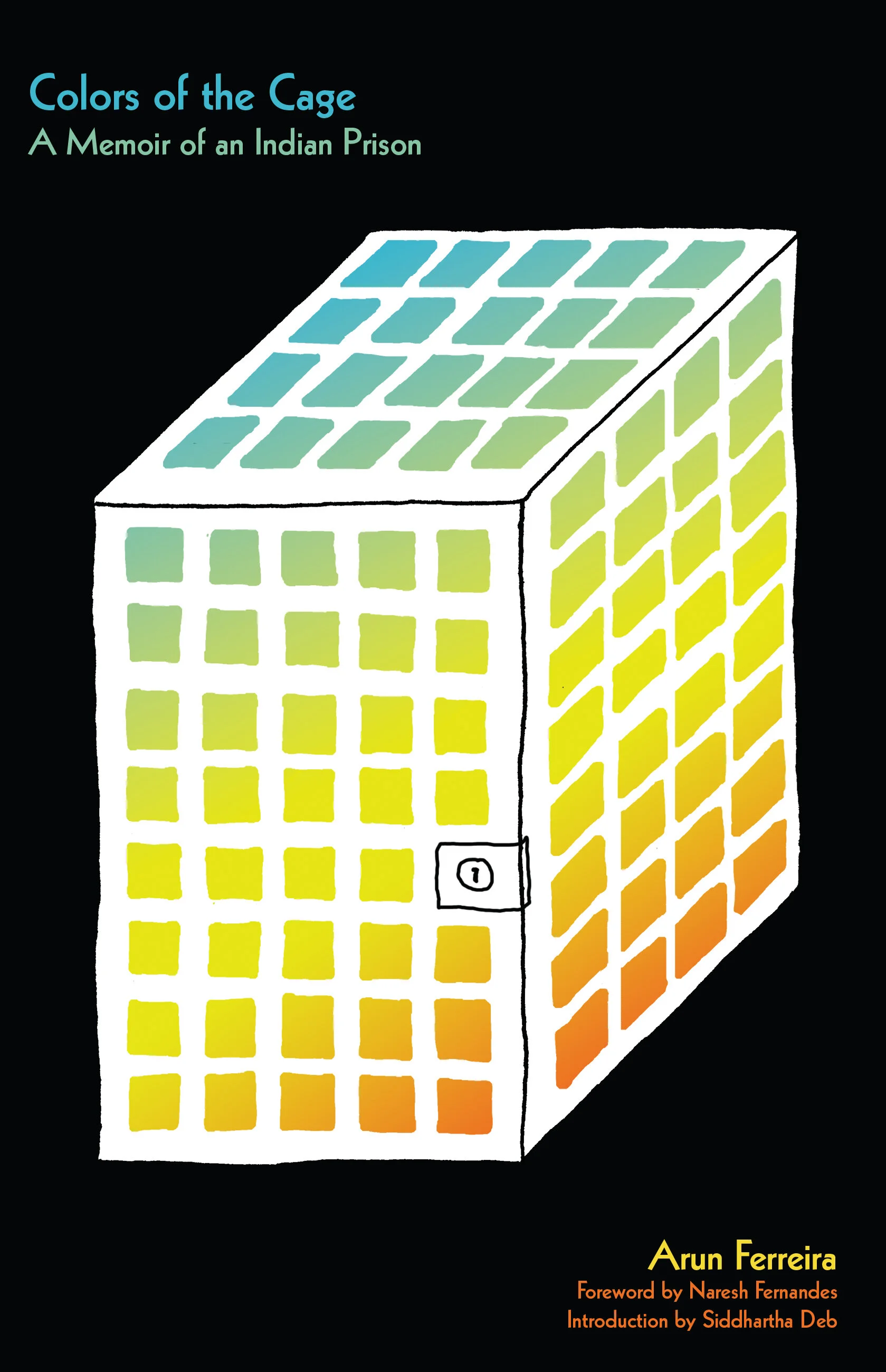
Arun Ferreira
Introduction by Siddhartha Deb
Foreword by Naresh Fernandes
Abolition / Literary Nonfiction
A powerful eyewitness account of life in an Indian prison shows how abolition is necessary to achieve a democratic transformation of society.
In May 2007, Arun Ferreira, a democratic rights activist, was picked up at a railway station in western India, detained by the court, and condemned to prison for an expanding list of crimes: criminal conspiracy, murder, possession of arms, and rioting, among others added during his detention.
In one of the most notorious prisons in India, Arun Ferreira was constantly abused and tortured. Over the next several years, each of the ten cases slapped against him fell apart. At long last, Ferreira was acquitted of all charges. As he exited the prison, moments away from freedom, he was rearrested by plainclothes police. He never got to glimpse his family waiting for him just outside the prison gates.
In stark and riveting detail, Ferreira recounts the horrors he faced in prison—torture, beatings, the general air of hopelessness—and the small consolations that kept hope alive—strikes and solidarity among inmates. His memoir is a timely reminder that across the globe policing and incarceration are institutions in desperate need of being dismantled.

CareNotes Collective
Health & Care / Social Movements
The present way of life is a war against our bodies. Nearly everywhere, we are caught in a crumbling health system that furthers our misery and subordination to the structural violence of capital and a state that only intensifies our general precarity. Can we build the capacity and necessary infrastructure to heal ourselves and transform the societal conditions that continue to mentally and physically harm us?
Amidst the perpetual crises of capitalism is a careful resistance—organized by medical professionals and community members, students and workers, citizens and migrants. For Health Autonomy: Horizons of Care Beyond Austerity—Reflections from Greece explores the landscape of care spaces coordinated by autonomous collectives in Greece. These projects operate in fierce resistance to austerity, state violence and abandonment, and the neoliberal structure of the healthcare industry that are failing people.
For Health Autonomy is a powerful collection of first-hand accounts of those who join together to build new possibilities of care and develop concrete alternatives based on the collective ability of communities and care workers to replace our dependency on police and prisons.


Stavros Stavrides
Urban Studies / Social Movements
A pioneering and ingenious study of new forms of emancipatory urbanism emerging in these times of global crisis and resistance
In recent years, urban uprisings, insurrections, riots, and occupations have been an expression of the rage and desperation of our time. So too have they expressed the joy of reclaiming collective life and a different way of composing a common world. At the root of these rebellious moments lies thresholds—the spaces to be crossed from cities of domination and exploitation to a common world of liberation.
Towards the City of Thresholds is a pioneering and ingenious study of these new forms of socialization and uses of space—self-managed and communal—that passionately reveals cities as the sites of manifest social antagonism as well as spatialities of emancipation. Activist and architect Stavros Stavrides describes the powerful reinvention of politics and social relations stirring everywhere in our urban world and analyzes the theoretical underpinnings present in these metropolitan spaces and how they might be bridged to expand the commons.
What is the emancipatory potential of the city in a time of crisis? What thresholds must be crossed for us to realize this potential? To answer these questions, Stavrides draws penetrating insight from the critical philosophies of Walter Benjamin, Michel Foucault, and Henri Lefebvre—among others—to challenge the despotism of the political and urban crises of our times and reveal the heterotopias immanent within them.

Mumia Abu-Jamal
Introduction by Kathleen Cleaver
Mumia Abu Jamal, America’s most famous political prisoner, is internationally known for his radio broadcasts and books emerging “Live from Death Row.” In his youth Mumia Abu-Jamal helped found the Philadelphia branch of the Black Panther Party, wrote for the national newspaper, and began his life-long work of exposing the violence of the state as it manifests in entrenched poverty, endemic racism, and unending police brutality. In We Want Freedom, Mumia combines his memories of day-to-day life in the Party with analysis of the history of Black liberation struggles. The result is a vivid and compelling picture of the Black Panther Party and its legacy.
Applying his poetic voice and unsparing critical gaze, Mumia examines one of the most revolutionary and most misrepresented groups in the US. As the calls that Black Lives Matter continue to grow louder, Mumia connects the historic dots in this revised/updated edition, observing that the Panthers had legal observers to monitor the police and demanded the “immediate end to police brutality and the murder of Black people.” By focusing on the men and women who were the Party, as much as on the leadership; by locating the Black Panthers in a struggle centuries old—and in the personal memories of a young man—Mumia Abu-Jamal helps us to understand freedom.